Synopsis: The Union Budget 2026-27 has published quite a number of expansive plans. The article looks at seven strategic manufacturing programs which have over ₹1.25 lakh crore outlay and makes India a global manufacturing leader by itself by focusing on important supply chains and minimizing imports.
The Union Budget 2026- 27, which was presented by Finance Minister Nirmala Sitharaman on February 1, 2026, allocates over ₹1.25 lakh crore in eight frontier manufacturing schemes -biopharma, semiconductors, rare earths, chemicals, infra equipment, containers, advanced fibre and ECMS to reduce imports, develop 2-3 crore jobs, and increase the GDP share of manufacturing by 25 percent of the current 17 percent by 2030. This is in line with Make in India 2.0 and Viksit Bharat 2047 to utilize the reserves, demographics, and policy incentives of India as the whole world supplies shift on the global supply chain.
Strategic Pivot of India to Manufacturing
Budget 2026 intentionally avoids tax reforms and only allows minimal GST rationalizations, to invest in production capacities. This is dealing with the structural weaknesses such as 70 percent dependence on import of electronics, and 95 percent dependence on China, the main source of critical minerals and APIs. The investments in manufacturing have better multipliers in the economy ₹1 produces ₹2.5-₹3 output, according to NITI Aayog estimates- and sustainable jobs are created to employ the 65% working age population in India. US-China tech decoupling and Red Sea disruptions are geopolitical tensions, which exacerbates the domestic supply chain’s urgency, allowing export surges to 2 trillion without adding to the fiscal deficit targets (4.8% GDP). This is a production-based strategy that creates competitive advantage in the long term at the expense of short-term tax cuts that tend to cause inflation with no structural benefits.
1. Biopharma
To launch India into a global biologics powerhouse, Biopharma Shakti Scheme injects ₹10,000 crore over next five years, with 1000 approved sites of clinical trials, vaccine and API parks, mainly in Hyderabad and Bengaluru. This plan focuses on cancer therapeutics, diabetes-related treatment, and vaccines, with the aim of increasing biopharma exports as well as doubling them to reach a level of 130 billion dollars by the year 2030.
Some key players in the sector currently:
- Serum Institute of India (the largest vaccine manufacturer in the world, 1.5 billion doses per year)
- Biocon (biosimilars giant with revenue of 1.5 billion)
- Dr. Reddy Laboratories (global generic leader entering biologics).
2. Semiconductor Manufacturing (India Semiconductor Mission 2.0)
India Semiconductor Mission (ISM) 2.0 to expand India’s capability in the semiconductor sector. Currently, India imports 100% of its semiconductor requirements, with exports exceeding $30 billion annually. The semiconductor mission plans to reduce import dependence while supporting electronics, EVs, AI, and defence manufacturing.
Some key players in the sector currently:
- Tata Electronics (under construction Dholera and Assam fabs)
- Micron Technology (Sanand ATMP plant)
- HCL-Foxconn (OSAT and Assembly joint venture).
3. Rare Earth Magnets
Dedicated rare earth corridors to be established in Odisha, Kerala, Andhra Pradesh and Tamil Nadu to promote mining, processing, research and manufacturing of high value magnets. It is essential in the production of EVs, wind turbines, electronics, defense and aerospace, and also medical equipment. Although India has a strong rare-earth resource base, domestic production of permanent magnets is still at a developing stage. Currently, 95% of India’s rare earth magnets are imported from China, so domestically producing them would save 5 billion dollars annually. Also, in November 2025, ₹7,280 crore REPM Manufacturing Scheme was approved which would provide financial support and incentives to build a fully integrated domestic manufacturing ecosystem.
Some key players in the sector currently
- Indian Rare Earths Ltd (IREL, government company, a mining pioneer).
- NMDC (exploration and processing knowledge).
4. Chemicals
₹600 crore to set up 3 dedicated chemical parks of bulk drugs, specialty chemicals, dyes and fertilizers, reducing by 25 percent the cost of importation of 28 billion a year. The plug and play infrastructure can speed up scaling in agri-chemicals (India controls 20% of the world in terms of generics) and EV battery constituents. Prioritization can counter the 40% control of the intermediates by China, to be self-reliant in its down-stream industries such as pharma and plastics in the face of fluctuating global prices. The budget also proposed ₹20,000 crore over the next 5 years for Carbon Capture, Utilisation and storage (CCUS) across the sectors of chemicals, power, steel, cement and refineries.
Some key players in the sector currently:
- Reliance Industries (largest complex of refinery crackers in the world)
- Tata chemicals (diversified specialties portfolio)
- PI Industries (custom synthesis leader).
5. Capital Goods / Construction, Infra and Container Manufacturing Improvement.
The budget enhances local production of tunnel boring machines (TBMs – colossal boreholes in mountains), concrete casts and huge construction equipment. Obtains technical assistance from Germany and Japan. Devices constructed ₹111 lakh crore infrastructures for boring 100 new tunnels and metros. Make in India reduces its costs and time by 30 percent and 40 percent respectively. Additionally the Budget has allocated 10,000 crore within 5 years to manufacture shipping containers that upscales 1.5 billion tonne port containers by 2030 which reduces imports by 3 billion dollars.
Some key players in the sector currently:
- Braithwaite & Co (PSU leading the container manufacturing drive).
- Texmaco Rail & Engineering (rail-linked containers).
- Larsen & Toubro (L&T, 100+ tunnels; integrated engineering & containers)
- Hindustan Construction Company (HCC, metro/tunnel expertise)
6. Textile
For textile, an Integrated Programme with five parts is announced: a National Fibre Scheme which includes natural, man made and new-age fibres; a Textile Expansion and Employment Scheme to modernise clusters; a consolidated National Handloom and Handicraft Programme; the Tex-Eco Initiative to have green textiles and apparel; and Samarth 2.0 to upgrade skilling by industry and academic collaboration. Another suggestion that is being proposed in the Budget is the establishment of Mega Textile Parks in challenge mode to help in the support of technical textiles.
Some key players in the sector currently:
- Reliance industries (advanced material emerging through JioFibres)
- Aditya Birla Group (Grasim Ventures in viscose/specialty fibres).
- Welspun India (technical textiles growth)
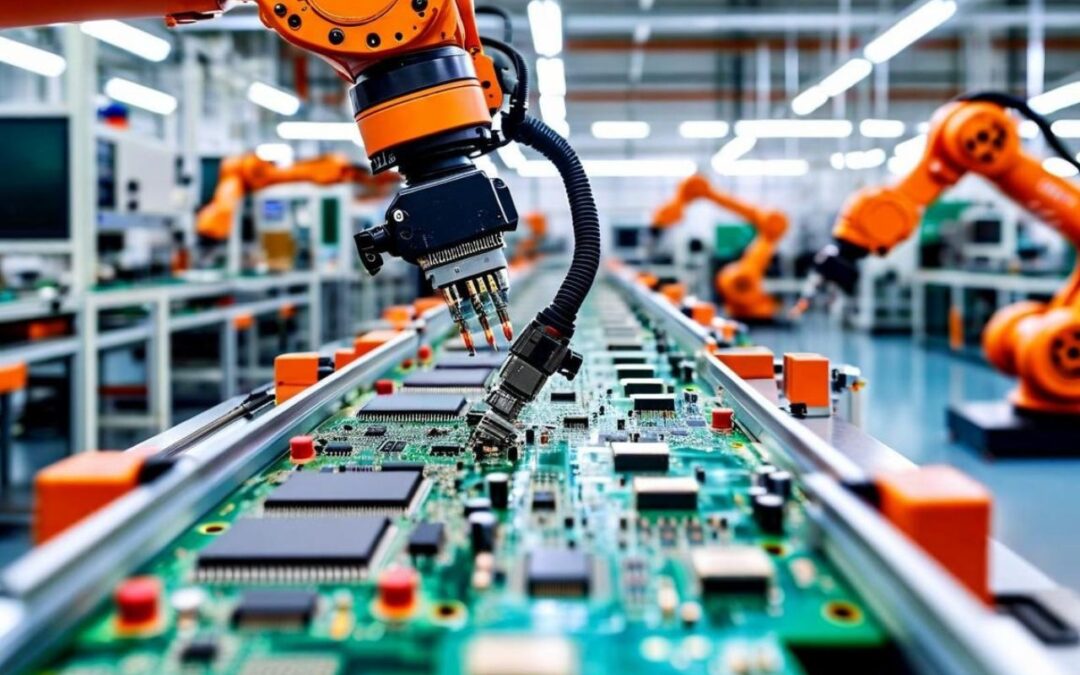
7. Electronics Components Manufacturing
ECMS gets ₹40,000 crore to make PCBs, sensors, capacitors, and displays, which take 40 percent of the smartphone value chain as compared to 10 percent of assembly. This will make India an assembler, net exporter of technology with its 300 billion electronics exports planned by 2030. Import bills of more than 15 billion a year are being countered through prioritization and resiliency is being established against global chip shortages to support 5G, IoT, and EVs.
Some key players in the sector currently:
- Dixon Technologies (component and PCB leader in EMS)
- Syrma SGS (manufacturer of PCBs and sensors)
- Amber Enterprises (capacitors and electronics modules)
Future Outlook
These seven sectors have the potential of attracting over ₹5 lakh crore investment by 2030 that will create 2-3 lakh job opportunities and make India a 10 trillion economy. Major players in these sectors may increase investments and the exports will reach 1 trillion in electronic/pharma alone. The worldwide relationships during US friendshoring and China slowdown make India the second manufacturing powerhouse, making Viksit Bharat even earlier.
Written By Jayanth R Pai