
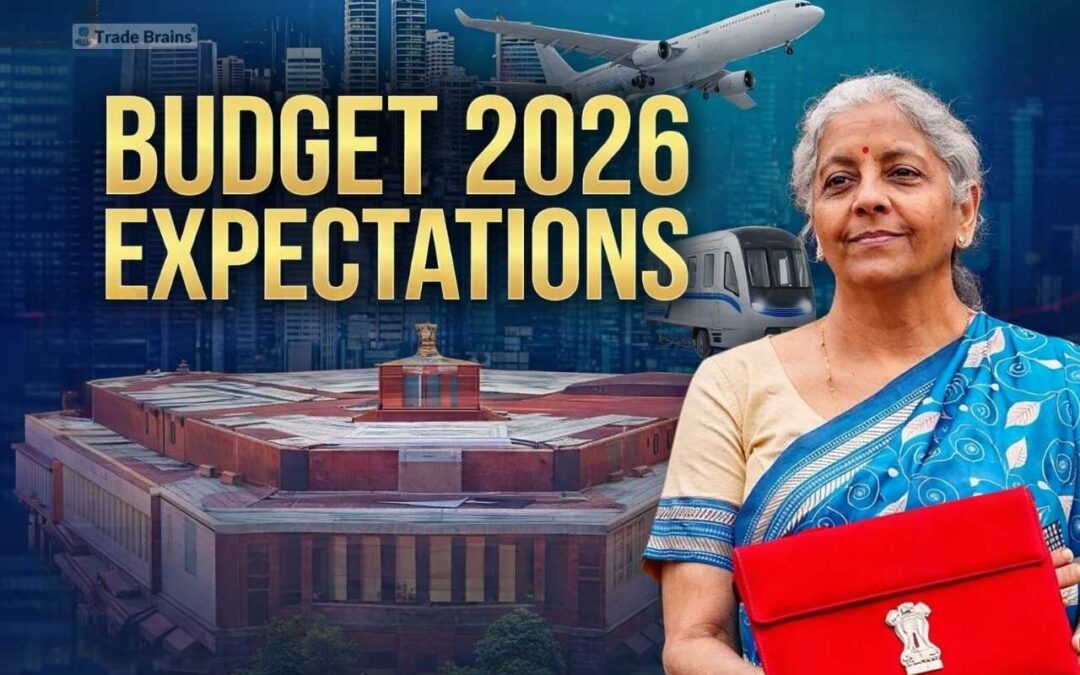
Synopsis: In the light of growing speculations about the Union Budget 2026, this article tries to examine what to expect, key priority areas, income tax expectations, what could be in for the middle or high income earners and more.
The Union Budget which is also known as the Annual Financial Statement outlines the government’s estimated revenue and expenditure for the upcoming financial year. The 2026 Union Budget will be presented by the Finance Minister Nirmala Sitharaman on February 1, 2026.
Key Priorities of Union Budget 2026
Infrastructure Development: Government‘s capital expenditure target for FY26 was around ₹11.2 lakh crore and its primary focus included road, highways, railways and public transportation. So, investment in infrastructure development is going to be a priority in the upcoming budget too.
Defence: In the previous budget, the Ministry of Defence received around ₹6.81 lakh crore which is almost 13% of the total central expenditure. 2026 budget will also prioritize defence given the geopolitical tensions.
Pro-poor subsidies: Upcoming budget will most likely continue to provide subsidies, welfare schemes and other pro-poor initiatives.
Research and Development: In the past years, initiatives like the National Research Foundation, a ₹50,000 crore initiative, were introduced. This shows the government’s focus on R&D in various sectors like defence, advanced materials, etc
Income Tax Expectations
As the government has already made substantial relief in the tax regime in previous years, it is unlikely that the government will make further reductions in tax slabs. Tax collection growth has been stagnant, and any aggressive reduction in tax rates could negatively affect revenue targets.
Therefore, the focus is expected to remain on maintaining tax stability. However, experts anticipate minor adjustments in specific areas, such as a possible increase in the limit of tax deductions claimable under Section 80C or a change in the tax slabs for high-income earners.
What the Middle Class Can Expect
The income tax slab rates are likely to remain unchanged for middle-class income earners, as the government had increased the zero-income tax threshold to ₹12 lakh in the previous budget under the new tax regime.
- Minor increases in deductions available under Section 80C and Section 80D
- Additional relief on housing loan interest
- A potential increase in the standard deduction, which could increase the no-income-tax threshold to ₹13- ₹14 lakh.
- Relaxation in the maximum ceiling limit of interest deduction under Section 24(b).
EV Incentives: A Smarter Way to Offer Tax Benefits
Although the government may not provide further income tax cuts, we expect a range of incentives to support middle-class income earners.
- We are expecting incentives or tax deductions linked to electric vehicles (EVs) to nudge people into more environmentally responsible choices. These incentives could be a higher deduction on loans taken to buy EVs or a new EV-oriented deduction category.
- Beyond personal tax benefits, the government might also bring incentives to support and extend EV infrastructure and green mobility systems across the country.
These incentives also align with the government’s ambitious goal to achieve 50% of installed electricity capacity from non-fossil fuel sources by 2030.
Also read: Income Tax Slabs FY 2025–26 Explained: How Much Tax Will You Pay Under New Regime?
Budget 2026 Expectations for High-Income Earners
While the 2026 budget might not bring significant changes to an average taxpayer, for high-income earners, it might deliver some adjustments to surcharges and tax thresholds.
- At present, individuals with higher incomes have to pay additional charges on top of the basic tax rate as surcharges. This often raises the final tax rate to around 42-43%.
- It has been noticed that there is a high outflow of High Net Worth Individuals (HNWI) from India to abroad, and tax advantages are one major reason.
- A Kotak Mahindra Survey found that 1 in 5 HNWI is planning to move abroad for lower tax jurisdictions.
- Hence, we expect an adjustment in the tax slab rates for high-income individuals, such as a rise in the income threshold for 30% tax rate from the current ₹24 lakh to ₹35-40 lakh. Also, a reduction or rationalisation in surcharges.
Women & Senior Citizens: Targeted Relief Expected
The basic exemption threshold for senior citizens under the old tax regime is ₹3 lakh, and for very senior citizens who are 80+ years of age, the threshold is ₹5 lakh. We expect this to be raised as that would increase the disposable income for retirees and would be aligned with the current living costs.
Furthermore, experts suggest increasing the ceiling of deduction on interest income under Section 80TTB from ₹50,000 to ₹75,000 or ₹1 lakh. There is also speculation that the government might make certain pension payouts tax-free. If implemented, these changes could significantly help retirees and people who depend on them.
Female taxpayers have increasingly advocated for tax incentives that encourage more women to be financially independent. There have been discussions on tax deductions for women’s retirement planning, better access to credit to promote women entrepreneurs, and investment incentive soor tax rebates for women in high-income brackets.
Other Key Budget 2026 Expectations Worth Watching
Climate Change and Green Energy: Along with providing incentives to EV, the government is likely to prioritise expansion of renewable energy, such as solar power, and energy storage
Manufacturing and MSME Support: Domestic manufacturing and MSMEs are expected to remain a priority, with a focus on providing better access to credit and enhance export competitiveness.
Who Wins and Who Adjusts Expectations
Middle-income taxpayers are likely to continue enjoying a higher tax-free income threshold, increased standard deductions, and specific incentives related to long-term goals like clean mobility.
Women and senior citizens might also receive targeted support to ease financial and healthcare burdens. High-income earners probably won’t see major tax cuts, but they could benefit from a review of surcharge rates and possible adjustments to higher income brackets.
Conclusion
With revenue under pressure and a focus on budget discipline, the government is expected to avoid sudden or drastic reforms. Instead, the focus will be on gradual changes, making compliance easier, and maintaining consistent policies. Overall, Budget 2026 seems to aim at promoting stability, long-term engagement, and alignment with national priorities.
Note: The views and expectations expressed in this article are based on publicly available information, expert opinions, and prevailing economic indicators as of the time of writing.
Written by Nila Maria Jacob