
Synopsis: The government’s economic priorities for FY 2026–27 are centred on growth, citizen empowerment, and inclusive development. The highlights emphasise an overall infrastructure development and also a focus on new modern sectors.
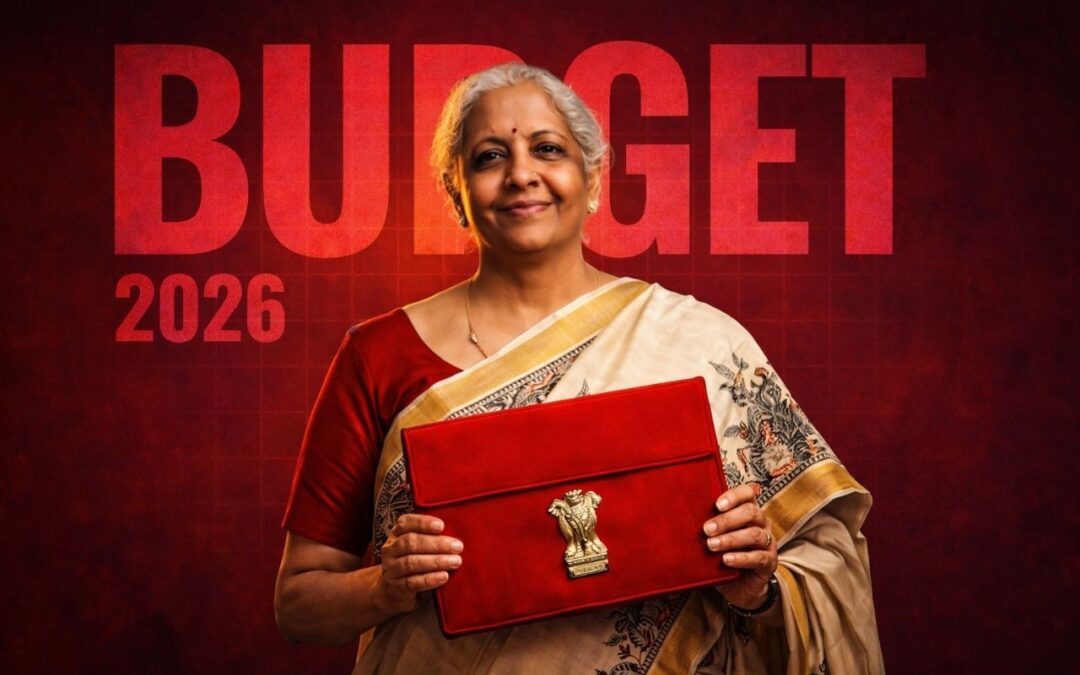
On 1st February 2026 the Finance Minister of India Nirmala Seetharaman presented her ninth consecutive Union Budget for the financial year of 2026-2027. The budget presentation always takes place on the 1st of February. This year it fell on a Sunday but regardless the event took place and it made history. It was the first time that a budget was held on a Sunday.
The budget focused on three Kartavyas which means duties. One is sustaining economic growth and second is fulfilling citizen aspirations. The last is an inclusive development through Sabka Vikas. Read below to know more about what was highlighted in the Union Budget.
1. Three Pillars of Duties (Kartavya)
- Economic Push: This is aimed at productivity and global competition
- Citizen Empowerment: The aim is to focus more on investing in the capacity of the people to make them partners in progress.
- Equitable Access: This step would make sure that every region and community benefits from Sabka Vikas translating to Development for All.
2. Infrastructure Investment
The government has taken a notable step for Capital Expenditure (Capex) as it is raising the outlay to ₹12.2 lakh crore. This is a 9% increase from the previous year and a major step that signals a continued reliance on infrastructure as the primary driving force for job creation and economic stability.
3. Semiconductor Mission 2.0
Another major step taken on the basis of earlier successes was the India Semiconductor Mission 2.0. The highlighted step was launched with a ₹40,000 crore allocation. The focus has shifted from mere fabrication to a full-stack approach. The details include the production of specialized equipment, raw materials, and indigenous chip design.
4. Rare Earth Push
The Budget proposed dedicated Rare Earth Corridors in mineral rich states like Odisha, Kerala, Andhra Pradesh, and Tamil Nadu. These rare earth rich states would help in the mining and processing of 17 essential elements that would reduce reliance on imports (particularly from China).
5. Expansion of the high speed Rail Road
In relation to Indian Railways the budget includes the announcement of seven new rail corridors. These growth connectors would include cities like Mumbai, Pune, Delhi, Varanasi, Bengaluru, Hyderabad and Chennai. This inclusion would make commuting from rail within the country a lot easier.
Also Read: Sovereign Gold Bond Tax Rules Changed: How Much Tax You’ll Pay After Union Budget 2026
6. Empowering Small Businesses
A dedicated ₹10,000 crore MSME Growth Fund was introduced. This fund is designed to tariff-proof small and medium enterprises. Another angle that is attached to it is that it would help them move in the global trade volatility and scale into Champion MSMEs and compete on an international stage.
7. Relief for the Textile Sector
The textile industry received targeted relief through schemes that are focused on improving the legacy cluster by combining some modern elements in it. The Budget emphasizes secondary tier cities as new hubs for garment manufacturing to help in the exports and also rural employment.
8. The Biopharma Shakti Initiative
This initiative aims to strengthen India’s pharmaceutical and biotechnology domain by increasing quality education and research infrastructure. The creation of a network of 1,000 accredited clinical trial sites will help speed up global research investments and position India as a one of the major hub for biopharma and biosimilar development.
9. The Orange Economy (AVGC)
In a first ever step the Indian Budget officially recognized the Orange Economy. It is the creative sector that spans around gaming, animation, visual effects, and comics (AVGC). The big plan includes setting up 15,000 Content Creator Labs in schools to prepare two million professionals for this booming industry by 2030.
10. Global Logistics Transformation
The Budget envisions India as a premier Global Logistics Hub. This includes the development of City Economic Regions and a new Dedicated Freight Corridor (DFC) between West Bengal and Gujarat to slash transport costs and time.
What to Expect?
The citizens can expect a significant push toward digitalization and AI integration across governance and agriculture (through the Bharat-VISTAAR platform). The personal income tax slabs remained unchanged, the transition to a New Tax Act starting April 1, 2026 suggests a simplified future for taxpayers. The focus on advanced rail and rare earth minerals indicates a long term bet on becoming a self reliant nation that is on the path of becoming a manufacturing superpower.
Final Take
Budget 2026 brought some of the most surprising changes for citizens. The promise of focusing on Orange Economy has truly made the newer generation content. The aim of making the count self-sufficient is a remarkable statement.
The major development highlighted in the budget presentation was directed toward empowering the citizens and focusing on infrastructure so that the country does not rely on other nations for technological necessities. Well, it does seem promising but when will the effect take place? That is something the citizens are eagerly waiting for.
Written by Kenbi Riba