
Synopsis: This article breaks down the key tax changes announced in Budget 2026, explaining what has changed, who it impacts, and what it means for your financial planning going forward.
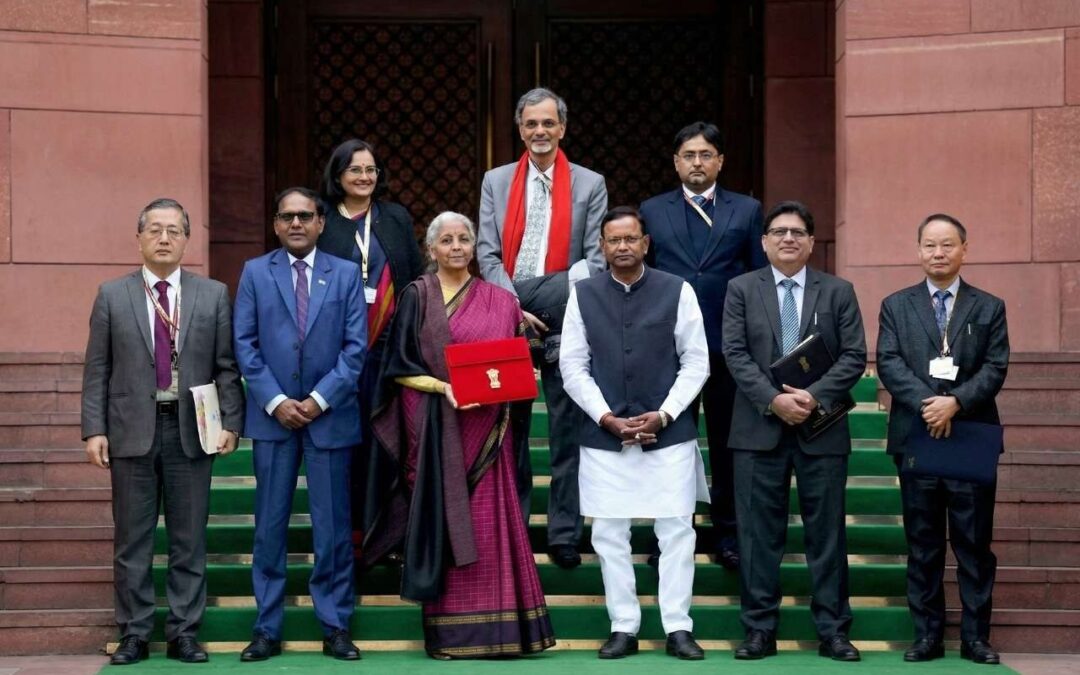
The Union Budget 2026 was presented by the Finance Minister, Nirmala Sitharaman, on February 1, 2026. The government did not bring any broad reductions but quietly introduced some significant tax reforms that could impact taxpayers and investors.
Income Tax Slabs and Standard Deduction
- The new Income Tax Act will come into effect starting from April 1, 2026. This will replace the old legislation and aims to smooth compliance. Additionally, the deadline for filing revised ITR has been extended to March 31 of the relevant assessment year on paying a nominal fee.
- The take-home pay for middle-class taxpayers will most likely remain the same, as there are no changes in tax rates, deductions, and exemptions. Consistency and simplification in filing ITR would improve the overall compliance experience of taxpayers.
Tax Collected at Source (TCS)
- The TCS rate on overseas tour packages has been reduced from the present 5% and 20% to 2%.
- TCS on LRS remittances for education and medical purposes has been reduced from the present 5% to 2%.
- Reduction in TCS rates on overseas tour packages and on LRS remittances will benefit leisure travellers, students studying abroad, and families funding overseas medical treatment.
Extension of Revised ITR Filing
- Deadline for filing revised ITR has been extended from December 31 to March 31 on paying a nominal fee.
No Change in Income Tax Slabs
- There is no change in the Income Tax brackets and rates under the new tax regime. No changes in tax for senior and super senior citizens.
New Income Tax Slabs for FY2026-27
| Income Tax Slabs | Income Tax Rate |
| Up to ₹4,00,000 | Nil |
| ₹4,00,001 to ₹8,00,000 | 5% |
| ₹8,00,001 to ₹12,00,000 | 10% |
| ₹12,00,001 to ₹16,00,000 | 15% |
| ₹16,00,001 to ₹20,00,000 | 20% |
| ₹20,00,001 to ₹24,00,000 | 25% |
| ₹24,00,000 and above | 30% |
Old Income Tax Slabs for FY 2026-27
| Income Tax Slabs | Income Tax Rate |
| Up to ₹2,50,000 | Nil |
| ₹2,50,001 to ₹5,00,000 | 5% |
| ₹5,00,001 to ₹10,00,000 | 20% |
| ₹10,00,000 and above | 30% |
Tax Deducted at Source (TDS)
- PAN-based TDS instead of complicated TAN, for property purchases from NRIs.
- This will simplify compliance and make property deals for NRIs easier.
Sovereign Gold Bonds (SGB)
- The tax exemption under Section 70(1)(x) will now be available only for investors subscribed to the SGB at the time of its original issuance by the RBI. Additionally, the investor must continuously hold the original issue bond until its maturity to qualify for this exemption.
- This move would encourage investors to invest in SGBs for a longer period, and it’ll also ensure that investors do not misuse price variations in the secondary market to earn tax-free gains.
Taxation on Share Buybacks
- Buyback proceeds will be taxed as capital gains instead of being treated as dividend income. The tax rate applicable will depend on the shareholder’s status i.e around 22% for corporate entities and 30% for non-corporate shareholders.
- Post-tax returns from buybacks may decline for the shareholders. Furthermore, companies might reconsider buybacks as a capital distribution strategy and prefer dividends or reinvestment.
Customs Duty on Personal Imports
- Customs duty on personal imports has been reduced from 20% to 10%. This lowers the cost of bringing in goods for personal use.
- The lower customs duty reduces the financial burden on individuals importing personal items and improves their affordability.
Securities Transaction Tax
| Securities Name | Old STT | New STT |
| Futures | 0.02% | 0.05% |
| Options Premium | 0.1% | 0.15% |
| Exercise of Options | 0.125% | 0.15% |
Also Read: Sovereign Gold Bond Tax Rules Changed: How Much Tax You’ll Pay After Union Budget 2026
Automated Process for NIL Deduction Certificate
- An automatic system for issuing NIL deduction certificates is now available for small taxpayers.
- Automated NIL deduction certificates help small taxpayers keep more money by avoiding unnecessary tax deductions.
Interest on Motor Accident Compensation
- Interest earned on motor accident compensation is now completely exempt from income tax.
- Tax exemption on interest from motor accident compensation provides relief to victims and their families.
Clarification of TDS provisions for manpower supply services
- TDS on manpower supply services will be considered as contract payments, which means the TDS will be 1% for individuals and HUFs, and 2% for others.
- Clarification for taxpayers on the treatment of TDS applicable to manpower supply services.
Depositories to Accept Form 15G and 15H
- Depositories will now accept Form 15G and Form 15H, so there is no need to submit these declarations separately.
- Allowing depositories to accept Forms 15G and 15H simplifies compliance and reduces paperwork
Individual ITR due dates remain unchanged
- No change in ITR filing deadlines for individual taxpayers filing ITR-1 and ITR-2. It’ll continue to be July 31.
Foreign Asset Disclosure Scheme
- A one-time foreign asset disclosure scheme has been introduced for a period of six months. It is aimed at small taxpayers such as students, young professionals, tech employees, and NRIs who have recently relocated.
- Category A is for taxpayers who didn’t disclose foreign income as well as foreign assets. The maximum amount of undisclosed income or assets is capped at ₹1 crore. Taxpayers must pay 30% tax on the fair market value or undisclosed income, with an additional 30% tax as penalty.
Rationalisation of Penalty and Prosecution
- Assessment and penalty proceedings will be combined into a single order.
- No interest will be added to penalty amounts while appeals are pending before the first appellate authority.
- The pre-payment requirement has been reduced from 20% to 10%.
- Taxpayers can file updated returns even after reassessment proceedings have started, as long as they pay an extra 10% tax.
- Penalties for technical defaults, such as audit failures, gaps in transfer pricing documentation, or delays in providing transaction statements, will turn into fixed fees.
- The immunity framework now covers cases of misreporting income, in addition to underreporting, if 100% additional tax is paid.
- Several offences, including not producing books of account, failing to provide documents, and not paying TDS when the payment is made in kind, have been decriminalized.
Cryptocurrency Reporting Penalties
- Crypto firms should pay a penalty of 200 per day for not submitting the documents and 50,000 for submitting inaccurate information.
Tax Holiday for Cloud Service Providers
- Tax holiday proposed until 2047 for cloud service providers setting up Indian data centres and serving customers locally.
Immunity for small undisclosed foreign assets
- Immunity provided for non-disclosure of non-immovable foreign assets below Rs 20 lakh. This is effective from October 1, 2024.
Conclusion
By keeping the same income tax brackets, the government has prioritised fiscal stability. At the same time, it has made important changes to the taxation of investments, overseas spending, and financial transactions. Understanding these changes and factoring them into financial planning will be essential for optimising returns, avoiding surprises, and ensuring compliance in the coming years.
Written by Nila Maria Jacob