Synopsis: In this article, we will be looking in to why India cut US treasury holdings to a 5-year low and what it could mean for markets, the economy, and the people of the country.
The holdings of US treasury securities are reduced to a five-year low, this states there is a change of shift in foreign exchange reserve strategy. This has implications not only on India’s macroeconomic management but also for the global financial system.
The economic stability of a country brings confidence among global investors as mainly foreign exchange reserves safeguard them. The US dollar has had major dollar dominance for a long period of time in the international trade, but recently India has brought down its holding of US treasuries down to five-year low.
This is not a sudden decision by India, It is a strategic approach took based on the global trends and domestic monetary policies. As, India is trying to position itself in complex dynamic global economic environment.
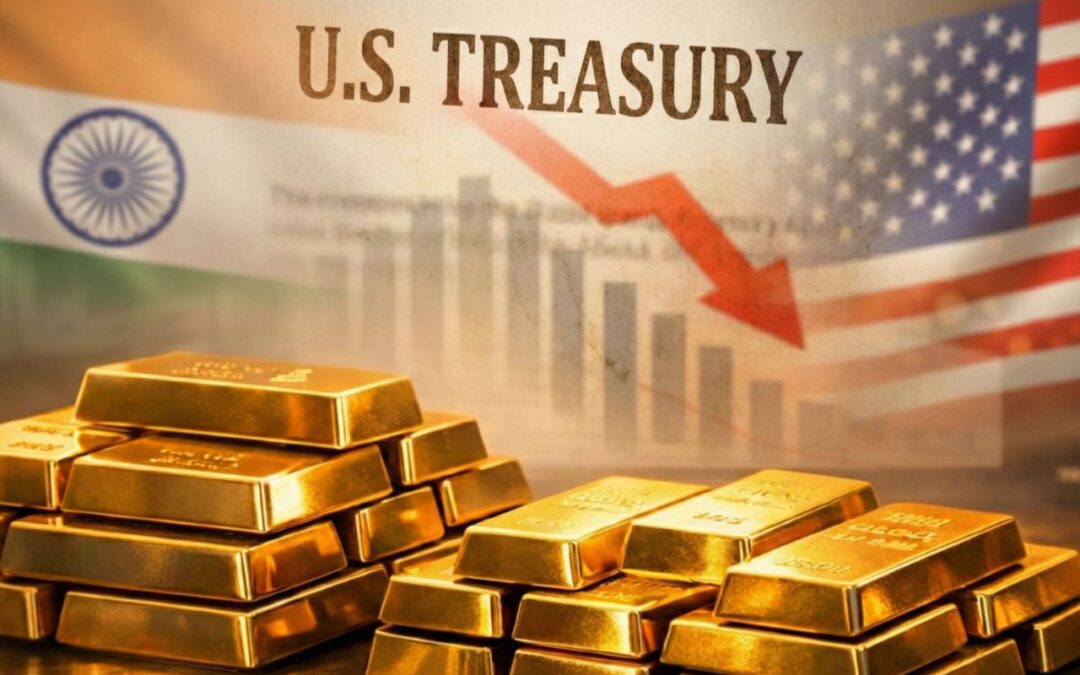
The country’s long-term holdings have dropped to $174 billion, down 26%. The treasuries now account only for one-third of the nation’s foreign-exchange assets. A larger share of India’s reserves are majorly gold and other alternatives, while China questions about US exceptionalism and the role of its debt as a reserve asset.
The European governments could also start scaling back after seeing the renewed trade threats from President Donald Trump over Greenland. This shift has mainly occurred to move away from dollar assets due to domination by the currency and to mitigate sanctions.
There was no response from the central bank regarding the request for comment on the decline in holdings of US government bonds. As, the relations between US and India deteriorated last year, made a lot of policymakers reduce their vulnerabilities.
The RBI has put in efforts to defend India’s battered rupee, as it has fallen to record lows on delays to a US-India trade deal after 50% tariffs on Indian exports, which is relatively the highest in Asia. By selling these treasury holdings, the central bank can now use the funds to purchase rupees and strengthen its value.
Over the recent months, the investment circles have raised questions over whether US treasuries remain the best option due to Trump’s global trade tariffs and raiding Venezuela.
Also Read: Davos 2026: 9 Indian States Attract Over ₹30 Lakh Crore in MoUs
China and Japan holdings record for $683 billion and $1.2 trillion, respectively. This states that RBI isn’t a major holder as it records only for one-quarter of China’s holdings. The foreign ownership of US treasuries remains near an all-time high. Still, the selling adds up to the debate on the role of US sovereign bonds in global portfolios.
The search for alternative global reserve assets is undoubtedly gaining traction, due to the central banks having to navigate a complex policy landscape which places more pressure on reserve allocation.
The central bank increases its gold buying streak. China and Brazil have cut their long-term treasury holdings. But, The National bank of Poland approved plans to purchase another 150 tons of the precious metal (Gold).
India’s pile of treasuries shrinks with deposits with commercial banks overseas more than 15%, total foreign exchange assets about 0-5%, deposits with other central banks, BIS and foreign securities again about 0-5% while treasuries have dropped up to 15%.
India’s selling could taper due to various reasons, a steady rupee performance that needs for intervention or reduction if the trade pact is finalised.
A number of market watchers do claim that a shift to other assets are coming. A survey found out that a vast majority of central banks still hold the greenback, but 60% planned to lookout for alternatives in the upcoming years.
Written by Vijai Krishna