
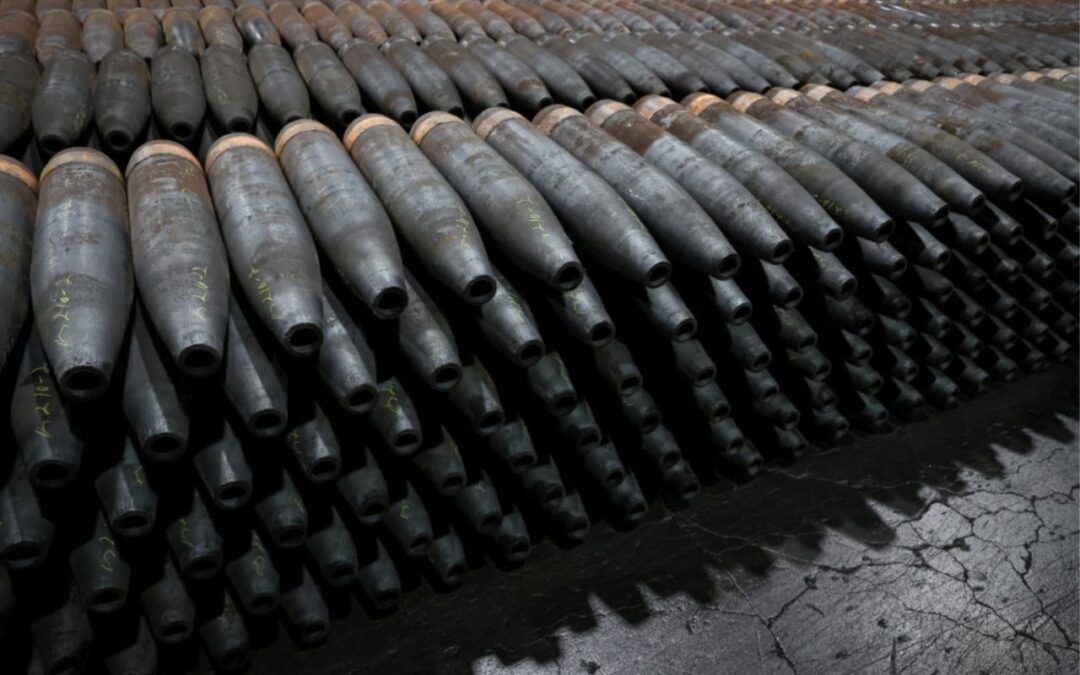
Synopsis: While big-ticket defense platforms like fighter jets, advanced warships, and naval assets capture high-profile media headlines, their ultimate operational reliance hinges on a lesser-known consumable industry. Specialized missile propellants, shell casings, and large-caliber tactical high explosives form the functional backbone of any military standing army. Because these specialized inputs operate under a recurring, high-volume consumption model, companies like Premier Explosives, Goodluck India, and Solar Industries India are establishing highly resilient, high-moat positions within India’s growing domestic and export defense supply chains.
When retail investors think about capital allocation within the defense sector, their focus naturally drifts toward the massive, high-tech platforms that populate major policy announcements: multi-role fighter aircraft, nuclear-powered submarines, and armored missile launchers. What often goes unnoticed is that these sophisticated systems are, in structural terms, one-time capital purchases.

A fighter jet or a mobile missile system can remain in service for decades without being completely replaced. In contrast, the rockets, long-range cruise missiles, and heavy artillery shells they fire are tactical consumables. They must be entirely replaced every single time they are deployed in live-fire operations, used in military training exercises, or simply cross their built-in chemical expiration dates. This paradigm creates what functions essentially as a high-margin, recurring subscription model for active warfare preparedness.
With ongoing geopolitical tensions driving global defense modernization to historic levels, the global demand for immediate, large-scale tactical ammunition has expanded dramatically. However, the entry barriers into this space are exceptionally steep.

Due to strict national security concerns and severe safety protocols, the government rarely issues manufacturing authorizations to private players to handle specialized military-grade high explosives or complex chemical propellants. Consequently, the select few domestic companies that secure these highly regulated industrial clearances enjoy an almost absolute lock on their target markets. While flashy technology hardware grabs the headlines, these industrial consumable plays are quietly locking in predictable, long-term revenue pipelines. By covering the three essential components of a tactical strike the propellant, the casing, and the explosive payload these companies represent a true “picks and shovels” play on defense.
1. Premier Explosives
Premier Explosives stands as a genuine pioneer within the domestic private defense sector, managing an incredibly robust niche moat that is highly difficult to replicate. The company achieved historic significance by becoming the very first private entity in India to manufacture solid propellants for the nation’s premier tactical missile programs, including the critical Akash and Astra weapon platforms.

Solid propellants require volatile, ultra-precise chemical formulation and complex industrial processing to ensure stable rocket motor ignition under harsh battle conditions. Because these propellants form the core propulsion system for active, high-volume anti-aircraft and beyond-visual-range missile arsenals, Premier Explosives remains structurally tied to India’s frontline missile stockpile requirements.
The company’s primary strategic advantage stems from its deeply entrenched position within the national defense manufacturing architecture. Because changing an approved chemical propellant formula requires years of complex testing, certification, and military re-validation, Premier Explosives benefits from immense customer stickiness, high pricing power, and long-term security against newer market entrants. With a market capitalization of Rs. 4,000 Crore shares of Premier Explosives closed at Rs. 741.45, continuing to hold a vital position in the domestic missile supply line.
2. Goodluck India
While propellant manufacturers dominate the chemical side of the equation, the heavy hardware layer depends entirely on high-grade precision engineering. This is where Goodluck India, through its dedicated division Goodluck Defence & Aerospace, is establishing an increasingly important footprint. The company has successfully transitioned from an industrial engineering player into a high-barrier defense supplier.

The core catalyst driving the company’s defense growth is its recent acquisition of specialized, highly restricted industrial manufacturing licenses. These authorizations empower Goodluck India to manufacture medium-caliber artillery shells and heavy rocket motor casings, the precise metal housings required to withstand the immense pressures generated by exploding artillery rounds and firing missile engines.
Recognizing the severe global shortage of conventional artillery and mechanical defense hardware, management is aggressively ramping up its dedicated production capacity. This positioning transforms Goodluck India from a domestic sub-contractor into an active international exporter, allowing the company to tap directly into global defense procurement demand. With a market capitalization of Rs. 4,511.80 crore, shares of Goodluck India closed at Rs. 1,357.40.
3. Solar Industries India
To complete the narrative of a self-reliant tactical ecosystem, one must look at the “business of the bang.” While other firms manufacture the structural “bus” (the missile or shell casing), Solar Industries India is the dominant private-sector titan that fills the “payload.” The company has successfully transitioned from being India’s leader in industrial explosives for mining into a highly critical strategic asset for the Ministry of Defence.
Solar Industries possesses an unmatched “Integrated Lethality” moat. The company owns one of the world’s most advanced manufacturing facilities for heavy energetic materials including HMX, RDX, and TNT, which provide the raw destructive capability for high-performance warheads. Beyond raw chemicals, the company has vertically integrated into pioneering the domestic production of weaponized drones (Loitering Munitions) and weapon systems like Pinaka rockets.
By producing the core raw energetic chemicals, assembling the warheads, and integrating them directly into final delivery systems, Solar Industries operates a high-margin, “one-stop-shop” for the Indian armed forces. This formidable technical barrier and scale give it incredible structural strength. With a massive market capitalization of Rs. 1,60,000 Crore, shares of Solar Industries India closed at Rs. 17,770.00, reflecting its dominant position as India’s premier private explosives powerhouse.
Strategic Context: The Export Frontier
A key catalyst that could supercharge these three players is India’s aggressive defense export target of Rs. 50,000 crore by 2028-29. This macro tailwind is highly favorable for niche consumable suppliers due to two distinct factors:
Global Shell Shortages: Ongoing regional conflicts have created a severe, persistent global deficit in 155mm artillery shells and conventional munitions. Indian suppliers with active, authorized capacity are uniquely positioned to bridge this international demand gap.
Testing Infrastructure Advantages: India’s extensive and sophisticated national range testing facilities (such as Pokhran or ITR Chandipur) allow these companies to rigorously validate “combat-ready” products. This seamless certification ecosystem makes their products highly reliable and immensely attractive to international buyers across the Global South.
The Bottom Line
The long-term investment thesis for the defense consumables layer is exceptionally straightforward. Complex weapon delivery platforms establish a nation’s military potential, but it is the continuous, high-volume manufacturing of ammunition, propellants, and explosive payloads that sustains its actual strategic capability. By securing early, highly restricted industrial licenses and aligning production with both domestic stockpiling goals and international export markets, this niche trifecta is uniquely positioned to capture reliable, long-term value within India’s defense ecosystem.
Disclaimer: The views and investment tips expressed by investment experts/broking houses/rating agencies on tradebrains.in are their own, and not that of the website or its management. Investing in equities poses a risk of financial losses. Investors must therefore exercise due caution while investing or trading in stocks. Trade Brains Technologies Private Limited or the author are not liable for any losses caused as a result of the decision based on this article. Please consult your investment advisor before investing.