
Synopsis India clears its biggest submarine contract in history, pairing a Mumbai shipyard with a German defence giant to build six next-generation underwater warships.
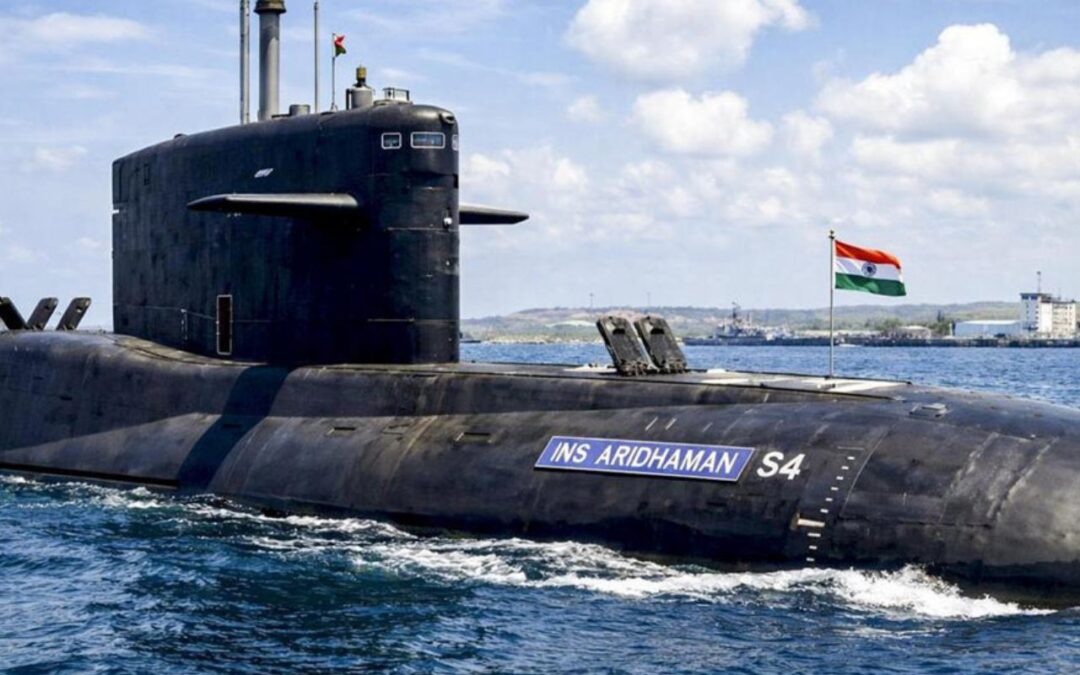
Decades after building its first submarine, India is now preparing to construct its most advanced ones yet. A landmark government approval has set the stage for a ₹70,000-crore programme that will reshape the Indian Navy’s underwater fleet – and cement Mumbai’s Mazagon Dock as the backbone of the country’s submarine-building ambition.

Shares of Mazagon Dock Shipbuilders Limited, with a market capitalization of Rs. 1,01,730 crore, are trading at a price of Rs.2,511 i.e. 2.27% up from its previous closing price of Rs.2,455.1. It is trading at a P/E ratio of 39.3.
The News
The Union Finance Ministry has approved a ₹70,000-crore proposal to build six next-generation conventional submarines under Project-75I, clearing the way for final sign-off by the Cabinet Committee on Security (CCS), chaired by the Prime Minister. Once the CCS nod comes through, the contract will be formally signed under the incoming Navy chief, Admiral Krishna Swaminathan, who takes charge on May 31 after Admiral Dinesh K Tripathi retires following four decades of service.

Mazagon Dock Shipbuilders Limited (MDL) will build the submarines at its Mumbai yard in partnership with German defence firm thyssenkrupp Marine Systems (tkMS). The two edged out the only competing bid – a joint proposal from Larsen & Toubro and Spain’s Navantia – to win one of the largest defence contracts in Indian history.
What Makes These Submarines Different
The six submarines are a variant of the HDW Class 214 design – a proven platform used by several NATO navies. The defining feature is air-independent propulsion (AIP), a technology that allows submarines to stay submerged for far longer periods without surfacing to recharge batteries. This makes them significantly quieter and harder to detect compared to conventional diesel-electric vessels. In contested maritime environments, that edge matters enormously.

As part of the agreement, tkMS will transfer the submarine’s design and core technology to India – a condition that directly supports the government’s push for self-reliance in defence manufacturing. The first submarine will be delivered seven years after the contract is inked, with one vessel commissioned every year after that.
Make in India at the Core
Indigenisation is built into the contract’s DNA. The first submarine must carry a minimum of 45% local content, rising to 60% by the sixth. This is not just a compliance target – it reflects a deliberate strategy to build domestic supply chains and engineering capability around submarine construction. The navy has set a goal of full self-reliance by 2047, the centenary of India’s independence, with around 60 warships currently under construction at various Indian yards.
Project-75I also fits into the broader India-Germany defence partnership. In April this year, Defence Minister Rajnath Singh and his German counterpart Boris Pistorius signed a defence industrial cooperation roadmap in Berlin, covering joint development and co-production of weapons and systems.

MDL’s Track Record and Growing Order Book
MDL is no stranger to submarines. The yard previously delivered six Kalvari-class Scorpene submarines under the earlier P-75 programme, in collaboration with France’s Naval Group, under a ₹23,562-crore contract. The last of the six, INS Vaghsheer, was commissioned in January 2025. Project-75I is the natural next step – bigger, more advanced, and far more consequential in scale.
The company also reported a strong FY2025-26, with consolidated revenue from operations rising 14% year-on-year to ₹13,006 crore and annual PAT climbing to ₹2,578 crore from ₹2,414 crore in FY25. The ₹70,000-crore contract, once signed, will provide multi-year revenue visibility that few defence companies in India can match.
About the Company
Mazagon Dock Shipbuilders Limited is a Mumbai-based Defence PSU under the Ministry of Defence. India’s foremost warship and submarine builder, MDL has delivered destroyers, frigates, and submarines to the Indian Navy over seven decades. It is a central pillar of India’s Atmanirbhar Bharat defence manufacturing programme.
Disclaimer: The views and investment tips expressed by investment experts/broking houses/rating agencies on tradebrains.in are their own, and not that of the website or its management. Investing in equities poses a risk of financial losses. Investors must therefore exercise due caution while investing or trading in stocks. Trade Brains Technologies Private Limited or the author are not liable for any losses caused as a result of the decision based on this article. Please consult your investment advisor before investing.