
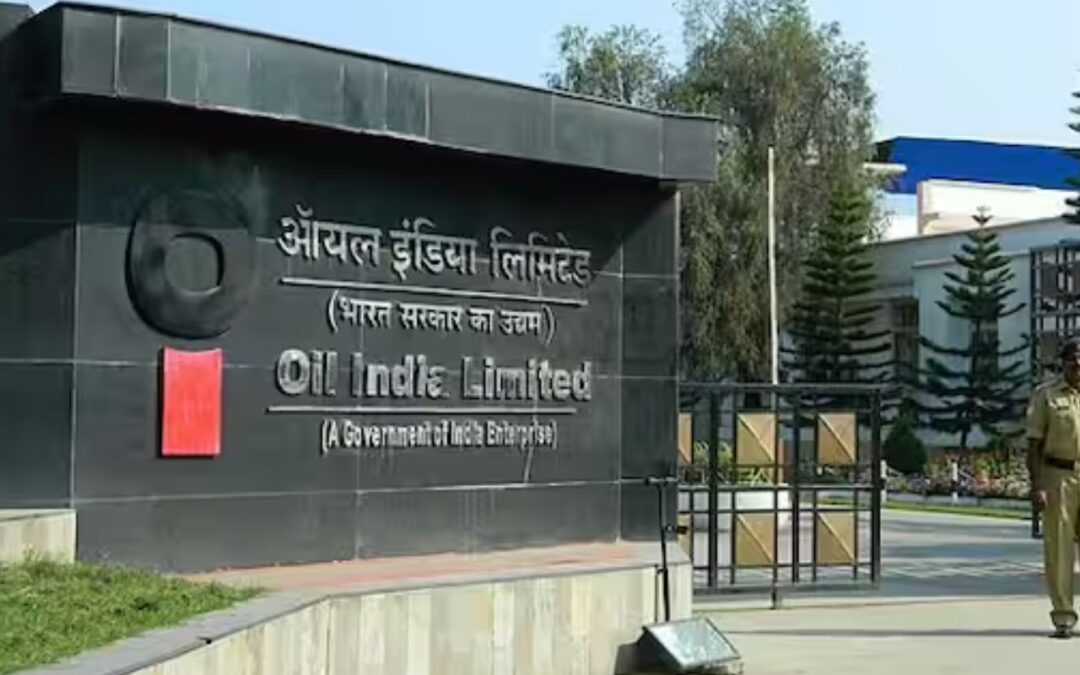
Synopsis:-Nine months after its first-ever natural gas discovery in the Andaman basin, Oil India Limited has struck gas again at the Vijayapuram-3 exploratory well in block AN-OSHP-2018/1, making it two successful finds from three wells drilled in the block a hit rate that exceeds most frontier exploration benchmarks and lends fresh credibility to the basin’s long-touted resource potential.
A state-run Maharatna explorer came into focus on Friday after disclosing its second natural gas discovery in the Andaman shallow offshore basin within the span of nine months, a development that extends one of the more watched frontier exploration campaigns in India’s upstream sector.

With a market capitalization of Rs. 78,630.22 crore, the shares of Oil India Ltd were trading at Rs. 483.4 per share, down 1.12 percent from its previous closing price of Rs. 488.90. It is trading at a P/E of 12.37.
The Discovery: Vijayapuram-3
The gas was encountered in the Vijayapuram-3 exploratory well, situated approximately 15 kilometres off the east coast of the Andaman Islands at a water depth of 355 metres. Drilling was carried out under the government’s Open Acreage Licensing Policy (OALP) framework. Testing in the Eocene formation at depths exceeding 1,900 metres confirmed gas presence through continuous flaring, the standard field-level proof of a live hydrocarbon column. Oil India is now conducting isotope and gas composition studies to characterise the find.

The result brings the block’s exploration tally to two discoveries from three wells drilled, with one more well remaining under the minimum work programme. For context, a 67 percent well-level success rate in frontier offshore exploration is well above the global average, which typically runs between 30 and 40 percent. With only three data points, statistical caution applies but the back-to-back nature of the finds and the geological consistency between the two wells is not a coincidence the market is likely to dismiss.
The first Andaman discovery at the neighbouring Vijayapuram-2 well in September 2025 produced gas samples with a 97 percent methane composition, with only minor traces of ethane and propane. That purity level is commercially valuable: high-methane, low-contaminant gas requires less processing before it can be sold or piped, which reduces the capital cost of monetisation. Whether the Vijayapuram-3 pool shares the same biogenic or thermogenic genesis will be confirmed by the ongoing isotope analysis.

The geological setting here is not straightforward. The Andaman basin sits at the convergence of the Indian and Burmese tectonic plates, producing complex subsurface volcanic tuffs and heavy faulting that have historically made the area punishing to drill. Oil India navigated this by deploying an Integrated Drilling Management System backed by AI-driven predictive analytics that modelled real-time torque-and-drag profiles through the Miocene sediments. The result was a reported 40 percent reduction in non-productive drilling time, a figure that, if it holds across the appraisal campaign, materially changes the economics of operating in this frontier.
Block Scale and India’s Gas Import Equation
Block AN-OSHP-2018/1 covers 3,669.25 square kilometres. Oil India’s Revenue Sharing Contract for the block was signed in July 2019 under OALP Round-II, with a committed minimum work programme estimated at $69.3 million (approximately Rs. 658 crore at 1 USD = Rs. 94.94). That is the foundational exploration spend; appraisal, development, and eventual production infrastructure would run multiples higher.
The strategic context for these discoveries is India’s energy import bill. The country currently sources roughly 88 percent of its crude oil and approximately 50 percent of its natural gas requirements from overseas. Any material domestic offshore find particularly clean, high-methane gas with no proximity to existing infrastructure feeds directly into the government’s Samudra Manthan initiative, which seeks to catalyse deepwater and shallow offshore development through new production platforms, pipeline buildouts, and potential floating LNG setups.

Global energy intelligence firm Rystad Energy has framed the Andaman basin’s long-run potential in “Guyana-scale” terms as an aspirational comparison to South America’s most prolific recent offshore discovery, where recoverable resources now exceed 11 billion barrels of oil equivalent. The Andaman basin is at the very beginning of its appraisal journey, and applying that comparison to two wells would be premature. The successive finds do, however, confirm the basin is geologically active and commercially prospective.
What Comes Next
Oil India has completed a fresh 3D seismic survey across 600 square kilometres in the block, data that will inform the targeting of appraisal wells once isotope and composition studies on Vijayapuram-3 wrap up. The path from this point discovery, appraisal, declaration of commerciality, field development plan approval, and first gas is typically a 5 to 10 year journey in Indian offshore, with additional timelines introduced by the environmental sensitivity of the area.
The Andaman and Nicobar archipelago is a UNESCO biosphere reserve, home to endangered Irrawaddy dolphins and unique shallow-water marine ecosystems. Any shift from exploration to full appraisal drilling will require strict adherence to containment and biodiversity protection protocols, adding a regulatory layer that is absent from comparable mainland or international campaigns.
Business Overview
Oil India Ltd is a Government of India-controlled Maharatna entity engaged in the exploration, development, and production of crude oil and natural gas, LPG production, crude oil transportation, and renewable energy generation. For FY26, consolidated revenue stood at approximately Rs. 33,946 crore against a profit after tax of approximately Rs. 7,551 crore.
Disclaimer: The views and investment tips expressed by investment experts/broking houses/rating agencies on tradebrains.in are their own, and not that of the website or its management. Investing in equities poses a risk of financial losses. Investors must therefore exercise due caution while investing or trading in stocks. Trade Brains Technologies Private Limited or the author are not liable for any losses caused as a result of the decision based on this article. Please consult your investment advisor before investing.