
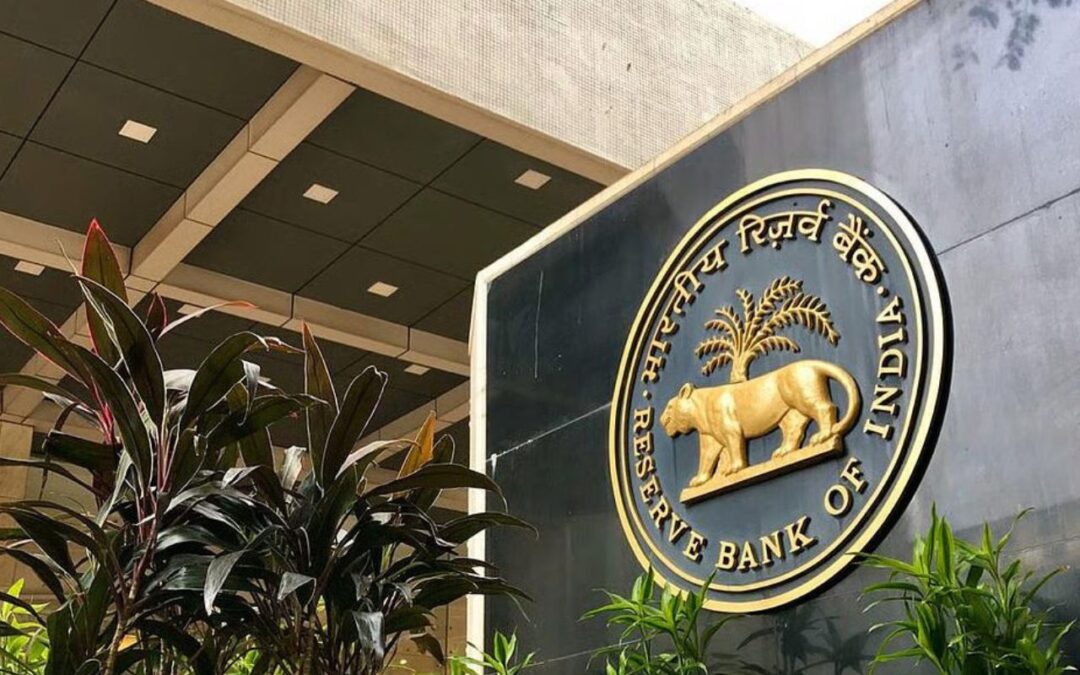
Synopsis: The Reserve Bank of India has imposed a monetary penalty of Rs. 2,49,658 on Canara Bank for delayed reporting by a currency chest, the bank disclosed to exchanges on June 6, 2026; the penalty is financially immaterial but adds to a pattern of regulatory scrutiny on PSBs around operational compliance, including KYC maintenance and inoperative account norms.
A regulatory disclosure filed with BSE and NSE on June 6, 2026 brought the country’s largest public sector bank by branch network back under compliance scrutiny. The penalty, levied under the RBI’s powers, is negligible relative to the bank’s balance sheet, but the nature of the violation delayed reporting by a currency chest falls within the same class of operational lapses that have drawn repeated regulatory action on state-owned banks over the past two years.

With a market capitalization of Rs. 1,22,018.40 crore, the shares of Canara Bank were last recorded at Rs. 134.52 per share, down 0.95 percent from its previous close of Rs.135.81. It is trading at a P/E of 7.20.
The RBI imposed a penalty of Rs. 2,49,658 approx Rs. 2.5 lakh on Canara Bank for delayed reporting by a currency chest, the bank’s Company Secretary Santosh Kumar Barik disclosed in a Regulation 30 filing on June 6, 2026. Currency chests are designated vaults maintained by scheduled commercial banks on behalf of the RBI for the storage and distribution of currency notes, and banks are required to report chest-level transactions to the central bank within stipulated timelines.

A failure to meet those deadlines constitutes a procedural violation, even where no fraud or financial misreporting is involved. The bank’s filing notes that the financial impact is limited to the penalty amount itself. No broader operational disruption or legal proceedings have been flagged in connection with this action.
KYC and Inoperative Account Compliance
Currency chest reporting is one strand of a wider RBI compliance framework that has placed PSBs under heightened scrutiny. Two other areas KYC (Know Your Customer) record maintenance and the handling of inoperative or unclaimed accounts have been recurring sources of regulatory action on public sector lenders.

RBI guidelines require banks to periodically re-verify KYC documentation for existing customers, with risk-based timelines that range from two years for high-risk accounts to ten years for low-risk ones. Non-compliance with KYC norms, including failure to flag or freeze accounts with incomplete documentation, has resulted in penalties on multiple PSBs in recent years. Separately, accounts that remain inactive for over two years are classified as inoperative under RBI rules, and banks are required to exercise enhanced due diligence before allowing debits from such accounts.
Unclaimed deposits older than ten years must be transferred to the RBI’s Depositor Education and Awareness (DEA) Fund, and procedural lapses in that transfer process have also attracted penalties.
For a bank of Canara’s size over 9,400 branches and a consolidated loan book running into tens of lakhs of crore the operational complexity of maintaining uniform compliance across all units is genuine. The currency chest penalty is small; the compliance infrastructure demands are not.

Business Overview
Canara Bank, incorporated in 1906 and nationalised in 1969, merged with Syndicate Bank in April 2020 to become one of India’s largest public sector lenders. The bank posted consolidated revenue of Rs. 1,26,371 crore and a net profit of Rs. 19,712 crore for FY26. As of Q3 FY26, its Gross NPA ratio stood at 2.08 percent, Net NPA at 0.45 percent, and NIM at 2.50 percent. The Government of India holds approximately 62.9 percent of the bank.
Disclaimer: The views and investment tips expressed by investment experts/broking houses/rating agencies on tradebrains.in are their own, and not that of the website or its management. Investing in equities poses a risk of financial losses. Investors must therefore exercise due caution while investing or trading in stocks. Trade Brains Technologies Private Limited or the author are not liable for any losses caused as a result of the decision based on this article. Please consult your investment advisor before investing.