
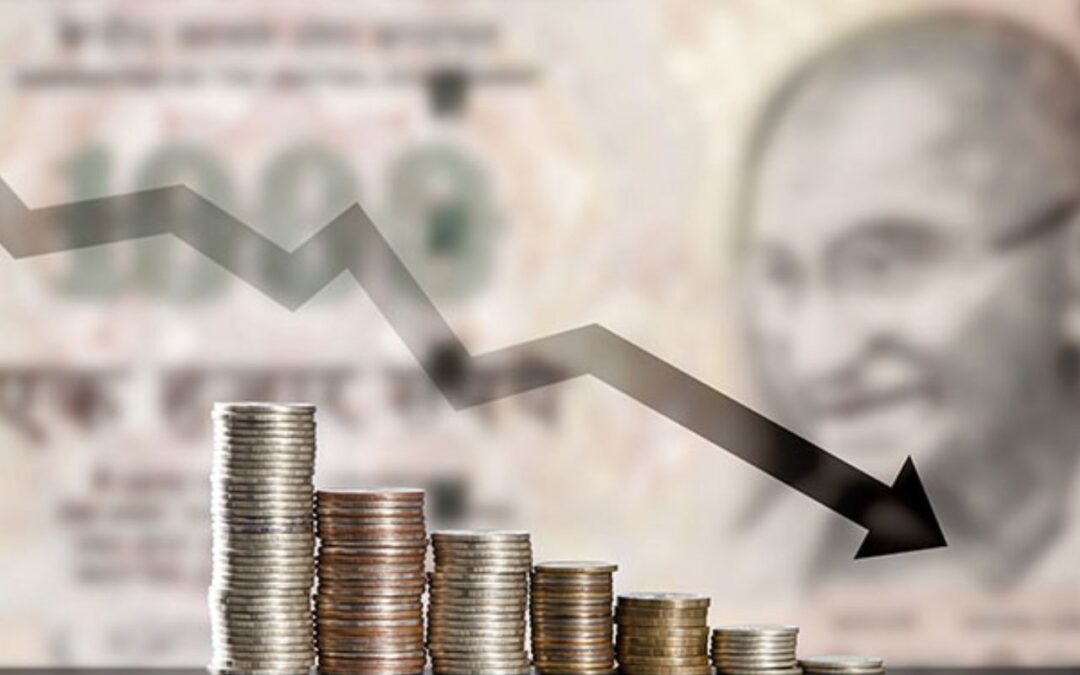
Synopsis: A violent Iran-Israel escalation over the weekend has sent Brent crude past $96 per barrel and driven the Indian rupee to 95.32 against the dollar a 38-paise drop in a single session as global markets price in a prolonged disruption to Persian Gulf energy flows and capital flight accelerates away from emerging market assets.
A geopolitical flashpoint over the weekend has redrawn risk calculations across every major asset class. Israeli airstrikes on Beirut targeting Hezbollah, followed by a large-scale Iranian ballistic missile response late Sunday, erased the ceasefire optimism that had taken weeks to build. Energy and currency markets registered their sharpest single-session repricing in recent months and the damage was evident across Asian trading desks before European markets even opened.

Brent crude futures surged 3.3 percent to $96.15 per barrel in early Monday trading, with intraday spikes reaching $97.70 the most aggressive one-day advance in over a month. West Texas Intermediate rose 4.5 percent, crossing $94.70 a barrel.
The core anxiety centres on the Strait of Hormuz. The narrow choke point through which a large share of Persian Gulf crude transits daily is facing a near-closure threat as Iranian forces maintain pressure on commercial shipping routes. Physical blockage means that additional supply cannot reach the market regardless of production decisions elsewhere.

OPEC+ attempted to respond, approving an emergency quota increase of 188,000 barrels per day for July on Sunday. Energy analysts dismissed the move almost immediately: infrastructure damage and the Hormuz constraint mean member nations cannot deliver the additional barrels in any case. The market priced the announcement accordingly Brent continued climbing through the morning session without a pause.
Currency Markets
The US Dollar Index held the 100.00 level on Monday, its strongest reading in two months. Two forces are running simultaneously: safe-haven demand from a global risk-off move, and a May Nonfarm Payrolls print 172,000 jobs added against an 85,000 consensus estimate that has shifted Federal Reserve rate expectations back toward a hawkish lean.

For India, the currency shock is more acute. The rupee opened at 95.32 per dollar, down 38 paise from Friday’s close of 94.94. The depreciation reflects a widening trade deficit fear and accelerating foreign institutional investor equity outflows. The structural exposure is significant: India imports approximately 87 percent of its crude oil requirements. When global crude prices and dollar strength move against it simultaneously, the rupee faces a compounding pressure that does not resolve within a single session.
Where the Earnings Risk Is
The combination of $96 crude and a 95-per-dollar exchange rate translates into direct earnings pressure for Indian companies with dollar-denominated cost structures or liabilities. IndiGo, India’s largest carrier by market share, reported a net loss of ₹2,400 crore for FY26, with management pointing to this exact cost bind jet fuel priced in dollars, lease liabilities denominated in foreign currency, and a weaker rupee that marks those obligations upward on the balance sheet even in periods of steady operations.
The same arithmetic applies across sectors exposed to imported inputs. Refiners, chemical manufacturers, and capital-equipment importers all absorb higher costs on the rupee side before passing anything on. Whether the margin compression shows up in Q1 FY27 results depends largely on how fast crude retreats if it does at all.

Broader Asian Markets
Asian equity indices confirmed the risk-off tone. South Korea’s KOSPI fell between 5.39 and 9 percent, driven by heavy selling in tech-weighted positions. Japan’s Nikkei 225 dropped 3.74 percent. Global diplomatic channels remain deadlocked, with international leaders urging restraint from both sides without visible progress. Brokerage desks have already started adjusting their models to reflect a prolonged, high-energy-cost quarter rather than a temporary spike.
Disclaimer: The views and investment tips expressed by investment experts/broking houses/rating agencies on tradebrains.in are their own, and not that of the website or its management. Investing in equities poses a risk of financial losses. Investors must therefore exercise due caution while investing or trading in stocks. Trade Brains Technologies Private Limited or the author are not liable for any losses caused as a result of the decision based on this article. Please consult your investment advisor before investing.