
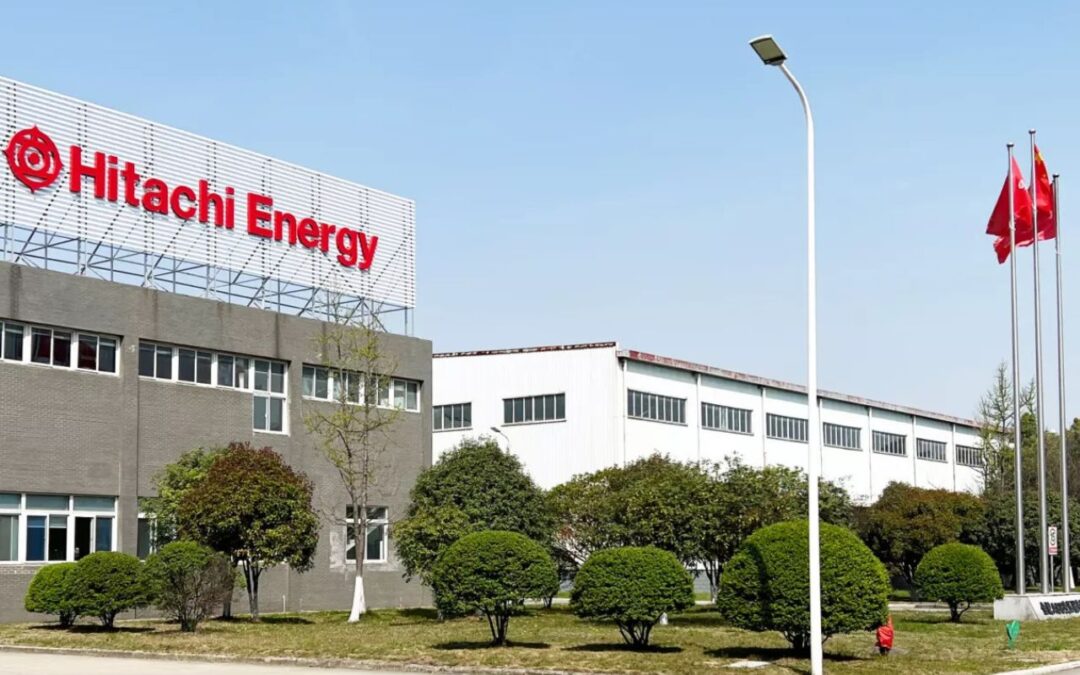
Synopsis: With India’s energy grid entering a decade of structural overhaul driven by aggressive renewable capacity additions, an 80 GW BESS target, and HVDC corridor buildout Hitachi Energy India has articulated a four-pillar strategic positioning across battery storage, transmission modernization, HVDC, and grid digitalization, while its own financials show a sharp margin expansion from 6 percent in FY23 to 17 percent in the December 2025 quarter.
India’s transmission infrastructure is heading into the most capital-intensive upgrade cycle in decades and the question for equipment companies serving this segment is not whether demand will arrive, but how quickly they can scale to meet it. A heavy electrical equipment manufacturer with exposure to all four layers of this transition has been consolidating its strategic positioning across battery storage, HVDC, renewable integration, and grid automation, at a moment when each of those segments is moving from pipeline discussion to active procurement.

With a market capitalization of Rs. 1,57,697.02 crore, the shares of Hitachi Energy India Ltd were trading at Rs. 35,380 per share, down 4.04 percent from its previous closing price of Rs. 36,870 apiece. It is trading at a P/E of 166.36.
India has set a target of 80 GW in grid-scale battery energy storage capacity by FY36. At current penetration levels, that number represents an enormous procurement runway from power conversion systems to control architectures to grid integration software. Hitachi Energy India is focusing its engineering effort on this segment: delivering the digital twins, power electronics, and stabilization software that prevent renewable intermittency from cascading into grid frequency disturbances.

The investment rationale here is specific. As solar and wind capacity crosses the 50 percent non-fossil threshold, the grid faces hour-by-hour supply imbalances that thermal plants cannot absorb efficiently on short notice. Storage layers become load-balancing infrastructure rather than supplementary capacity and the company supplying the interface between batteries and the transmission network occupies a high-margin, technically-complex position in the procurement chain that is not easily substituted.
HVDC and Renewable Grid Integration
The second and third pillars of Hitachi Energy’s India strategy are closely connected in practice. Getting renewable power from generation sites in Rajasthan or Gujarat to industrial load centres several hundred kilometers away demands both long-distance transmission capacity and real-time power quality management. The company’s HVDC systems address the corridor piece directly: over very long distances, direct current transmission loses significantly less energy to resistance than alternating current, making it the economically preferable technology for inter-regional power flow.

On the power quality side, Hitachi Energy deploys STATCOMs (Static Synchronous Compensators) and specialized transformers to maintain voltage stability as the generation mix shifts continuously across the day. India’s thermal capacity is expected to hold around 100 GW as a baseline floor through the decade, providing dispatchable power. Balancing that thermal base against variable renewable inputs on the same national grid requires continuous reactive power compensation equipment that must be installed before the renewable capacity it is compensating can operate reliably.
Grid Digitalization
The fourth strategic pillar is the software overlay. A grid adding capacity rapidly, shifting its generation mix hourly, and managing a decentralized structure of thousands of solar and wind installations cannot be run on conventional substation monitoring alone. Hitachi Energy’s digital portfolio spans IoT sensors, asset performance management software, and real-time monitoring tools targeted at utilities trying to anticipate transformer failures and automate peak load management.
This segment deserves attention in the context of Hitachi Energy India’s financials. Operating margins have expanded sharply from 6 percent in FY23 to 9 percent in FY25, accelerating to 17 percent in the December 2025 quarter. That trajectory is not explained by scale alone. Software and services revenue carries structurally higher margins than transformer or equipment supply; as digital offerings take a larger share of the project mix, the blended margin moves accordingly. The TTM operating profit stands at Rs. 1,037 crore against revenue of Rs. 7,277 crore a distance from the Rs. 250 crore operating profit on Rs. 4,469 crore revenue just two years earlier.

Business Overview
Hitachi Energy India Ltd, incorporated in 2019 was a joint venture between Hitachi Ltd and ABB’s Power Grids business. Hitachi Ltd holds a 71.31 percent promoter stake following a QIP that raised Rs. 2,476 crore, of which approx Rs. 470 crore had been deployed as of March 2026 leaving significant dry powder for capacity or capability expansion. Foreign institutional investor interest has grown materially over the past year, with FII shareholding rising from 4.96 percent in March 2025 to 11.68 percent in March 2026, reflecting institutional accumulation ahead of FY26 results.
For FY25, the company reported standalone revenue of Rs. 6,385 crore, up approx 22 percent YoY, and net profit of Rs. 384 crore, up approx 134 percent YoY. TTM net profit stands at Rs. 841 crore. ROCE for FY25 stood at 19.4 percent.
Disclaimer: The views and investment tips expressed by investment experts/broking houses/rating agencies on tradebrains.in are their own, and not that of the website or its management. Investing in equities poses a risk of financial losses. Investors must therefore exercise due caution while investing or trading in stocks. Trade Brains Technologies Private Limited or the author are not liable for any losses caused as a result of the decision based on this article. Please consult your investment advisor before investing.