
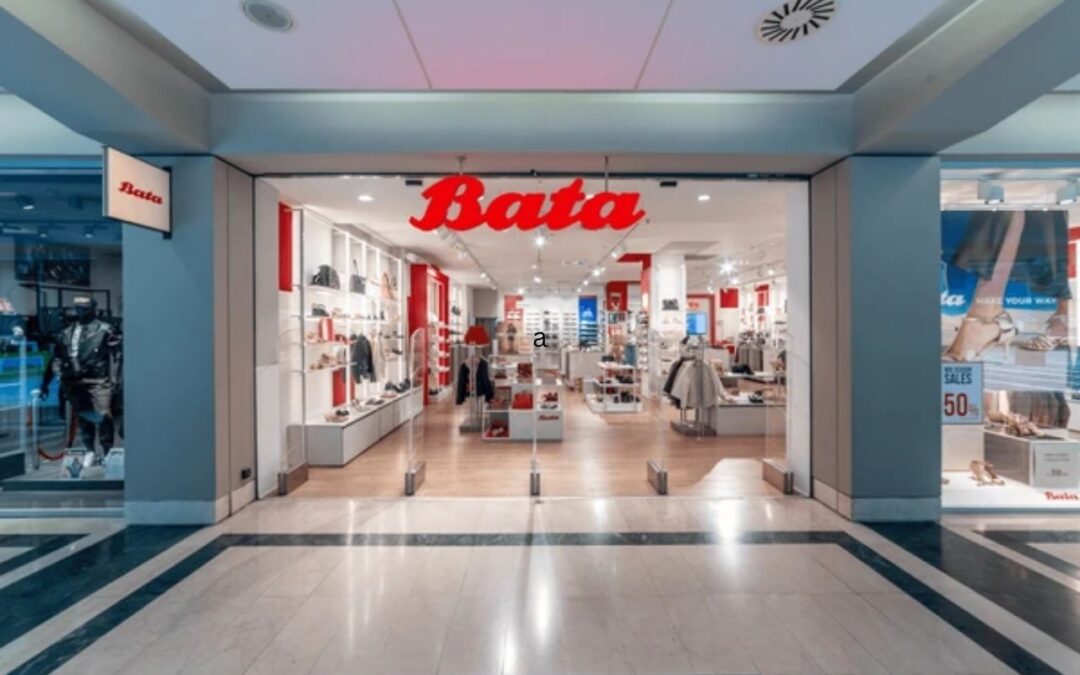
Synopsis: In its Q4 FY26 earnings conference call, Bata India detailed a multi-pronged distribution overhaul Zero-Based Merchandising now live in 700 stores, a franchise network approaching 1,000 outlets, and bata.com growing 81 percent year-on-year though revenue has been flat for three consecutive years and the stock is trading near its 52-week low, making execution on the ZBM ramp and the sneaker proposition for younger buyers the clearest near-term tests of whether the restructuring converts into growth.
A footwear retailer operating over 2,000 exclusive brand stores across India drew investor attention on its Q4 FY26 earnings call, detailing a multi-year distribution restructuring that includes a Zero-Based Merchandising programme now live in 700 stores, an e-commerce direct-to-consumer site that grew 81 percent year-on-year, and a factory closure that locks in a 10 percent structural reduction in employee costs. The call also covered the stabilization of the value segment after three years of decline and a dedicated sneaker strategy aimed at recapturing younger consumers.

With a market capitalization of Rs. 8,632.55 crore, the shares of Bata India Ltd were trading at Rs. 671.65 per share, up 0.5 percent from its previous closing price of Rs. 668.30 apiece. It is trading at a P/E of 64.
ZBM Rollout and COCO Store Productivity
Zero-Based Merchandising, a store-reset programme that rebuilds inventory assortments from demand data rather than historical allocation was live across 550 stores in Q4 FY26, covering the larger-format locations that collectively account for 70 percent of total COCO turnover. By May 2026, the ZBM count reached 700 stores, with a target of 800 to 850 roughly 75 to 80 percent of the company-owned network by the end of the next quarter. Management reported a mid-single-digit comparable growth delta between ZBM stores and the rest of the network.

For a business where consolidated revenue has barely moved over three years, a structural productivity differential across 70 percent of COCO turnover is the most operationally significant data point from the call. COCO stores contribute 65 percent of total company revenue, so the ZBM uplift flows directly into the consolidated P&L rather than accruing to a third-party partner.
Franchise, MBO, and the Value Segment Turning
The franchise (FOFO) network crossed 700 stores during the quarter, pushing the total exclusive brand outlet count past 2,000. The target is approaching 1,000 FOFO stores within 12 months. Franchise expansion here is structured as outright-sale arrangements Bata carries no lease rental exposure on FOFO locations making incremental store additions capital-light compared to company-owned openings. Franchise contribution is running near double digits of total revenue. The multi-brand distribution network now reaches 1,670 towns.

The sub-Rs. The 1,000 MRP value segment which had been declining for three years under GST-driven price increases and raw material pressures stabilized in the latter part of Q4 and returned to growth in line with overall value trends. The value portfolio represents 35 to 40 percent of total turnover, so its recovery removes a sustained drag on consolidated revenue that had persisted since FY22.
E-Commerce and the Inventory Discipline
Digital commerce is contributing in the low-teens 8 to 12 percent of business with bata.com growing 81 percent year-on-year. The platform accounts for 14 percent of the total online mix and doubles as a test channel for new products before wider store deployment. Over 700 physical stores now double as fulfillment nodes for online orders, with a plan to scale this to 1,000 stores. The operational context behind these numbers is a two-year inventory overhaul that cut absolute stock levels by 28 percent cumulatively, while floor availability improved by 1,000 basis points, the improvement driven by SKU complexity reduction of 30 percent rather than stock-outs.
The cash conversion cycle improved to 123 days in FY25 from 162 days in FY24, and inventory days fell from 227 to 195. Target inventory turns of 3.0 compared to the current 2.7, leaving further efficiency to extract. FCF discipline is already reflected in the FY25 operating cash flow of Rs. 738 crore, an unusually strong figure for a consumer brand of this revenue scale.

Product Strategy, Cost Resets, and the Youth Gap
Hush Puppies contributes 18 to 20 percent of total turnover and is the company’s fastest-growing brand, expanding through dedicated stores and shop-in-shop formats with an emphasis on full-price sell-through over markdown clearance. Total marketing spend increased 1.5 times, with 80 to 85 percent allocated to digital channels including the Ballerina Campaign, which management cited as pushing brand consideration benchmarks to an all-time score of 66. The sneaker category disclosure addresses a structural gap: management acknowledged a persistent perception problem with younger consumers and is developing a dedicated proposition for that segment.
Management estimated that only 10 percent of recent product design investments have reached store floors, with the bulk of the new range set to roll out over the next 12 months. On costs, the closure of an older manufacturing facility resulted in a 10 percent structural reduction in employee costs going forward. Raw material inflation across polyurethane, EVA, and leather is tracking at 5 to 6 percent; the company is managing it through selective pricing adjustments rather than broad-based hikes across its 30-state network.
Business Overview
Incorporated in 1931, Bata India Limited (formerly Bata Shoe Company Private Limited) began operations in Konnagar in 1932 before expanding into a large township known as Batanagar, which became the first manufacturing facility in the Indian shoe industry to receive ISO: 9001 certification. After going public in 1973, the company established itself as India’s largest footwear retailer, currently operating an unmatched network of over 1,375 modernized stores across all major metros and towns to deliver a premium shopping experience. Beyond its retail footprint, Bata also maintains a massive non-retail urban wholesale division that serves millions of customers through a vast network of more than 30,000 dealers.
Disclaimer: The views and investment tips expressed by investment experts/broking houses/rating agencies on tradebrains.in are their own, and not that of the website or its management. Investing in equities poses a risk of financial losses. Investors must therefore exercise due caution while investing or trading in stocks. Trade Brains Technologies Private Limited or the author are not liable for any losses caused as a result of the decision based on this article. Please consult your investment advisor before investing.