

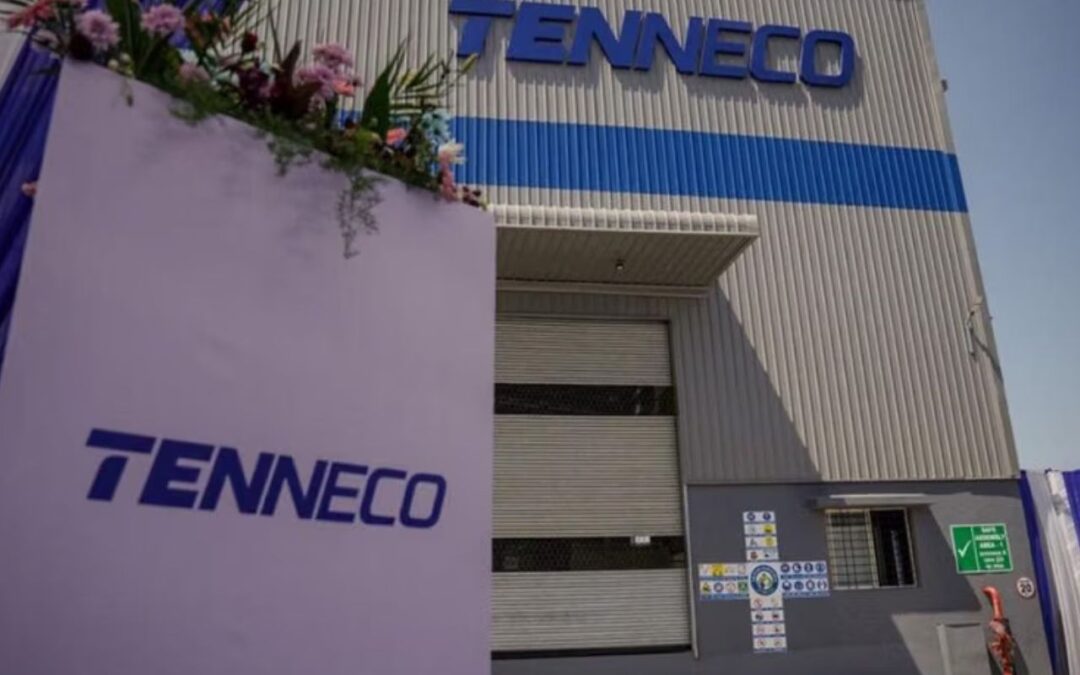
Synopsis: Tenneco Clean Air India’s breakthrough entry into India’s largest passenger vehicle OEM through a gasoline particulate filter programme could unlock a significant growth opportunity. Backed by a Rs 12,400 crore order book, expanding exports, upcoming emission regulations, and technology-led differentiation, the company is positioning itself for sustained long-term growth.
The Indian automotive component industry is witnessing a phase of change due to stringent emission norms, the trend of premiumisation, export possibilities, and changing automobile technology. In such an environment, Tenneco Clean Air India posted its best-ever results during FY26 by recording its highest-ever revenue, profitability, returns, and orders received.

While Tenneco Clean Air India has established itself in the Clean Air, Powertrain Solutions, and Advanced Ride Technologies business segments, there was one achievement of the management which had the potential to shape the company’s growth in a way that could not be imagined earlier, viz., entry into the largest Indian passenger vehicle original equipment manufacturer (OEM) via the GPF programme.
With a market cap of Rs 23,200 crore, the shares of Tenneco Clean Air India Ltd are trading at Rs 576 and are trading at a PE of 37 compared to their industry’s PE of 27. The shares have given a return of more than 20% since their listing in November 2025.

A Record Year Demonstrates the Strength of the Operating Model
Tenneco Clean Air India had an outstanding financial year in FY26. The company experienced a 12.3% growth in its value-added revenues to Rs 4,918 crore, with EBITDA rising by 13.5% to Rs 925.5 crore. Margins also recorded an all-time high of 18.8% compared to 14.3% in FY24.
These gains have been attributed to the implementation of the company’s P3 operational model based on people, performance, and pride. Return on capital employed shot up to 94% compared to 57% in FY25. At the same time, the company continued to maintain a zero-debt capital structure along with a negative cash conversion cycle.

Why the Largest PV OEM Was a Missing Piece in the Portfolio
Despite its strong financial performance, management acknowledged that Tenneco’s Clean Air business has historically lacked exposure to India’s largest passenger vehicle OEM.
According to management, this absence effectively prevented the company from participating in a substantial portion of India’s passenger vehicle exhaust and after-treatment market. During the earnings call, management noted that not being present at the country’s leading PV manufacturer limited growth opportunities even as the company maintained strong relationships with other OEMs.
This gap became increasingly significant as the Indian passenger vehicle market expanded and certain OEMs benefited from a favourable product mix and market-share gains.

The Breakthrough GPF Win Changes the Equation
The key turning point occurred when Tenneco succeeded in obtaining a Clean Air programme from a prominent Japanese passenger car OEM in India through their gasoline particulate filter offering. Management highlighted this event as a milestone because it provided them access to a new clean air segment that they had not previously accessed before.
Even more significant than the immediate financial gain was the fact that the OEM enjoyed a strong market presence in India. The expectation is that the breakthrough will pave the way for further interaction with the OEM and potentially other clean air programmes.
How Regulatory Changes Could Expand the Opportunity
Entry by customers around this point in time is aligned with the imminent introduction of more stringent rules on fuel efficiency and emissions. The company’s management indicated that CAFE 3 standards will contribute to the rising adoption of various technologies, including gasoline particulate filters, especially in cases of gasoline direct injection engines.
Though such technologies help to decrease carbon emissions, their application makes the exhaust systems more complex and richer in terms of components per vehicle. From management perspectives, the potential impact of CAFE 3 regulations, in conjunction with future BS7 standards, can generate a new addressable market worth Rs 1,300 crore to Rs 1,400 crore during the next three to five years.
Clean Air Growth Could Accelerate Beyond FY28
While Clean Air and Powertrain Solutions reported growth of 5.5% in FY26, it was suggested by the company’s management that there will be a considerable improvement in growth rates in the coming years when new customer programmes start making contributions.
The management noted that the results of the OEM partnership would become much clearer starting FY28 due to increasing production volumes. The management stressed that joining the supplier panel opens the way for further involvement in vehicle development programmes in the future. Along with growth in exhaust systems’ contents driven by regulations and better export performance, there is much potential for growth.
Exports Are Emerging as Another Powerful Growth Driver
In addition to domestic growth prospects, exports are becoming an increasingly critical part of Tenneco’s growth strategy. While the current exports constitute around 5% to 6% of the total sales of the company, the management pointed out that exports form 14% to 20% of the company’s total bookings.
This is attributed to parity of technology in line with global markets, diversified supply chains not dependent on China, and cost effectiveness of the Indian market. Export booking is happening all over North America, South America, Europe, and Asia. Exports will start growing strongly only in FY27 and FY28 onwards.
Technology Leadership Strengthens Competitive Position
The growth strategy of the firm is also aided by its technology capabilities. With Advanced Ride Technologies, the company pointed to the success of its patented DaVinci DCx suspension technology as a major breakthrough in mechanical suspension technology. This product has already won favour from a leading OEM in India and is currently generating interest among several OEM firms in India, Japan, Korea, and Europe.
As the focus of the article is clean air strategies, the technology advantage that Tenneco is able to achieve through DaVinci DCx helps position the company as a technology leader rather than merely competing on price alone.
A Rs 12,400 Crore Order Book Supports Long-Term Visibility
As Tenneco commences its FY27 journey, it holds a lifetime order book worth Rs 12,400 crore, offering full visibility to its FY28 sales goals and helping the company’s management maintain optimism about the sustainability of the company’s double-digit growth trend.
In order to cater to future demand, the company has planned investments worth approximately Rs 140 crore towards capacity creation in the form of its Clean Air plant in North India and an Advanced Ride Technologies greenfield plant in West India. Such a combination of factors offers solid footing for the company going forward.
Is This the Missing Piece in Tenneco’s Growth Story?
Tenneco Clean Air India has already proven itself to be capable of delivering high levels of profitability, superior returns, and solid cash flows. Nevertheless, from the constant highlighting of the significance of the break-even point at which it made a breakthrough entry into India’s biggest passenger vehicle OEM by the management, it seems like this event could be the start of something much bigger.
As the company enters into what could be considered a high-volume customer relationship at a time when content changes per vehicle are expected and will lead to new opportunities in exhaust aftertreatment, coupled with growing exports, technology-based differentiation, and a pipeline worth Rs 12,400 crore, there seems to be a potential for accessing a bigger addressable market.
Disclaimer: The views and investment tips expressed by investment experts/broking houses/rating agencies on tradebrains.in are their own, and not that of the website or its management. Investing in equities poses a risk of financial losses. Investors must therefore exercise due caution while investing or trading in stocks. Trade Brains Technologies Private Limited or the author are not liable for any losses caused as a result of the decision based on this article. Please consult your investment advisor before investing.



