
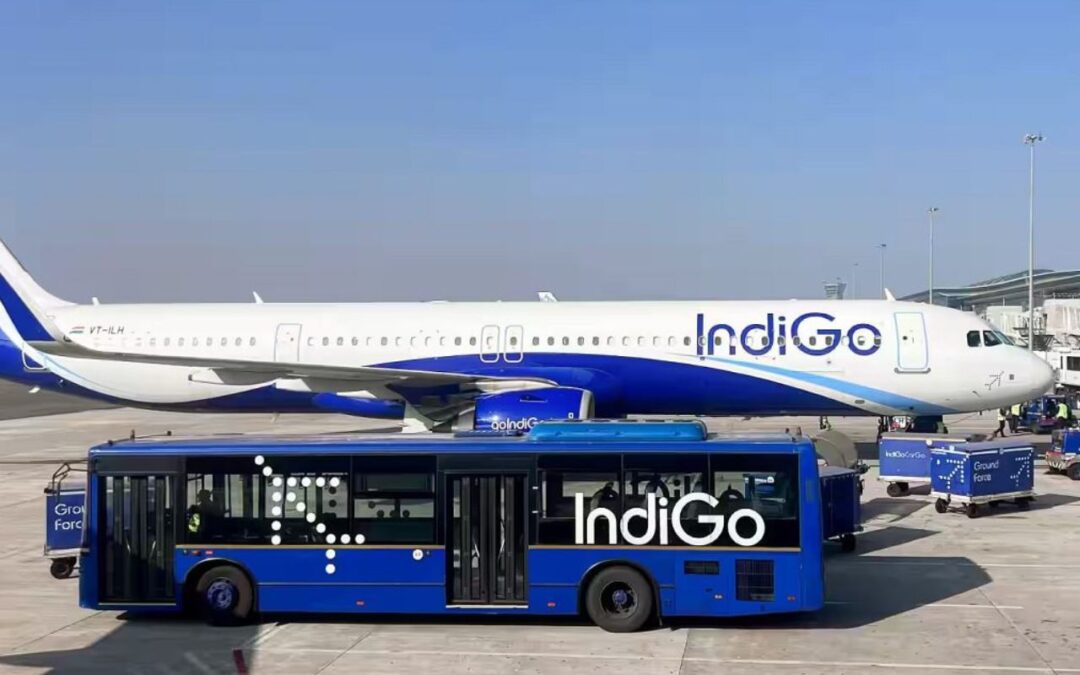
Synopsis: InterGlobe Aviation’s IndiGo has unveiled an ambitious 2030 growth strategy, targeting 200 million passengers annually, a fleet of over 550 aircraft, and expanded international operations. The plan leverages India’s aviation boom, rising travel demand, and premiumization opportunities, though successful execution will depend on fleet expansion, costs, competition, and market conditions.
The shares of a Large-cap company that specialises in domestic and international passenger air transportation are in focus following the outlined ambitious growth roadmap aimed at transforming itself into a major global aviation player by 2030. In this article, let’s see if the growth plan is too ambitious or perfectly timed for the aviation boom.

With a market capitalization of Rs. 1,82,063.48 crores in the day’s trade, the shares of InterGlobe Aviation Ltd rose by 5 percent, reaching a high of Rs. 4,727.40 per share compared to its previous closing price of Rs. 4,501.90 per share.
What Happened
InterGlobe Aviation, engaged in domestic and international passenger air transportation, has outlined an ambitious growth roadmap aimed at transforming itself into a major global aviation player by 2030.

Growth Ambition and Scale Expansion
IndiGo (operated by InterGlobe Aviation Ltd.) aims to transform into a major global aviation player by 2030. The airline is targeting a massive expansion in capacity, reaching about 300 billion available seat kilometres (ASK) annually and carrying around 200 million passengers by the end of the decade.
Fleet and Network Expansion
A key pillar of the 2030 vision is fleet growth. IndiGo plans to scale up to a fleet of over 550 aircraft and operate more than 3,000 daily departures. The airline is also shifting its fleet strategy, increasing the share of owned aircraft to 30–40%, reducing reliance on leases over time.

International Push and Route Strategy
IndiGo is shifting from a predominantly domestic carrier to a more balanced international airline. International operations—especially mid and long-haul routes—are expected to rise to 10–15% of total capacity, up from about 4% today. This means domestic flying will gradually fall to 85–90% of total capacity.
Premiumization and Product Upgrade
The airline is also focusing on higher-value offerings. It plans to expand business-class seating to over 4,300 seats by FY27 and scale its “Stretch” premium product across 105 aircraft. This signals a clear move toward capturing premium travellers while still maintaining its low-cost leadership model.
Is IndiGo’s 2030 Growth Plan Too Ambitious or Perfectly Timed?
IndiGo’s 2030 roadmap reflects one of the most ambitious expansion plans in global aviation. The airline aims to nearly double its scale by targeting around 300 billion available seat kilometres (ASK) and carrying 200 million passengers annually by the end of the decade. Backed by plans to operate more than 550 aircraft and over 3,000 daily departures, IndiGo is positioning itself to capitalise on the rapid growth of air travel demand in India and across international markets.

A major part of this strategy involves diversifying beyond its domestic stronghold. IndiGo plans to significantly increase international operations, particularly on mid- and long-haul routes, while also expanding premium offerings such as business-class seating and its “Stretch” product. By balancing low-cost leadership with premium services and reducing dependence on leased aircraft, the airline is building a stronger and more sustainable business model.
While the targets are aggressive, they appear well-timed given India’s rising middle class, growing international travel demand, and expanding aviation infrastructure. However, execution will be key, as fleet deliveries, competitive pressures, fuel costs, and global economic conditions could influence how smoothly IndiGo achieves its 2030 vision.
Financials & Others
The company’s revenue rose by 1.29 percent from Rs. 22,152 crores in March 2025 to Rs. 22,438 crores in March 2026. Meanwhile, Net profit from Rs. 3,073 crores turned to a loss of Rs. 2,662 crores in the same period.
The company has a Return on Capital Employed (ROCE) of 6.71%, indicating relatively modest efficiency in generating profits from its capital base. However, it has demonstrated strong long-term business growth, with a median sales growth of 23.8% over the last 10 years, suggesting consistent expansion in revenue despite the comparatively low capital returns.
InterGlobe Aviation Limited is the parent company of IndiGo, India’s largest airline by market share. Founded in 2004 and headquartered in Gurugram, the company operates domestic and international passenger air transportation services, along with cargo, ground handling, and related aviation services.
It follows a low-cost carrier business model focused on affordable fares, operational efficiency, and on-time performance. Over the years, it has grown into one of the world’s largest airlines by daily departures and holds a dominant position in the Indian aviation market, serving millions of passengers across a wide network of domestic and international destinations.
Conclusion: IndiGo’s 2030 vision is ambitious but well-aligned with India’s rapidly growing aviation market. With plans to expand its fleet, strengthen international operations, and introduce more premium offerings, the airline is positioning itself to benefit from rising travel demand.
While challenges such as fuel costs, competition, and aircraft delivery delays remain, IndiGo’s strong market position and execution capabilities make its growth targets achievable. If managed effectively, the airline’s expansion could be perfectly timed for the next phase of the aviation boom.
Disclaimer: The views and investment tips expressed by investment experts/broking houses/rating agencies on tradebrains.in are their own, and not that of the website or its management. Investing in equities poses a risk of financial losses. Investors must therefore exercise due caution while investing or trading in stocks. Trade Brains Technologies Private Limited or the author are not liable for any losses caused as a result of the decision based on this article. Please consult your investment advisor before investing.



