
Synopsis: Nestle India shares fell 4% after the Food Safety and Standards Authority of India (FSSAI) issued a notice over a complaint alleging insect larvae in a Maggi packet. FSSAI also reportedly sent notices to KFC, Flipkart India, and Open Secret over hygiene concerns, following social media complaints.
The shares of a Large-cap company, specialised in the food and beverage industry that manufactures, markets, and sells a wide range of products, is in focus in the day’s trade after falling 4 percent due to the FSSAI Notice.

With a market capitalisation of Rs. 2,65,114.29 crores in the day’s trade, the shares of Nestle India Ltd rose by 3.6 percent, reaching a low of Rs. 1,370.00 per share compared to its previous closing price of Rs. 1,421.75 per share.
What Happened
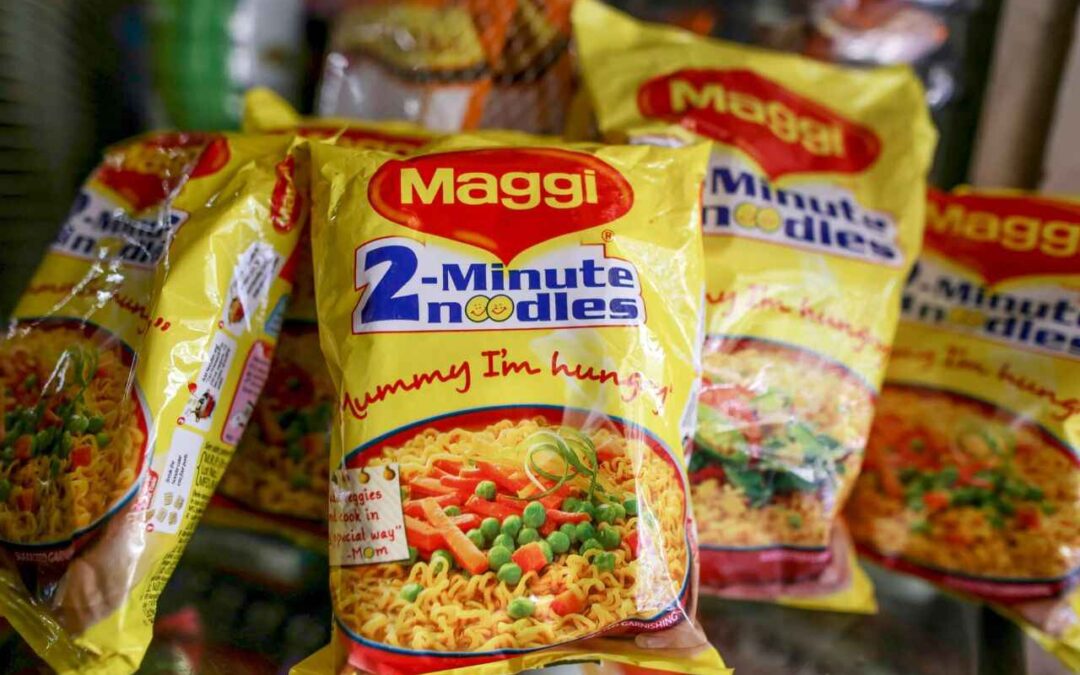
Nestle India Ltd, which manufactures and markets a wide range of food and beverage products, has come under the spotlight after reports emerged that the Food Safety and Standards Authority of India (FSSAI) issued a notice to the company regarding a complaint alleging the presence of insect larvae in a Maggi packet.

According to ANI, FSSAI has also sent notices to KFC over an alleged hygiene issue and to Flipkart India and Open Secret following complaints of insects being found in a dates product. The regulator has taken cognisance of concerns raised on social media, while further clarification from the companies and FSSAI is awaited.
Maggi Controversy Returns?
Previously, the Maggi controversy first erupted in 2015 when tests conducted by the Food Safety and Standards Authority of India (FSSAI) and other state authorities reportedly found high levels of lead and MSG in some Maggi noodle packets. This led to a nationwide ban on the product, widespread media coverage, and massive public concern over food safety. Nestle India faced recalls, legal battles, and a significant hit to its brand reputation.

Nestle consistently maintained that Maggi noodles were safe and complied with food regulations. After months of testing and legal proceedings, the ban was lifted in late 2015 when courts cleared the product, and lab results confirmed it was safe for consumption.
The controversy had a lasting impact on consumer trust and food safety awareness in India, prompting stricter regulatory checks and greater scrutiny of packaged foods across the country. It also became a cautionary tale for multinational companies operating in India.
Financials & Others
The company’s revenue rose by 22.60 percent from Rs. 5,504 crores in March 2025 to Rs. 6,748 crores in March 2026. Meanwhile, Net rose from Rs. 885 crores to Rs. 1,114 crores in the same period.

The company demonstrates strong financial health, highlighted by its impressive return on equity (ROE) of 73.2% and a three-year average ROE of 92.3%. Its return on capital employed (ROCE) stands at 84.1%, indicating efficient utilisation of its capital to generate profits. With a minimal debt-to-equity ratio of 0.08, the company is almost debt-free, which significantly reduces financial risk and enhances its stability.
In addition to robust profitability, the company has consistently rewarded shareholders with a healthy dividend payout of 74.3%. This demonstrates a strong commitment to returning value to investors while maintaining a sustainable financial structure.
Nestlé India Ltd is a leading food and beverage company in India, and a subsidiary of the Swiss multinational Nestlé S.A. Established in 1961, it has become a household name with a diverse portfolio of products, including dairy, beverages, infant nutrition, confectionery, and culinary items. Popular brands under Nestlé India include Maggi, Nescafé, KitKat, and Milo, reflecting the company’s strong focus on quality, nutrition, and consumer trust.
The company operates a robust network of manufacturing facilities and a widespread distribution system across India. Nestlé India emphasises sustainability, health, and wellness, integrating responsible sourcing, environmental initiatives, and community development into its operations. Over the years, it has consistently contributed to India’s food industry growth while adapting global best practices to local consumer needs.
Disclaimer: The views and investment tips expressed by investment experts/broking houses/rating agencies on tradebrains.in are their own, and not that of the website or its management. Investing in equities poses a risk of financial losses. Investors must therefore exercise due caution while investing or trading in stocks. Trade Brains Technologies Private Limited or the author are not liable for any losses caused as a result of the decision based on this article. Please consult your investment advisor before investing.



