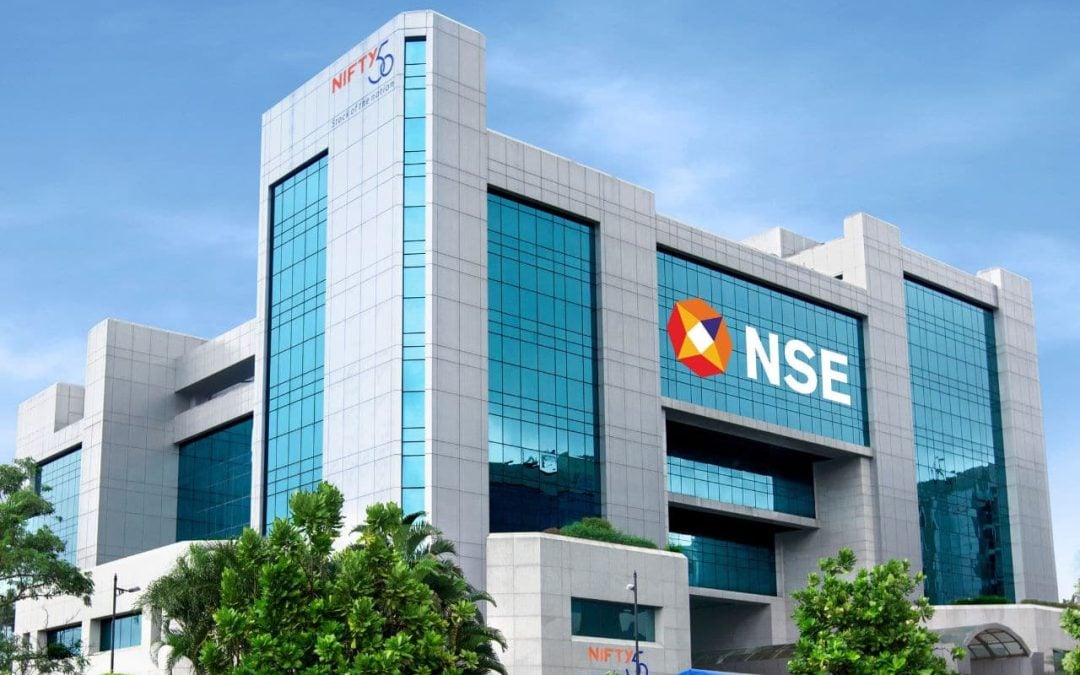
Synopsis: NSE’s long-awaited IPO is gaining momentum, with major institutional shareholders preparing stake sales through an Offer for Sale, potentially making it one of India’s largest public market listings.
The National Stock Exchange (NSE) is India’s leading stock exchange and one of the world’s largest trading platforms by trading volumes. Over the years, it has played a crucial role in modernizing India’s capital markets through technology-driven trading and greater market accessibility.
As the exchange moves closer to its long-awaited public listing, recent developments surrounding its IPO have drawn significant attention from investors and market participants, making it one of the most closely watched events in the Indian financial markets.
NSE IPO Could See OFS Worth Up to ₹23,000 Crore
The National Stock Exchange’s long-awaited IPO is expected to be largely driven by an Offer for Sale (OFS), with the total size estimated between ₹20,000 crore and ₹23,000 crore. The exchange is expected to dilute around 4-5% of its equity, making it one of the biggest public market transactions in India. The proposed sale is aimed at providing liquidity to existing shareholders rather than raising fresh capital for the company.

PSU Shareholders May Contribute Nearly ₹15,500 Crore
Public sector institutions are expected to account for a major portion of the OFS. According to estimates, PSU shareholders could collectively sell shares worth around ₹15,500 crore, representing nearly two-thirds of the total offer size. This makes government-linked institutions the biggest beneficiaries of the proposed listing.
LIC Expected to Be the Largest Seller
Among all shareholders, LIC is expected to emerge as the largest seller in the IPO. The insurer may offload shares worth approximately ₹5,300 crore, making it the single biggest contributor to the OFS. LIC currently owns a significant stake in NSE, and the transaction could help unlock substantial value from its long-held investment.

SBI Group Likely to Sell Shares Worth ₹3,700 Crore
The SBI Group, including its various subsidiaries and investment arms, is expected to collectively sell shares worth around ₹3,700 crore through the IPO. Alongside LIC, SBI’s participation highlights the extent of institutional interest in monetising investments accumulated over the years.
Global and Domestic Investors Set to Participate
Apart from PSU shareholders, several prominent institutional investors are also expected to participate in the sale. These include Temasek Holdings, GIC, and The New India Assurance Company. Their participation could help push the overall OFS size closer to the upper end of the ₹20,000-23,000 crore range, reflecting the broad shareholder base of the exchange.
One of India’s Most Anticipated Listings
The NSE IPO has been awaited for years and is viewed as a landmark event for India’s capital markets. As one of the world’s largest stock exchanges by trading volumes, NSE occupies a critical position in the country’s financial infrastructure. A successful listing would not only provide liquidity to shareholders but also bring greater public participation and transparency to one of India’s most influential market institutions.

Conclusion
The proposed NSE IPO is shaping up to be a landmark market event, with an estimated OFS size of up to Rs. 23,000 crore and participation from major shareholders including LIC, SBI, Temasek, GIC, and New India Assurance. If executed as expected, the listing could become one of India’s largest IPO transactions and represent a significant milestone in the evolution of the country’s capital markets.
Disclaimer: The views and investment tips expressed by investment experts/broking houses/rating agencies on tradebrains.in are their own, and not that of the website or its management. Investing in equities poses a risk of financial losses. Investors must therefore exercise due caution while investing or trading in stocks. Trade Brains Technologies Private Limited or the author are not liable for any losses caused as a result of the decision based on this article. Please consult your investment advisor before investing.