
Synopsis: PDS has crossed $2.2 billion in GMV and $1.5 billion in revenue in FY26, serving 300+ brands across 22 countries through a network of 40+ specialized business verticals and 100+ offices. With management targeting $5 billion GMV and 5% PAT within five years, the company is betting on a services-led, asset-light model to capture structuring tailwinds in global fashion sourcing.
The global fashion supply chain is being redrawn. Geopolitical volatility, cost pressures, and shrinking order cycles are pushing global retailers to consolidate vendors, diversify sourcing geographies, and outsource more of their supply-chain complexity to specialized partners. Quietly, one company has been positioning itself to capture the bulk of that shift.
A Platform Built at Scale
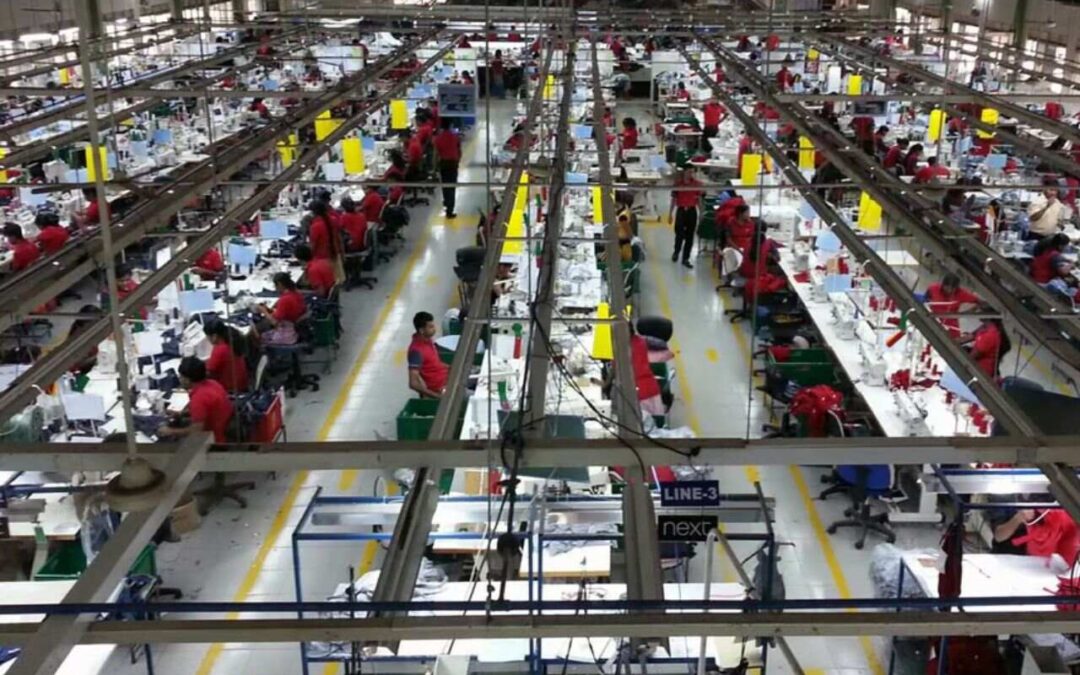
PDS is no longer a conventional apparel sourcing company. The group generated over $2.2 billion in GMV and more than $1.5 billion in revenue during FY26, operating across 22 countries through a network exceeding 100 offices. It handles approximately 1.3 million pieces per day, serves more than 300 brands and retailers globally, and employs over 12,000 people spanning sourcing, manufacturing, and supply-chain functions.
The Growth Strategy of 5-5-5. The ambition is considerably larger: management has set a formal target of $5 billion GMV, with a PAT margin of 5%, within the next five years roughly 130% the current GMV run-rate.

Services at the Core, Product at the Heart
The architectural shift underpinning that growth target is a deliberate pivot toward services. Management describes PDS as a “services business with product at heart” a framing that signals where revenue mix is heading.
The company now operates more than 40 specialized business verticals, each led by experienced industry professionals with ownership incentives. These verticals offer design-led sourcing, sourcing-as-a-service, category management, manufacturing solutions, and brand management a suite broad enough to engage customers at multiple points across the supply-chain stack. Deeper engagement means stronger switching costs and a larger share of customer wallet.

The Talent Play
One of the less obvious competitive levers at PDS is its recruitment engine. In recent years, the company has attracted senior executives with prior leadership experience at GAP, Kate Spade, Sainsbury’s, Dunelm, Primark, ASDA, Hanes Brands, Target Australia, PVH, and C&A. Executives at that level don’t join companies without stable customer pipelines and credible growth roadmaps their presence both reflects and reinforces the platform’s positioning with global retailers.
Incubation Economics: Proof of Concept
PDS runs a structured incubation model for new business verticals. The FY21–FY23 cohort provides the clearest evidence of whether it works: an $18 crore loss-funding outlay through the incubation phase has since generated approximately $22 crore in cumulative profits through FY26. That’s a net positive return on what is, in effect, internal venture capital and it validates the model’s ability to build, scale, and monetize new verticals over a three-to-five-year horizon.
Sourcing-as-a-Service: The Next Growth Engine
The most immediate growth lever being actioned is sourcing-as-a-service. Recent customer wins across North America and Europe represent an estimated $400 million in potential GMV opportunity, with approximately $7–8 million in potential net profit attached.

The client mix gives a sense of the market segments PDS is targeting: a major US value retailer, a European hypermarket group, and a UK sports and lifestyle brand. These are large, structurally cost-conscious accounts that are actively consolidating their vendor relationships and outsourcing sourcing complexity. Management believes such engagements can be executed with minimal working capital requirements, making them particularly attractive from a returns perspective.
Capital Efficiency as a Structural Advantage
The PDS model is deliberately asset-light. Rather than acquiring manufacturing capacity or distribution infrastructure outright, the company scales through its ecosystem of specialized business verticals sharing infrastructure, compliance systems, customer relationships, and financial resources across units. This structure keeps capital employed lean while allowing revenue and profit to compound through organic expansion.
Risk Architecture
The business carries meaningful cross-border exposure, which management addresses through several overlapping safeguards: limited inventory risk, diversified sourcing across geographies, credit insurance coverage, natural currency hedging, and diversification across customer accounts. These aren’t decorative disclosures in a business operating across 22 countries with over 300 client relationships, systematic risk controls are operationally material.
The Question for Investors
PDS enters FY27 with a credible operational foundation, a validated incubation model, and tangible pipeline visibility in sourcing-as-a-service. The $5 billion GMV target requires sustained execution across new customer wins, vertical expansion, and margin discipline simultaneously. Can the platform model and the talent assembled to run it deliver at that scale?
Disclaimer: The views and investment tips expressed by investment experts/broking houses/rating agencies on tradebrains.in are their own, and not that of the website or its management. Investing in equities poses a risk of financial losses. Investors must therefore exercise due caution while investing or trading in stocks. Trade Brains Technologies Private Limited or the author are not liable for any losses caused as a result of the decision based on this article. Please consult your investment advisor before investing.