Synopsis: As Indian Railways accelerates its Kavach train-protection rollout, a clutch of listed suppliers and ancillary players have posted sharp revenue and profit growth on the back of swelling order books. From pure-play signalling firms to a Navratna telecom PSU and a freight logistics operator, here are five names drawing investor attention, along with where each currently stands on valuation.
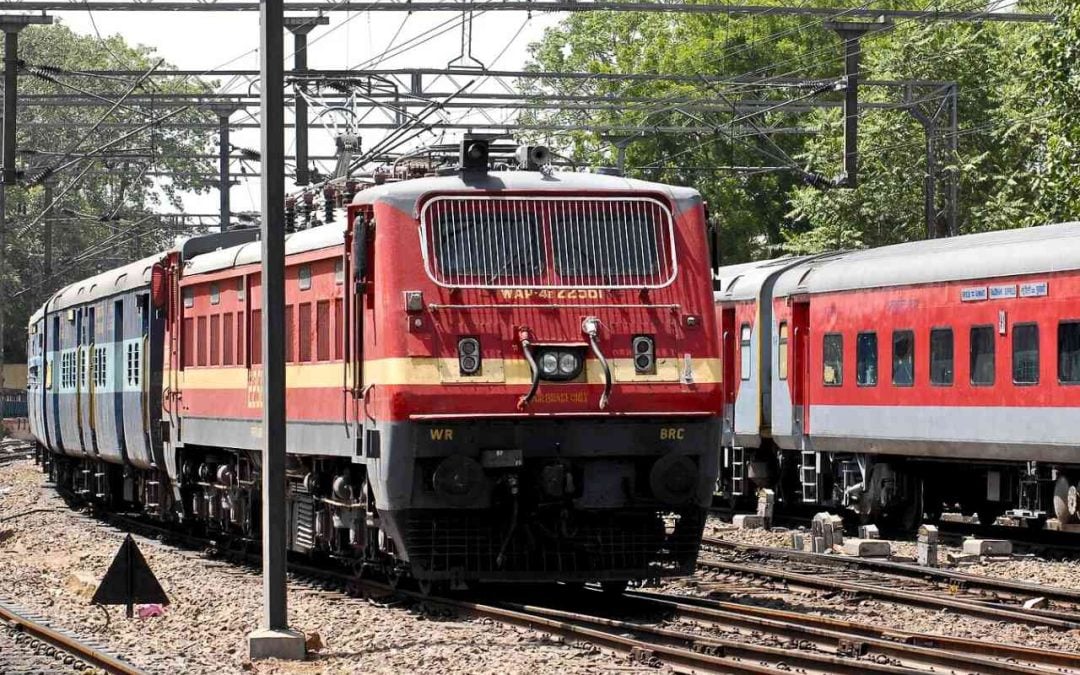
India’s railway safety push has moved from policy intent to balance-sheet impact over the past year, as the Kavach automatic train protection system works its way across an expanding number of routes and locomotives. The rollout has turned into a meaningful revenue driver for a small set of listed suppliers, electronics manufacturers, and infrastructure players who either build Kavach hardware directly or stand to gain from the broader railway modernisation drive around it. Several of these stocks have posted outsized revenue and profit growth in FY26, even as their share prices have moved in step with order announcements rather than through smooth, steady re-ratings.

1. Kernex Microsystems
Kernex Microsystems has emerged as one of the more direct beneficiaries of the Kavach rollout, with a niche presence in train collision avoidance and railway signalling systems that has translated into a string of recent order wins, including a Rs. 475.21 crore contract from CLW for Kavach loco equipment. The company’s FY25 numbers capture how early this monetisation still is: sales rose by around 868 percent year-on-year, while profit grew by roughly 289 percent, a pace typical of a small supplier scaling up from a low base as railway safety orders begin landing.
With a market capitalisation of around Rs. 3,436.10 crore, the shares of Kernex Microsystems closed on Thursday at Rs. 2,045 apiece, up 0.44 percent from a previous closing price of around Rs. 2,045, and the stock works out to a P/E of close to 38.77 times.. That multiple has expanded sharply alongside the swing from years of thin or negative margins to a near 35 percent operating margin in FY26. The company’s debtor days remain elevated at over 268 days, a reminder that order wins and cash realisation do not always move together for small-cap railway suppliers riding a fast-growing but still-young theme.

2. HBL Engineering
HBL Engineering is one of the largest suppliers of Kavach equipment, electronic interlocking systems, and railway safety solutions in the country, making it a direct play on Indian Railways’ modernisation drive. In FY26, the company reported revenue of about Rs. 3,303 crore and PAT of roughly Rs. 814 crore, with net margins near 24.64 percent, alongside a sizable Kavach-related order pipeline that includes a recent Rs. 179.79 crore on-board equipment contract from BLW.
With a market capitalisation of close to Rs. 22,893.53 crore, the shares of HBL Engineering closed on Thursday at Rs. 825.90 apiece, up 0.34 percent from a previous closing price of roughly Rs. 823.10, putting the stock on a P/E of around 23.99 times

That valuation sits well below Kernex’s growth-stock multiple, reflecting HBL’s position as an established, diversified manufacturer rather than a pure Kavach play; railway signalling is one of four business segments alongside industrial batteries, defence and aviation batteries, and electric drive trains. A near debt-free balance sheet and a five-year profit CAGR above 118 percent give the current multiple some support, even after the stock has rallied well off its 52-week low near Rs. 551.60.
3. Quadrant Future Tek
Quadrant Future Tek is developing next-generation train control and signalling systems under the Kavach ecosystem, positioning it to benefit from large-scale railway safety investments. The company reported FY26 revenue of around Rs. 153 crore and PAT of nearly -Rs. 43 crore, showing operating compression (-26 percent) in an emerging technology segment; more recently, it secured regulatory approval for passenger trials of KAVACH 4.0.
With a market capitalization of about Rs. 1,79.40 crore, the shares of Quadrant Future Tek closed on Thursday near Rs. 448.35 apiece. Unlike the other names on this list, the stock’s trailing P/E is not meaningful at present: the company has slipped into losses on a trailing twelve-month basis even though FY24 itself was profitable, so the negative multiple reflects recent quarterly volatility rather than a structural problem with the underlying signalling business. The gap between a still-small revenue base and a market valuation north of Rs. 1,500 crore suggests investors are betting on the ramp-up of its Kavach facilities in Hyderabad and Bengaluru more than on current earnings.

4. RailTel Corporation of India
RailTel Corporation of India provides telecom, networking, and digital infrastructure for Indian Railways and is increasingly participating in railway modernisation, signalling, and Kavach-related projects. The company reported FY26 revenue of approximately Rs. 4,277 crore and PAT of around Rs. 346 crore, while maintaining an order book exceeding Rs. 10,000 crore, of which about Rs. 1,000 crore is tied to Kavach-related work.
With a market capitalisation of roughly Rs. 10,048.58 crore, the shares of RailTel Corporation of India closed on Thursday around Rs. 313.10 apiece, down 1.35 percent from a previous closing price of Rs. 317.40, and the stock sits on a P/E of about 29.41 times. That places RailTel’s valuation between HBL’s and Quadrant’s on a relative basis, even though its share price has fallen more than 27 percent over the past year from levels above Rs. 443.15. Promoter holding through the Ministry of Railways stands at nearly 73 percent, leaving a comparatively small free float that can amplify swings around order-related news, and a reminder that Kavach contracts make up only a slice of RailTel’s overall pipeline.
Disclaimer: The views and investment tips expressed by investment experts/broking houses/rating agencies on tradebrains.in are their own, and not that of the website or its management. Investing in equities poses a risk of financial losses. Investors must therefore exercise due caution while investing or trading in stocks. Trade Brains Technologies Private Limited or the author are not liable for any losses caused as a result of the decision based on this article. Please consult your investment advisor before investing.