
Synopsis: Oriana Power missed its FY26 expectations due to commodity inflation, currency fluctuations, project delays, and the deferment of the Actis transaction. However, a ₹7,000 crore order book, growing BESS portfolio, green fuel opportunities, and a strong execution pipeline provide visibility for FY27-FY28 and could help revive investor confidence.
India’s renewable energy sector is undergoing a major transformation as solar power, battery storage, and green fuels become increasingly interconnected. Amid this shift, Oriana Power finds itself at an important juncture. While FY26 fell short of management’s initial expectations, the company continues to report strong growth and maintain a healthy project pipeline.

With an unexecuted order book of nearly ₹7,000 crore, expanding battery energy storage operations, a large solar project portfolio, and emerging green hydrogen opportunities, investors are closely watching its next phase of growth.
With a market cap of Rs 3,200 crore, the shares of Oriana Power Ltd are trading at Rs 1,595 and are trading at a PE of 13 compared to their industry’s PE of 31. The shares have given a return of more than 440% since their listing in August 2023.

FY26 Misses the Mark
Oriana Power started FY26 with high hopes, but the year became a year of a mix of successes and disappointments. The management openly admitted that the firm failed to meet some of its revenue and profitability targets. But it clarified that the failure was not the result of low demand or any weakening in the fundamental performance of its business.
Rather, it was because of a number of external disruptions that caused delays and impacted profitability. The cost of commodity inputs such as silver, copper, steel, aluminium, polysilicon, and solar glass increased sharply owing to their inflation. There was a sharp increase in crude oil prices, along with currency depreciation.

Meanwhile, geopolitical tensions, disruption in the supply chain, grid infrastructure issues, change in policy, and delays caused by elections in many states disrupted project execution. Nonetheless, Oriana Power managed to earn consolidated revenue of over ₹1,814 crore, EBITDA of about Rs 425 crore, and profit after tax of about ₹250 crore, thus remaining profitable and growing year on year.
What Went Wrong?
During the entire dialogue, the issue that kept repeating again and again was the fact that most of the issues the company had encountered during FY26 had to do with the timing and not the structural issues. According to the company, demand for their products and services within renewables, batteries, and green fuels remained strong.
Customers have continued to show keen interest, and the pipeline of opportunities is healthy. In fact, according to the company, project delays due to changes in management, approval processes, and regulatory developments affected timing and not the business potential.

It was reiterated that even though FY26 results had not met the expectations of the company, the whole year was used by the company to work on future potential in terms of revenue visibility, capability development, project pipeline development, and growth over the coming ten years.
₹7,000 Crore Growth Cushion
The first point of interest from the meeting was the size of the current order book of Oriana Power. The management revealed that the firm had an order book which was not executed and stood at around ₹6,800 crore to ₹7,000 crore.
The said order book gives a lot of visibility to the firm in FY27 and FY28 and serves as the foundation of the management’s confidence about growth. What the company stated was that while investors would always look for visibility in the long term, the projects under the renewable energy sector have tendering and execution cycles of about twelve to eighteen months.
It was, therefore, unrealistic to expect visibility for FY29 or FY30 orders at the moment. Rather, the firm made clear that future opportunities would arise as there would be tenders announced and won in the coming years.
It was pointed out that the firm took part in tenders totalling almost ₹12,000 crore in one month alone. Having a decent order book to execute, management believes that the firm is sufficiently prepared to achieve its growth objectives over the next two years.
Playing It Safe on New Orders
There were queries from investors as to why Oriana had been losing many contracts for renewable energy and battery storage lately. The management clarified that the company has adopted a conservative bidding approach.
According to the management team, there have been substantial spikes in battery costs, lithium prices, and some commodity prices. Consequently, there has been uncertainty surrounding project economics.
As per the management, Oriana had won some previous battery energy storage projects when tariffs at which such projects were contracted were viable; however, recently, there has been much more aggressive bidding in the market. The management expressed worries that many of those projects won recently might face trouble in realising acceptable returns at current cost structures.
Instead of going after growth at all costs, Oriana decided to concentrate on profit-making and capital preservation. It said that, considering an order book worth ₹7,000 crore already existing, there was no need to go after every bid opportunity aggressively. The management felt that safeguarding shareholders’ value was a priority rather than bagging low-margin projects, which may pose execution issues later.
BESS Takes Center Stage
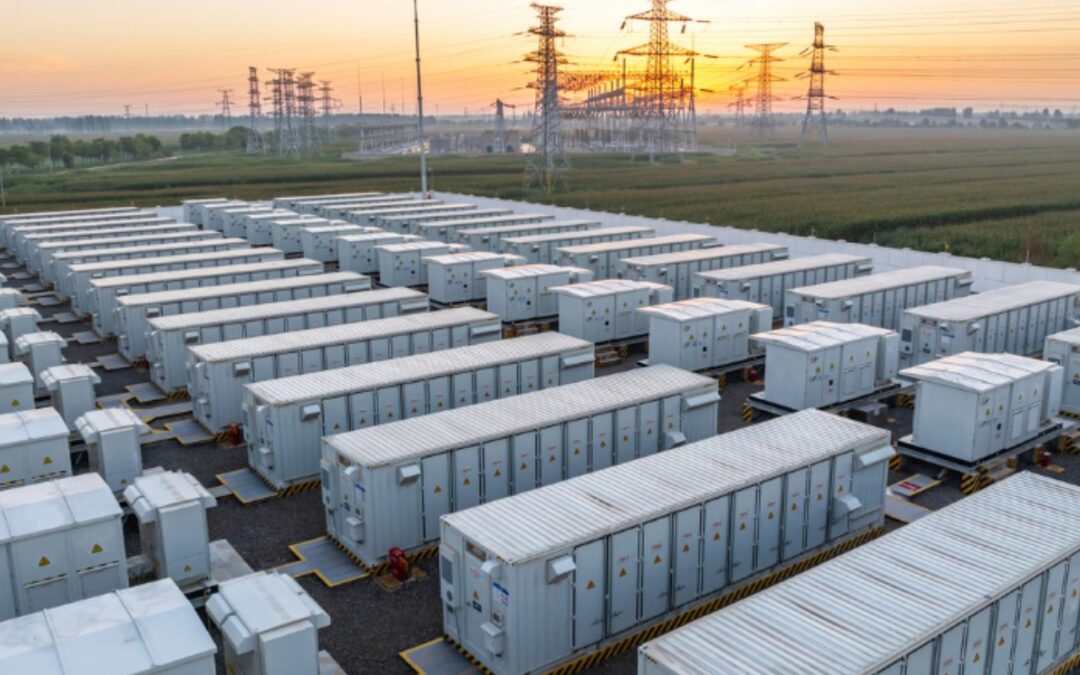
Although solar EPC continues to be the mainstay of Oriana, BESS has quickly emerged as one of the most important growth drivers for the company. As per management, the company has in excess of 1,500 MWh of BESS projects in execution as well as in excess of 3,000 MWh of BESS projects in the pipeline.
Management is of the view that the growing adoption of renewable energy in India will render storage facilities indispensable due to grid constraints. The company stressed that BESS was no longer just a future growth story but something very much in existence at present.
While there are a few players in the industry which have issued storage orders but have not executed any BESS projects to date, Oriana pointed out that it had already commissioned BESS projects on the ground. Management sees execution capacity as a key differentiator in the increasingly crowded environment. Going forward, BESS is likely to contribute around 40% of revenue in FY27 while rising to about 60% in FY28.
Solar Remains the Backbone
While battery storage is becoming increasingly important, solar EPC remains an integral part of the growth story at Oriana. The company has commissioned solar projects of more than 835 MWp and has over 700 MWp in the pipeline right now. Moreover, its project pipeline is worth over 2.5 GWp.
One of the most notable accomplishments of FY26 includes securing one of the largest floating solar plants in the world at Maithon Dam in Jharkhand. Having won the project with an order value of about ₹1,200 crore, the company showcased its capability to execute technically challenging renewable energy infrastructure projects.
Apart from this, the company has grown its footprint in interstate transmission system-connected projects and built up a land bank of about 4,800 acres. The management considers land holdings and connectivity infrastructure to be a strategic asset to develop projects and improve execution flexibility in the future.
Actis Deal in Focus
Another important point of discussion related to the delayed Actis transaction. In brief, it entails the monetisation of about 238 MWp of operating solar generation capacity while establishing a larger platform for renewable energy projects.
The reason for the delay was attributed by management to the changes in market dynamics and the growing prominence of battery storage technology in future renewable energy projects.
In more detail, management noted that as the storage components become more prevalent in future renewable energy projects, additional alignment is needed with respect to platform structure, asset mix, and value creation.
While management emphasized that the delay was mainly due to timing rather than the nature of the transaction itself, the strategic logic stays unaltered. Management believes that this partnership could be an important step towards capital mobilisation, strengthening of balance sheet position and growth acceleration.
While the connectivity, land and development infrastructure are already established for a larger platform of one-gigawatt capacity, the monetisation of the first 238 MWp portfolio is expected in fiscal year 2027, with other capacities potentially following thereafter.
The Green Hydrogen Opportunity
Apart from solar and storage, Oriana is strategically positioning itself in the green fuels ecosystem. In FY26, the company signed a 10-year agreement for green ammonia purchases, according to which it would be supplying 60 KTPA of green ammonia annually. As per management, the project has an estimated value of about ₹3,000 crore and would be catering to a fertiliser industry client.
The company has already found the land, undertaken development work, conducted a pre-FEED study, and entered into discussions with the suppliers. Several other green hydrogen, green ammonia, and green fuel projects are under evaluation in the states of Uttar Pradesh, Madhya Pradesh, Rajasthan, Tamil Nadu, Andhra Pradesh, and Maharashtra.
According to management, the consumption segment of renewables, consisting of green fuels and data centres, could turn out to be bigger than the generation and storage business in the future.
Revenue contribution from green hydrogen would not happen in FY27, while management believes it would start making a significant contribution from FY28 onwards. Green fuels would constitute approximately 10% of the revenue by FY28 and then grow further.
Can the Narrative Turn?
For the investor community, the big question is whether Oriana Power will be able to turn the page of its disappointing performance against certain FY26 expectations and regain faith in the growth story.
The management is confident of being able to do so. Today, the company boasts of having a sizeable order book, an increasing number of battery storage projects, a large pipeline of solar development, asset monetisation plans, and even green fuels.
Going forward, management has guided for conservative growth of around 40-50% CAGR in the current environment while pointing out that if external uncertainty subsides, growth could very well be higher than that.
In the case of Oriana, instead of going after volume via aggressive bids, the focus is on prudent capital allocation and execution. If the company is able to execute on its ₹7,000 crore order book, executes on its battery storage projects, monetises the Actis deal, and makes headway in green fuels, then gradually discussions around Oriana may shift away from the FY26 expectation miss towards the big opportunity which the management sees for itself.
Disclaimer: The views and investment tips expressed by investment experts/broking houses/rating agencies on tradebrains.in are their own, and not that of the website or its management. Investing in equities poses a risk of financial losses. Investors must therefore exercise due caution while investing or trading in stocks. Trade Brains Technologies Private Limited or the author are not liable for any losses caused as a result of the decision based on this article. Please consult your investment advisor before investing.