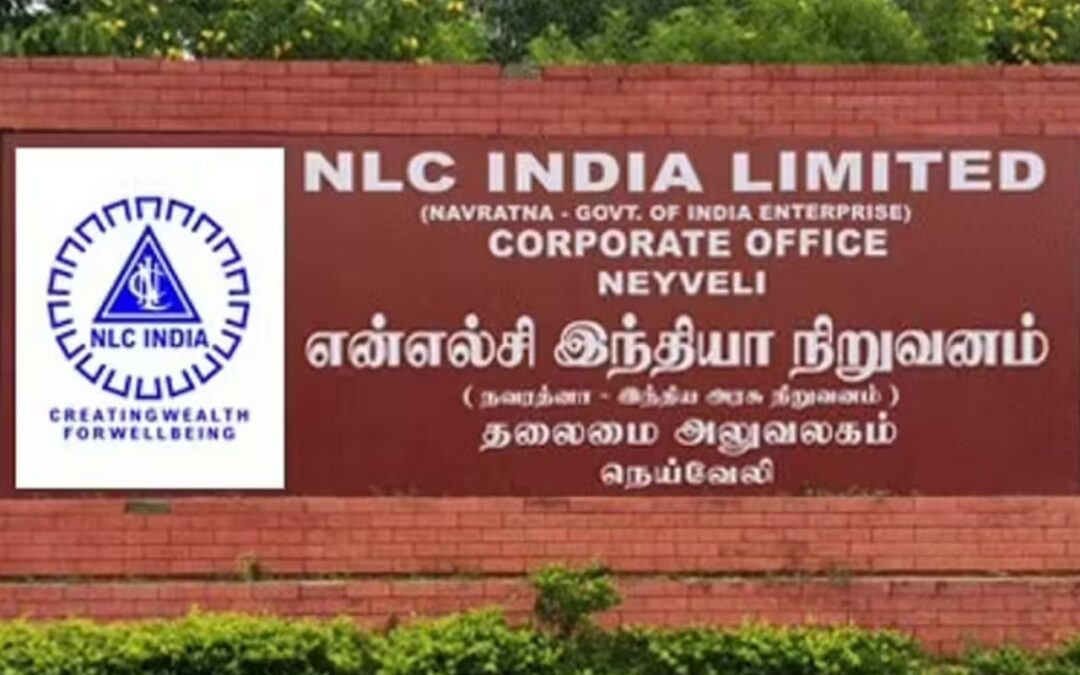
Synopsis: NLC India Renewables Limited (NIRL), the wholly owned renewable energy subsidiary of NLC India Limited, has entered into a Joint Venture Agreement (JVA) with Odisha Renewable Energy Development Agency (OREDA) for developing 1,000 MW green energy projects in the first phase across Odisha. The partnership will meaningfully grow NLC India’s renewable energy portfolio and bolster its long-term clean energy strategy.
The implementation of the projects will be subject to techno-commercial feasibility studies and the necessary approvals from the respective boards, the government, the Ministry of Coal, and other regulatory authorities.

NLC India Renewables Limited is currently trading at Rs 319.65. The stock opened at a day high of Rs 327, and a day’s low so far is Rs 319.05. The current market capitalisation of the company is Rs 44,421 crore, with a price-to-earnings ratio of 12.7 times, which is much lower than the peer median of 24.53 times.
Agreement
The first phase of this joint venture is to set up, operate and maintain a huge 1,000 MW capacity of green energy power plants spread across the state of Odisha. The agreement is strategically put together to encompass forward and backward integration in addition to just making power, allowing the entities to build out other clean energy assets, ancillary activities and emerging low-carbon technologies

The partnership enhances NLC India’s stand in one of the fastest-growing renewable energy markets in India and increases its pipeline of utility-scale clean energy projects.
The collaboration is structured to support a range of renewable technologies, including solar, wind, hybrid renewable projects, Battery Energy Storage Systems (BESS), pumped hydro storage, green hydrogen and future clean energy technologies.

This strategy is further bolstered by the partnership in Odisha, which provides a platform for large-scale deployment of renewable energy by working with a state government agency.
The company is securing a huge 1,000 MW state-supported project pipeline, which is effectively reducing its regulatory carbon exposure, creating stable future revenue streams and capturing the long-term economic upsides of India’s green energy transition.
Financials
NLC India Renewables Limited reported revenue from operations of Rs. 5,042 crore in Q4 FY26, compared to Rs. 4,443 crore in Q3 FY26 and Rs. 3,836 crore in Q4 FY25. This reflects an increase of 13.48 percent quarter-on-quarter and a robust growth of 31.43 percent year-on-year.

Net profit for Q4 FY26 increased to Rs. 1,481 crore, compared to Rs. 724 crore in Q3 FY26 and an increase from Rs. 468 crore in Q4 FY25. This represents a substantial increase of 104.55 percent quarter-on-quarter and nearly 216.45 percent upside year-on-year. Earnings per share (EPS) increased to Rs. 4.8 from Rs. 10.05 in the previous quarter. In terms of return ratios, the company’s ROCE and ROE stand at 10.4 percent and 17.5 per cent, respectively, and its debt-to-equity ratio is at 1.3 times.
Bottom line
The proposed 1,000 MW renewable energy joint venture significantly strengthens NLC India’s clean energy pipeline and reinforces its strategy of expanding beyond conventional power generation into diversified renewable energy technologies through partnerships with state agencies.
NLC India Limited is a Navratna Central Public Sector Enterprise under Ministry of Coal, engaged in lignite mining and power generation, with a growing renewable energy business. Through its subsidiary NLC India Renewables Limited, the company is developing utility scale solar, wind, energy storage and green hydrogen projects to help India transition to clean energy.
Disclaimer: The views and investment tips expressed by investment experts/broking houses/rating agencies on tradebrains.in are their own, and not that of the website or its management. Investing in equities poses a risk of financial losses. Investors must therefore exercise due caution while investing or trading in stocks. Trade Brains Technologies Private Limited or the author are not liable for any losses caused as a result of the decision based on this article. Please consult your investment advisor before investing.