Synopsis: Five listed Indian companies operating across depository services, credit ratings, industrial materials, banking software, and cash logistics have built businesses where customer relationships span decades, switching costs are prohibitively high, and retention is essentially baked into the structure of how their industries work.
In most businesses, winning a customer is only half the battle. Keeping them is the other half, and often the harder one. But a handful of companies operate in spaces where the second half barely feels like a battle at all. Their customers don’t leave not because of aggressive retention strategies or loyalty programs, but because the cost, complexity, or regulatory friction of switching is so high that staying is simply the rational choice. These are businesses built on structural stickiness, and they tend to generate compounding value over very long cycles.`

1. CDSL
Central Depository Services Limited is one of the two depositories in India which maintains electronic records of securities on behalf of millions of investors across the country. All demat accounts in India are with either CDSL or NSDL and the simple process of shifting an account from one depository to another is an exercise that most investors will never voluntarily undertake. It’s a pain for retail investors. It is even more so for institutional participants.
The stickiness at the institutional level is what makes CDSL’s economics particularly durable. Brokers, banks, mutual funds, and clearing corporations integrate deeply into the depository’s systems and these integrations don’t get undone lightly. As India’s financial markets have expanded rapidly, with demat accounts growing from under 9 crore in FY22 to Staggering nearly 23 crores today, CDSL has benefited from a powerful network effect: the more participants connect to its platform, the more valuable and entrenched the platform becomes for every existing participant.

2. CRISIL
CRISIL is India’s largest credit rating agency and a subsidiary of S&P Global, providing ratings, research, and risk analytics to banks, non-banking financial companies, corporates, and regulators. Every time a company wants to raise debt whether through bonds, commercial paper, or structured instruments it needs a rating. And in most cases, that rating relationship stays with the same agency across multiple funding cycles, because credibility, track record, and regulatory acceptance do not transfer with a rating switch.
The barriers to displacing CRISIL go beyond habit. Lenders and regulators are familiar with CRISIL’s methodology, banks build internal frameworks around its ratings, and corporates value the signalling effect that comes with an established agency. This creates a self-reinforcing dynamic where CRISIL’s existing relationships make its ratings more trusted, which makes new borrowers more likely to approach CRISIL, which deepens the network further. Beyond ratings, CRISIL’s research and analytics business serves financial institutions with proprietary data that becomes embedded into their internal workflows creating another layer of retention that has little to do with price.

3. 3M India
3M India is the listed Indian subsidiary of the American multinational 3M Company, supplying a wide range of industrial consumables, adhesives, abrasives, safety products, and specialty materials to manufacturers, healthcare providers, and infrastructure companies across the country. The company’s retention story is rooted in a concept that manufacturing companies know well: qualification.
When a production line qualifies a specific adhesive, abrasive, or safety product for use in its processes, replacing it is not a simple decision. It requires retesting, re-approval, potential line downtime, and in regulated industries like automotive or aerospace, formal change management documentation.
This qualification-based stickiness means that once 3M’s products are embedded in a customer’s manufacturing process, they tend to stay there for years often decades. The relationship compounds further because 3M typically supplies multiple product categories to the same customer, making the switching calculus even more complex. Many of 3M India’s industrial relationships have been active for twenty years or more, with customers continuing to use the same formulations across multiple product generations of their own.

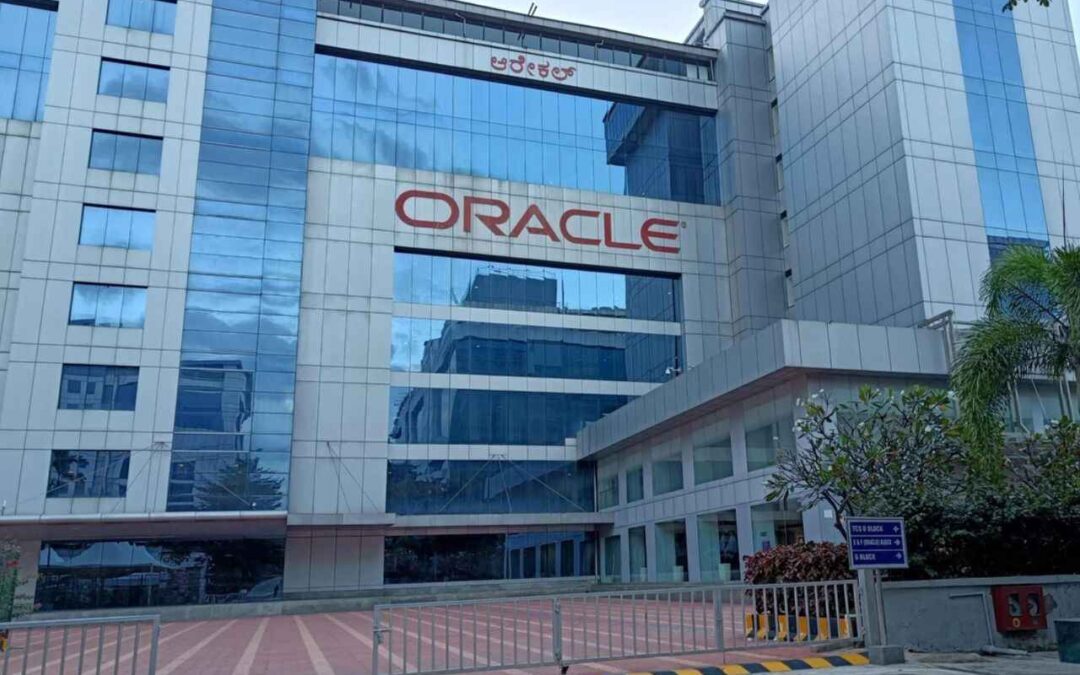
4. Oracle Financial Services Software
Oracle Financial Services Software, known as OFSS, provides core banking and financial services technology platforms to banks and financial institutions in India and globally. Its flagship product, FLEXCUBE, is used by some of the largest banks in the world for their core banking operations, managing accounts, transactions, loans, and regulatory reporting in real time, every day, without interruption.
Core banking platforms are the central nervous system of a bank, and replacing one is not a technology project. It is an enterprise transformation measured in years, with implementation costs that can run into hundreds of crores and operational risks that no bank board takes lightly.
This is why banks routinely use the same core banking platform for fifteen to thirty years, upgrading it version by version rather than ever considering a full replacement. OFSS earns recurring revenue through annual maintenance contracts, upgrade cycles, and support services all of which renew with near-automatic regularity. As regulatory requirements evolve and banks add new product lines, they turn to OFSS for the same platform, deepening the relationship further with every enhancement engagement.
5. CMS Info Systems
CMS Info Systems is India’s largest cash management company, handling the movement, processing, and ATM servicing needs of banks, retail chains, and financial institutions across the country. The company’s business is built on a foundation that is easy to underestimate: banks almost never switch their cash logistics provider. The reasons are straightforward but powerful.
Cash management relationships require extensive on-ground coordination, regulatory compliance alignment, and shared accountability frameworks that take years to build. Replacing a provider mid-contract or even at renewal means retraining staff, reconfiguring routes, and accepting transition risk on operations where error margins are measured in fractions.
CMS operates a network of branches, vaults, and trained personnel spread across India, making it operationally impractical for a bank to build the same infrastructure in-house or shift to a new provider at scale. As India’s ATM network expands and digital payment volumes push physical cash further toward the edges of the financial system, the need for reliable, compliant cash logistics has only grown and CMS remains the name that most of its banking customers have worked with for years and expect to continue working with.
Conclusion
Businesses built on high customer retention don’t always make headlines, but they tend to generate something more valuable over time, predictable, compounding revenue streams that are difficult for competitors to disrupt and rarely sensitive to short-term economic cycles. The five companies covered here each occupy a structural position in their respective industries where the cost of leaving outweighs any realistic benefit of switching.
CDSL, CRISIL, 3M India, Oracle Financial Services Software, and CMS Info Systems represent five different expressions of the same underlying principle: when a company becomes genuinely hard to replace, it doesn’t just win customers, it tends to keep them for life.
Disclaimer: The views and investment tips expressed by investment experts/broking houses/rating agencies on tradebrains.in are their own, and not that of the website or its management. Investing in equities poses a risk of financial losses. Investors must therefore exercise due caution while investing or trading in stocks. Trade Brains Technologies Private Limited or the author are not liable for any losses caused as a result of the decision based on this article. Please consult your investment advisor before investing.