Synopsis: A mobile handset distributor and electronics manufacturer has approved two related-party capital commitments on the same day, a Rs. 10.8 crore rights issue subscription into its cover-glass manufacturing joint venture and an unsecured credit line of up to Rs. 100 crore to a wholly owned subsidiary. Both transactions route capital toward growth bets outside the company’s core, declining distribution business, at a time when consolidated free cash flow has been negative for three straight years.
A leading Indian mobile handset distributor and electronics manufacturer came into focus after its board committee approved two separate capital allocation decisions involving group subsidiaries. The company disclosed both transactions in a regulatory filing dated June 30, 2026, following an Operations & Administration Committee meeting that lasted twelve minutes.

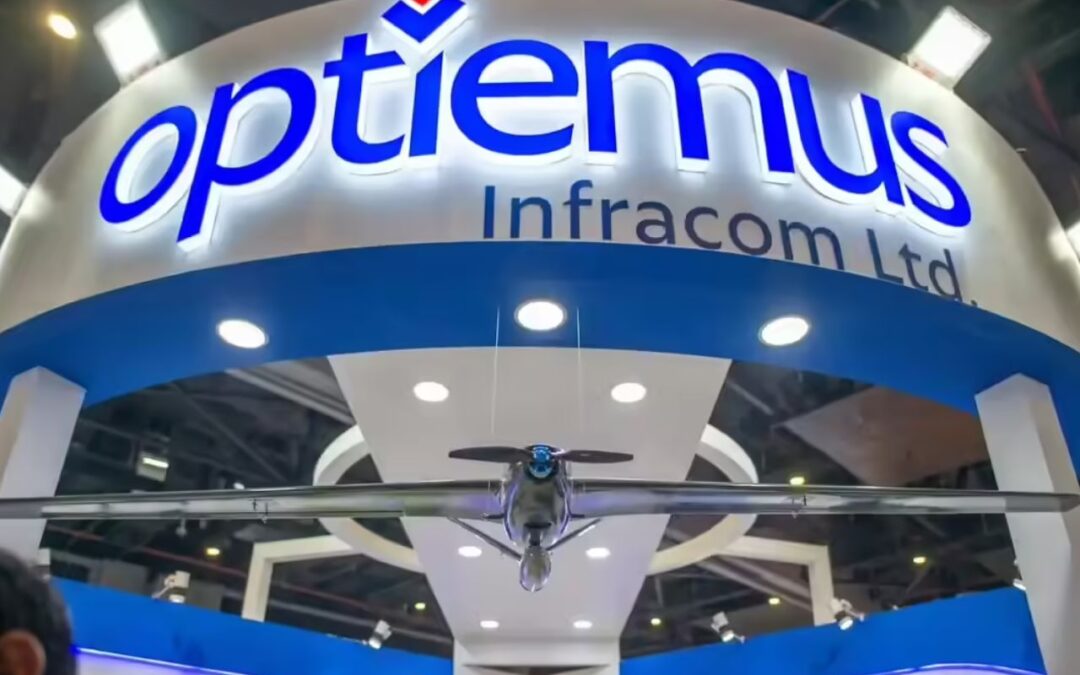
With a market capitalization of approximately Rs. 4,128.46 crore, the shares of Optiemus Infracom Limited were trading at Rs. 465.50 per share, down 0.90 percent from its previous closing price of Rs. 469.75 apiece. It is trading at a P/E of approximately 80.79.
The committee approved two transactions. First, Optiemus will subscribe to a rights issue of 1,07,99,460 equity shares in Bharat Innovative Glass Technologies Private Limited (BIGTech), a joint venture with Corning International Corporation that is building a cover-glass manufacturing facility in Tamil Nadu for mobile device screens. The shares come at par value of Rs. 10 each, for a total cash outlay of Rs. 10.79 crore, and Optiemus’s shareholding stays unchanged at 70 percent before and after the issue, meaning Corning is contributing proportionally to maintain its own stake.

Second, Optiemus will extend an unsecured loan of up to Rs. 100 crore, disbursed in tranches over three years, to GDN Enterprises Private Limited, a wholly owned subsidiary, at 8.50 percent annual interest or the prevailing State Bank of India benchmark rate, to fund GDN’s working capital needs.
Both transactions are related-party deals under SEBI’s listing regulations, since common directors sit on the boards of Optiemus and both subsidiaries. The BIGTech subscription is backed by an independent valuer’s arm’s-length determination; the GDN loan, being a wholly owned subsidiary transaction, carries no special governance rights such as board seats or anti-dilution protection, which is standard for intercompany lending of this kind and not itself a red flag.

Financial Impact
The more useful way to read this filing is as a snapshot of where Optiemus is directing capital, and what that capital allocation says about the underlying business. BIGTech was incorporated in October 2023, has no turnover yet, and already carries a net worth of Rs. 152.26 crore, indicating substantial capital has already gone into the cover-glass facility ahead of this latest tranche. Glass manufacturing plants of this kind typically require capital expenditure running into hundreds of crores, so the Rs. 10.8 crore approved here should be read as an incremental funding round rather than the scale of total commitment Optiemus has made or will eventually make to BIGTech. Investors should expect further rights issues or capital infusions as the facility moves toward commercial production.
The GDN loan is smaller in immediate cash impact but larger in absolute size, and the interest rate, pegged to SBI’s benchmark, prices it as a market-rate transaction rather than a subsidised transfer, which limits the case that the loan is being used to disguise a value transfer away from listed-company shareholders. That said, an unsecured related-party loan of up to Rs. 100 crore is large relative to Optiemus’s balance sheet, and its proceeds support a subsidiary’s working capital rather than a return-generating asset, so the loan’s eventual recovery depends on GDN’s own business performance, which investors cannot independently assess from this filing.
Taken together, the two approvals total roughly Rs. 111 crore, a meaningful figure against Optiemus’s consolidated net worth of about Rs. 777 crore as of March 2026. The timing matters too. Optiemus’s own operating cash flow has been negative for two consecutive years, at minus Rs. 13 crore in FY25 and minus Rs. 12 crore in FY26, while investing outflows widened sharply to Rs. 295 crore in FY26 from Rs. 51 crore the year before, largely to fund subsidiary investments like this one.

That gap has been bridged by financing activity rather than internal cash generation: consolidated borrowings nearly doubled, from Rs. 198 crore to Rs. 373 crore over the same year. None of this is unusual for a company funding a manufacturing pivot, but it does mean Optiemus is increasingly relying on external debt to bankroll subsidiary growth bets while its core handset distribution business, which posted a 6 percent revenue decline on a trailing basis, continues to shrink.
Business Overview
Optiemus’s near-term outlook hinges on whether its newer manufacturing bets, cover glass through BIGTech, electronics manufacturing through Optiemus Electronics, and emerging telecom and drone businesses, can scale into meaningful revenue contributors before the legacy distribution business erodes further or leverage becomes a constraint.
The company has signalled this direction through a string of similar capital allocation decisions in recent months, including a separate rights issue subscription into Optiemus Electronics worth Rs. 156 crore, alongside a manufacturing tie-up between that subsidiary and Ai+ Smartphone targeting roughly three million devices over five years.
Incorporated in 1993 and headquartered in New Delhi, Optiemus Infracom has historically operated as a mobile handset and accessories distributor for brands including Nokia and Samsung, and has more recently expanded into electronics manufacturing services, telecom equipment, and drones through its subsidiary network. For the year ended March 2026, consolidated revenue declined to Rs. 1,769 crore from Rs. 1,890 crore a year earlier, while net profit rose modestly to Rs. 66 crore from Rs. 63 crore, aided by other income of Rs. 40 crore. Promoter holding stood at 72.17 percent as of March 2026, having gradually declined from 74.89 percent over the prior two years. The company has not paid a dividend since FY23.
Disclaimer: The views and investment tips expressed by investment experts/broking houses/rating agencies on tradebrains.in are their own, and not that of the website or its management. Investing in equities poses a risk of financial losses. Investors must therefore exercise due caution while investing or trading in stocks. Trade Brains Technologies Private Limited or the author are not liable for any losses caused as a result of the decision based on this article. Please consult your investment advisor before investing.