
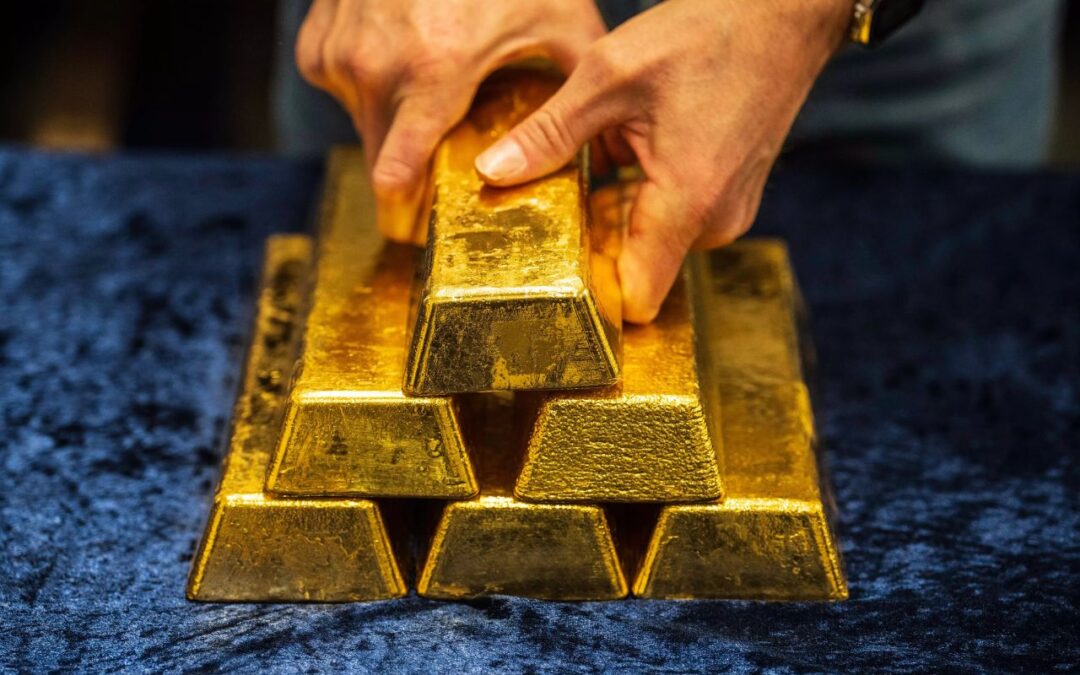
Synopsis: Precious metals extended a steep correction on Wednesday, with spot gold slipping below the psychologically important $4,000 mark to a seven-month low and silver falling even harder on thinner liquidity and heavier industrial exposure. The proximate trigger is a hawkish turn at the US Federal Reserve, but the deeper story is a roughly 30 percent unwind from January’s record highs, one that Indian investors are experiencing somewhat differently than the rest of the world because of currency and duty structures unique to the domestic market.
Precious metals came under renewed pressure on Wednesday, extending a correction that has wiped out nearly a third of the value gold had gained through its record run earlier this year. On the Multi Commodity Exchange, August gold futures fell 1 percent to Rs. 1,41,200 per 10 grams, while September silver futures suffered a sharper intraday slide of 2.5 percent, shedding Rs. 5,662 to settle around Rs. 2,22,901 per kilogram. Internationally, spot gold dipped below $4,000 an ounce to touch a seven-month low of $3,981.69, and spot silver slipped to $58.04 an ounce.

What Is Driving the Sell-Off
The immediate catalyst is a shift in interest-rate expectations. Fading prospects of a durable peace agreement between the United States and Iran, after Iran declined to meet US officials, have revived fears of prolonged energy-driven inflation. That has pushed Federal Reserve officials, including Cleveland Fed President Beth Hammack, toward signalling that rates could move higher rather than lower from here.
Since gold and silver pay no yield, rising rates raise the opportunity cost of holding them relative to interest-bearing assets, and the mere prospect of further hikes has been enough to trigger aggressive unwinding of leveraged long positions built up during the earlier rally. Technical desks describe the current market structure as firmly in “sell on rise” mode, meaning traders are using bounces to exit rather than to add fresh exposure.

The scale of the retracement is worth sitting with. Gold touched a lifetime high of $5,595 an ounce in January 2026; the slide to under $4,000 represents close to a 30 percent decline in roughly six months. Silver has fared considerably worse, down more than 50 percent from its recent highs, reflecting its thinner market depth and its heavier dependence on industrial demand, which tends to soften faster than investment demand when growth expectations wobble.
Why the Domestic Fall Looks Smaller Than It Is
Indian investors watching MCX prices may notice the correction looks milder at home than the headline international numbers suggest, and two structural reasons explain that gap rather than any genuine insulation from the global trend. First, the government’s decision to raise import duty on gold and silver from 6 percent to 15 percent has effectively raised the domestic price floor, since a larger duty component is now baked into every unit landed in India.

Second, the US Dollar Index has strengthened more than 2 percent in June to near 101.35, and because India imports the bulk of its bullion in dollars, a weaker rupee against a firmer dollar cushions the domestic price even as international dollar-denominated prices fall harder. Investors should treat this cushioning as a currency and policy effect, not evidence that Indian gold is somehow more resilient on fundamentals.
How Indian Households Are Reacting
The price slide has triggered a notable behavioural shift among Indian gold holders. Households are estimated to have offloaded around 50 tonnes of idle gold for cash during the April-June quarter, fearing prices could slide further toward the Rs. 1.2 lakh per 10 gram mark, a move that has fed an unusual boom in the domestic gold recycling industry.
Separately, the Reserve Bank of India has reported a sharp deceleration in gold imports and exchange-traded fund inflows, with May imports slowing to $12 billion after repeated government appeals to citizens to moderate physical gold purchases in the interest of the trade deficit. Together, these trends point to a market where both retail sentiment and policy nudges are reinforcing the downward pressure on prices rather than offsetting it.

What Investors Should Watch From Here
Analysts at Prithvi Finmart peg immediate international support for gold near $3,955-$3,994 an ounce, with MCX support around Rs. 1,40,000 per 10 grams. Several commodity strategists see a further 5 to 8 percent downside toward the Rs. 1,36,000 zone before stabilising, and frame the current weakness as an accumulation opportunity for investors with a multi-year horizon rather than a signal to exit gold allocations entirely.
That view rests on the assumption that the structural drivers behind gold’s earlier rally, central bank buying, geopolitical hedging demand and long-term currency debasement concerns, have not disappeared, only paused while rate expectations reset. For investors holding gold as a portfolio hedge rather than a trading position, the more relevant question is not catching the exact bottom but whether the allocation still serves its original purpose, which for most long-term investors it likely still does even after a correction of this size.
Disclaimer: The views and investment tips expressed by investment experts/broking houses/rating agencies on tradebrains.in are their own, and not that of the website or its management. Investing in equities poses a risk of financial losses. Investors must therefore exercise due caution while investing or trading in stocks. Trade Brains Technologies Private Limited or the author are not liable for any losses caused as a result of the decision based on this article. Please consult your investment advisor before investing.