
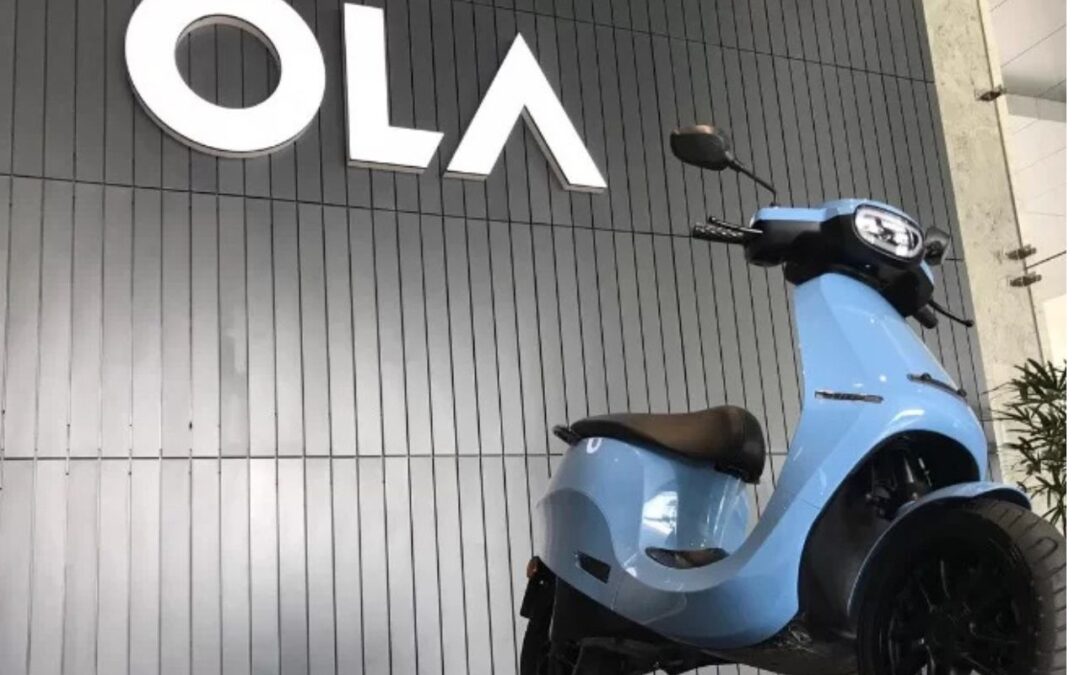
Synopsis:Ola Electric has come under fresh legal scrutiny after two component suppliers approached the National Company Law Tribunal (NCLT), seeking insolvency proceedings against the company’s operating subsidiary over alleged unpaid dues.
While Ola Electric has denied the claims and is contesting the petitions, the development shifts investor attention beyond the legal dispute to supplier confidence, working capital management, and execution risk.

Ola Electric Mobility Ltd is currently trading at Rs 42.44. The stock opened at Rs 42.55, reached a day’s high of Rs 42.85, and has so far recorded a day’s low of Rs 41.41. The current market capitalisation of the company is Rs 19,671 crore.
Two suppliers, Sterling E-Mobility Solutions and Anevolve Mando eMobility, have filed insolvency petitions under Section 9 of the Insolvency and Bankruptcy Code (IBC) against Ola Electric Technologies Pvt. Ltd, alleging unpaid operational dues of over Rs 40 crore. Ola Electric has disputed the claims, stating that the matter relates to commercial disagreements, including quality-related issues, and has filed caveats before the NCLT to contest the petitions.

The Bigger Picture Isn’t the Amount: It’s the Pattern
The sum in question is fairly small compared to the overall business of Ola Electric. However, what is notable is the recurrence of disputes with suppliers. This is yet another case of a vendor going to the tribunal, which shows that commercial disputes have gone beyond the normal negotiations.
For manufacturing companies, a healthy ecosystem of suppliers is essential to uninterrupted production. Even if the matters are ultimately resolved, repeated legal disputes can affect supplier confidence and alter payment terms and working capital efficiency.

The move comes as Ola Electric is trying to consolidate its position in the market amid stiff competition in the electric two-wheeler segment in the country. As the company scales production and broadens its product portfolio, stable supplier relationships become even more critical in guaranteeing timely access to components and the smooth execution of manufacturing operations.
Ola Electric has not entered insolvency proceedings despite insolvency petitions. These are operational creditors’ legal methods for recovering disputed debts. Investors should monitor whether supplier disputes remain isolated commercial disagreements or become broader issues affecting vendor confidence, procurement stability, and operational execution. Maintaining business momentum and market sentiment depends on how quickly these are resolved.
Financial Highlights
The company reported a weak operational performance in Q4 FY26, with revenue declining to Rs 265 crore, down 56.6 percent YoY from Rs 611 crore in Q4 FY25 and 43.6 percent QoQ from Rs 470 crore in Q3 FY26.

Operating loss stood at Rs 281 crore, up from a loss of Rs 695 crore in Q4 FY25 but a bit higher than Rs 271 crore in Q3 FY26. Thus, the operating margin (OPM) remained deeply negative at -106 percent against -114 percent in Q4 FY25 and -58 percent in Q3 FY26.
The company posted a loss of Rs 496 crore against loss of Rs 870 crore in Q4 FY25 and loss of Rs 487 crore in Q3 FY26. Similarly, net loss was at Rs 500 crore, down 42.5 percent YoY from Rs 870 crore in Q4 FY25 but up 2.7 percent QoQ from Rs 487 crore in Q3 FY26. The EPS was at Rs (-1.13), up from Rs (-1.97) in Q4 FY25 but down slightly from Rs (-1.10) in Q3 FY26.
Despite continued losses, the company maintains Rs 1,542 crore in cash and cash equivalents, Rs 402 crore in working capital, and a current ratio of 1.14x. The balance sheet reflects a debt-to-equity ratio of 0.82x, while profitability ratios remain negative with ROCE of -19.6 percent, ROE of -43.2 percent, and ROA of -19.4 percent.
The company has posted a 5-year sales CAGR of 383 percent, which shows that it grew rapidly in its growth phase over the longer term. However, the 3-year sales CAGR is -5 percent, indicating revenue contraction in recent years amid persistent operating and net losses.
While the company may have a healthy cash reserve, the real challenge is to turn operational improvements into sustainable profitability. Execution, recovery and cost discipline are likely to be the key indicators of a sustainable turnaround for investors.
About the Company
Ola Electric Mobility Limited is one of the largest electric vehicle makers in India, that designs, develops and sells electric two-wheelers and EV components, including battery packs, motors and vehicle software. The company has one of the country’s largest integrated EV manufacturing facilities – the Futurefactory in Tamil Nadu and sells directly to consumers through an expanding network of company-owned stores and service centres. Ola Electric is investing in battery technology, cell manufacturing and EV ecosystems along with electric scooters to get ahead in the fast-changing electric mobility market in India.
Disclaimer: The views and investment tips expressed by investment experts/broking houses/rating agencies on tradebrains.in are their own, and not that of the website or its management. Investing in equities poses a risk of financial losses. Investors must therefore exercise due caution while investing or trading in stocks. Trade Brains Technologies Private Limited or the author are not liable for any losses caused as a result of the decision based on this article. Please consult your investment advisor before investing.