
Synopsis: EPL and TCPL Packaging are pursuing growth through new categories, capacity additions and wider markets, but their FY26 performance shows a clear difference in momentum. While one is growing faster and delivering more consistent profits, the other is betting on utilisation and exports. Which packaging stock has the stronger outlook?
Packaging companies benefit from rising consumption because nearly every FMCG, pharmaceutical, food, personal-care or consumer product needs packaging. However, companies in the sector do not grow in the same way. Some depend mainly on domestic demand, while others can expand through new categories, exports, capacity additions and acquisitions.

EPL and TCPL Packaging are established packaging companies, but their business mix and recent performance are different. EPL is a global producer of laminated and extruded tubes, while TCPL is more focused on folding cartons, paperboard and flexible packaging. Their FY26 filings show that both have growth opportunities, but one company has delivered a much stronger and more consistent performance.
What Do EPL And TCPL Packaging Do?
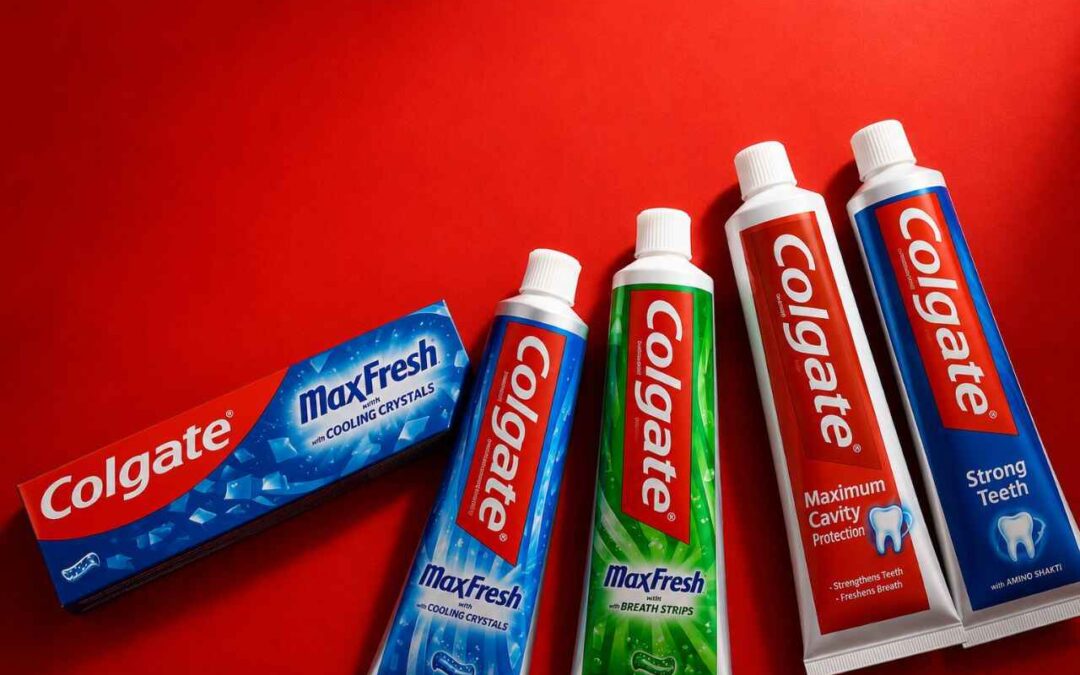
EPL supplies tubes used by brands across oral care, beauty and cosmetics, pharmaceuticals, food and other categories. Oral care was historically its core business, but management has deliberately expanded into Beauty and Cosmetics and other non-oral segments. By the end of FY26, Personal Care and Beyond accounted for 53 percent of its portfolio, while Beauty and Cosmetics had become larger than Oral Care in several important markets. Sustainable tube formats also contributed 38 percent of quarterly sales.

TCPL’s largest business is folding cartons, mainly supplied to consumer-product, FMCG and food-and-beverage companies. Management said this category contributes more than half of revenue, while flexible packaging contributes around 20 percent. The company has also built capabilities in printed laminates, labels and other flexible formats.
The difference matters. EPL has a larger international footprint and a specialised product category, while TCPL is more closely linked to Indian consumer demand and packaging volumes. EPL’s growth can come from category mix, global customer wins and geographic expansion. TCPL’s growth depends more on domestic demand, exports and the utilisation of its recently added capacity.

Which Company Grew Faster In FY26?
On the headline numbers, EPL was the clear winner. Its FY26 revenue from operations increased 13 percent to Rs. 4,763.1 crore. EBITDA grew 15.8 percent to Rs. 972.4 crore, while the EBITDA margin improved from 19.9 percent to 20.4 percent. PAT excluding exceptional items grew 15 percent, and return on capital employed improved by 96 basis points to 19 percent.
TCPL’s consolidated revenue increased only 2.3 percent to Rs. 1,810.2 crore. Including other income, total income grew 2.9 percent to Rs. 1,835.6 crore and EBITDA grew 3.3 percent to Rs. 317.7 crore. Its EBITDA margin remained broadly flat at 17.3 percent. Reported PAT declined 31.6 percent to Rs. 97.8 crore, while cash profit fell 9.9 percent. Higher finance costs, depreciation, exceptional items and taxes affected the bottom line.
The fourth-quarter comparison also favours EPL. EPL’s revenue grew 17.6 percent and EBITDA increased 17.2 percent, with the margin remaining above 20 percent. TCPL’s Q4 total income grew 9.2 percent, but EBITDA grew 6.6 percent and its margin declined from 17.8 percent to 17.4 percent.

EPL was therefore growing faster despite operating from a larger base. Its revenue, operating profit and underlying profit also moved in the same direction, making the growth look healthier.
Which One Has Been More Consistent?
EPL’s biggest advantage was its quarter-by-quarter consistency. Revenue grew 10 percent in Q1, 11 percent in Q2, 13.3 percent in Q3 and 17.6 percent in Q4. It delivered double-digit growth in every quarter, with momentum strengthening through the year. Its EBITDA margin also remained above 20 percent throughout FY26.
TCPL’s performance was more uneven. Q1 revenue grew around 5 percent, but EBITDA was broadly flat and the margin declined to 17.1 percent. In Q2, consolidated revenue was Rs. 461 crore and the EBITDA margin fell to around 15 percent. Q3 was much better, with EBITDA growing about 15 percent and the margin recovering to 17.2 percent, before Q4 closed with a 17.4 percent margin.
TCPL faced softer exports, GST-related disruption in the domestic channel and raw-material volatility. Its Q3 recovery showed that the business can improve when product mix and cost control are favourable, but the full-year numbers indicate that growth was not strong enough to create meaningful operating leverage.
EPL had weak spots too. Oral Care remained soft during parts of the year, Europe faced temporary operational and mix issues, and Q4 PAT growth was limited by foreign-exchange losses and a higher tax rate. However, Beauty and Cosmetics, the Americas, East Asia Pacific and the later Oral Care recovery helped offset these pressures.
What Could Drive EPL’s Next Phase?
The first driver is Beauty and Cosmetics. The category grew 35 percent in Q1, 26.3 percent in Q2, 26 percent in Q3 and around 30 percent in Q4. EPL has invested in customer acquisition, innovation, smaller order capabilities, extruded tubes and front-end specialists. Personal Care and Beyond grew 23.6 percent in FY26, much faster than overall revenue.
The second driver is geographic expansion. Brazil has become a strong performer, every country in the Americas delivered double-digit Q4 growth and the Thailand plant is completing customer validation. Management expects Thailand volumes to begin in FY27 and scale gradually. EPL has retained its longer-term guidance of 11 percent to 13 percent revenue growth.
The proposed Indovida merger could create an even larger opportunity. Indovida generated more than Rs. 3,800 crore of revenue in 2025, with a 21.3 percent EBITDA margin and 23.7 percent ROCE. The combined platform is expected to have around Rs. 8,300 crore of revenue and Rs. 1,750 crore of EBITDA, with 75 percent of revenue coming from emerging markets. EPL has also identified annual synergies of USD 35 million to USD 50 million through geographic expansion, products and costs.
The merger would add rigid packaging to EPL’s flexible-packaging platform and open markets such as Vietnam and Nigeria, while allowing Indovida to use EPL’s presence in India, China and Latin America. However, the deal is subject to regulatory approval and is expected to take around 12 months. Integration and synergy delivery will remain key risks.
What Could Drive TCPL’s Next Phase?
TCPL’s strongest growth lever is its Chennai greenfield facility. The plant strengthens its presence in South India and is receiving customer interest, including approvals and trials from large accounts. During H1, management indicated that utilisation was around 40 percent to 50 percent and expected it to rise over the following quarters. In Q4FY26 earnings call management mentioned that the utilisation has crossed 50 percent and the outlook is positive.
Flexible packaging is another opportunity. The business delivered strong FY26 performance, with healthy utilisation and the latest line operating at optimal levels. The Silvassa gravure-cylinder facility should reduce outsourcing, improve process control and support faster turnaround. TCPL is adding more than one or two customers almost every month and wants both folding cartons and flexible packaging to grow at a good double-digit rate.
Exports could recover if international conditions improve. Management said it has entered new geographies, added customers and expanded its export team. However, wars and global uncertainty make the timing difficult to predict. The company has not provided formal margin guidance and is being more calibrated with capex.
TCPL’s projects can support growth, but investors still need to see stronger capacity utilisation, an export recovery and better profit conversion. Net debt-to-EBITDA stood at 1.75 times at the end of FY26, compared with 0.52 times for EPL, giving EPL more financial flexibility.
Which Stock Has The Stronger Future Outlook?
Based only on the FY26 filings, EPL is growing faster and currently has the stronger future outlook. It delivered double-digit revenue growth in every quarter, maintained EBITDA margins above 20 percent, improved ROCE and generated underlying PAT growth. Its Beauty and Cosmetics strategy is already producing results, while Brazil, Thailand, sustainable packaging and the proposed Indovida merger provide additional growth avenues.
TCPL also has a credible long-term case through the Chennai plant, flexible packaging, backward integration and new customer additions. However, FY26 revenue growth remained low, PAT declined and performance was less consistent. Its future improvement depends more heavily on new capacity ramping up and external conditions becoming favourable.
Therefore, EPL appears to be the stronger performer today, while TCPL remains a company with potential that still needs to translate its investments into faster and more consistent earnings growth.
Disclaimer: The views and investment tips expressed by investment experts/broking houses/rating agencies on tradebrains.in are their own, and not that of the website or its management. Investing in equities poses a risk of financial losses. Investors must therefore exercise due caution while investing or trading in stocks. Trade Brains Technologies Private Limited or the author are not liable for any losses caused as a result of the decision based on this article. Please consult your investment advisor before investing.