
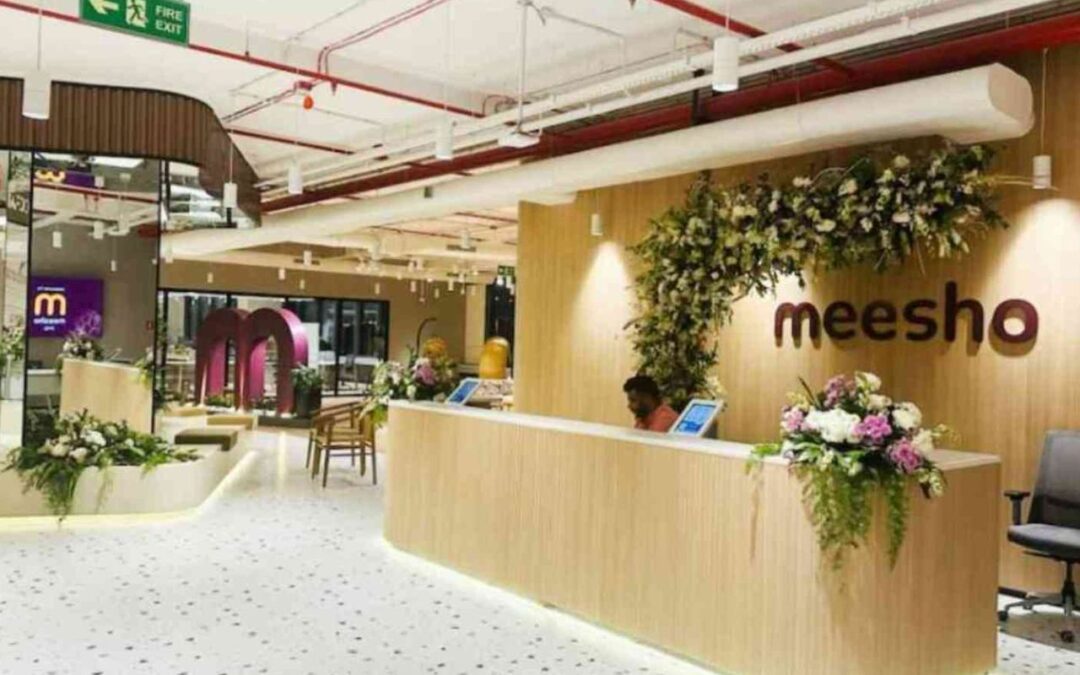
Synopsis: Institutional investors have steadily raised their stakes in a recently listed e-commerce platform over the past two quarters. Improving profitability, easing logistics costs, and a scaling advertising business appear to be driving this renewed confidence, even as the broader consumer internet space remains closely watched by the market.
Shareholding pattern data offers useful clues about how institutional money views a company’s near-term prospects. When both foreign and domestic institutional investors raise their holdings simultaneously, it often signals growing conviction in the underlying business. That is exactly what has played out over the last two quarters for this platform, alongside a set of encouraging operational updates from management.

Shareholding Trends Point To Growing Institutional Confidence
Meesho Ltd. operates a value-focused e-commerce marketplace catering largely to price-sensitive consumers across India, including a significant base of users from smaller towns and rural areas. It runs an in-house logistics network alongside third-party logistics partnerships, and has expanded into a dedicated branded goods vertical aimed at offering national and regional brands to a wider consumer base across the country.
According to the latest shareholding pattern data of Meesho Ltd., Foreign Institutional Investors (FIIs) increased their stake from 4.17% in March 2026 to 5.19% in June 2026, after a slight dip from 4.31% in December 2025. Domestic Institutional Investors (DIIs) showed an even sharper rise, moving from 5.28% in December 2025 to 5.56% in March 2026, and then jumping to 9.14% in June 2026.

Promoter holding, meanwhile, has gradually declined from 16.76% to 16.41% over the same period, while public shareholding fell from 73.66% to 69.26%, reflecting the shift of shares into institutional hands.
Margins Improve As Logistics Costs Normalize
This growing interest from institutional investors comes right after a strong Q4 FY26 performance. The company’s contribution margin, a measure of how much profit it keeps after covering direct costs, improved by 170 basis points (1.70 percentage points) compared to the previous quarter. Management said this jump was mainly because delivery and logistics costs, which had gone up temporarily during Q2 and Q3 FY26, have now come back down to normal levels.

That temporary cost increase had knocked off about 145 basis points from margins earlier in the year. With that issue now behind them, the company ended Q4 with a contribution margin of 4%, which management expects to use as the new starting point going forward.
A key driver of this improvement has been the growing share of prepaid transactions over cash-on-delivery orders, which carry a better delivery success rate and lower overall servicing cost. Additionally, the reduction in failed deliveries through improved address accuracy and partner allocation has helped bring down blended logistics costs further.
Advertising Business Continues To Scale
On the revenue side, advertising income continues to be a bright spot. The number of active seller catalogs on the platform’s ad product has grown more than 40% year-on-year, and advertiser budgets have more than doubled over the past year, indicating strong return on ad spend for sellers. Management has also highlighted plans to gradually introduce pricing changes in the ad business once steady-state adoption improves further.

Customer Acquisition Costs Trend Lower
Customer acquisition costs have also been trending favourably, aided by AI-led initiatives including a voice shopping assistant that has helped convert rural users more efficiently. The company expects to continue investing aggressively in rural user acquisition over the next year, given India’s relatively low online transaction penetration compared to other emerging markets.
Free Cash Flow Remains The Key Metric To Watch
Free cash flow, which management has described as its guiding metric over quarterly cash flow numbers, is expected to keep improving on a trailing twelve-month basis, supported by both margin gains and continued growth in order volumes.
New Brand-Focused Vertical Still In Investment Mode
Meesho’s new premium and brand-focused vertical is also scaling, though management has clarified that this segment remains in an investment phase, with contribution margins currently lower than the core marketplace business as the focus stays on onboarding brands and building selection.
The Road Ahead
The rising institutional stake, especially the sharp DII jump to 9.14% in June 2026, reflects growing confidence in the company’s improving margin trajectory. However, management has cautioned that future gains may be more gradual than the recent Q3-to-Q4 jump, hinging on continued ad revenue growth and fulfilment margin restoration. With the brand-focused vertical still in investment mode, the coming quarters will be key to confirming whether this institutional buying reflects sustained fundamental improvement or a temporary low-base effect.
Disclaimer: The views and investment tips expressed by investment experts/broking houses/rating agencies on tradebrains.in are their own, and not that of the website or its management. Investing in equities poses a risk of financial losses. Investors must therefore exercise due caution while investing or trading in stocks. Trade Brains Technologies Private Limited or the author are not liable for any losses caused as a result of the decision based on this article. Please consult your investment advisor before investing.