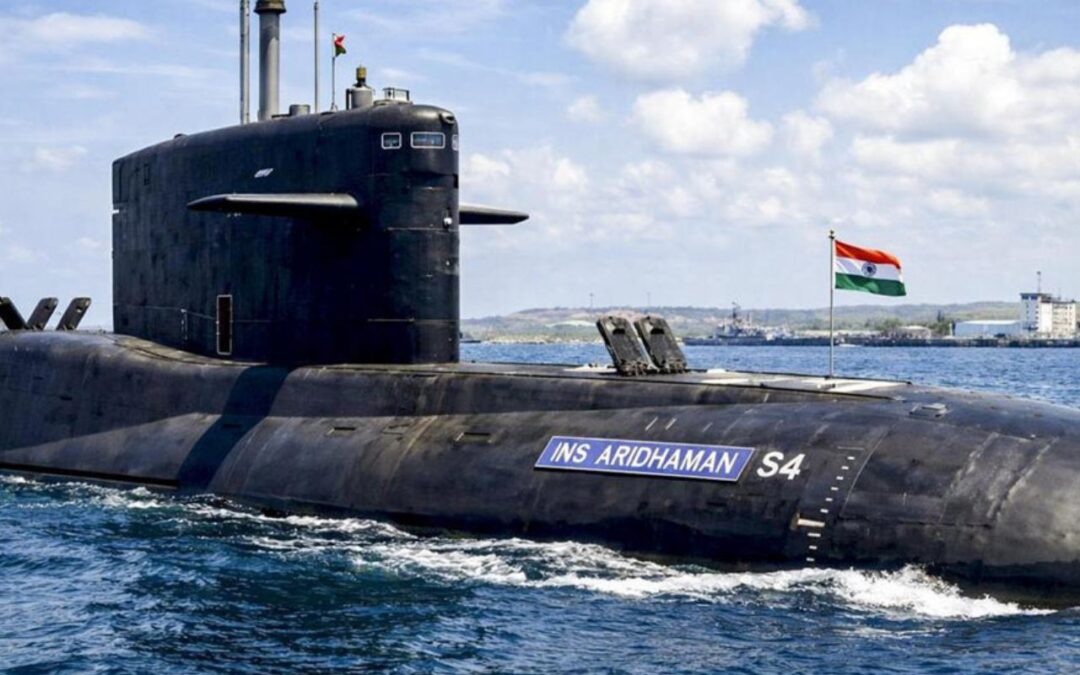
Synopsis: India’s ambitious Rs 90,000 crore next-generation submarine programme could create a multi-decade opportunity for specialised naval suppliers. With strong financial growth, increasing indigenisation, and expertise in critical submarine systems, CFF Fluid Control could emerge as a key beneficiary of India’s expanding underwater defence ecosystem and naval modernisation efforts.
Indian defence upgrades have been mostly confined to fighter jets, missiles, and indigenously produced weapons systems. But one of the areas where there might be tremendous potential could be below water. Geopolitical tensions in the Indo-Pacific region, the growing number of Chinese submarines in the Indian Ocean region, and securing trade routes at sea could compel India to invest heavily in building underwater warfare capabilities.

At the heart of this opportunity lies the submarine expansion plan that the Indian Navy has embarked upon. The Indian Navy plans a multi-decade submarine programme with the key focus lying on Project 75I (P75I), wherein nearly Rs 90,000 crore will be invested to build six submarines that would represent the next generation of submarines.
Along with upcoming P75(AS), indigenously built P76 submarines, and surface combatants, this could be one of the biggest naval manufacturing opportunities ever seen in independent India, potentially benefiting specialised naval suppliers such as CFF Fluid Control Ltd. With a market cap of Rs 2,000 crore, the shares of the company are trading at Rs 950 and are trading at a PE of 51 compared to their industry’s PE of 66. The shares have given a return of more than 470% since their listing in June 2023.

High Entry Barriers Could Favour Existing Participants
Production of submarines is one of the toughest aspects of defence manufacturing. Unlike other conventional defence systems, the production of submarines entails a number of years of testing, certifications, sea trials, and operational validations before the suppliers become eligible for participating in these programmes.
Entry into such a market will necessarily be tough. Suppliers in this field often spend many years qualifying themselves, establishing connections, and developing their manufacturing facilities. Due to this gestation period, entry by new players becomes difficult.

Furthermore, next-generation submarine programmes would also need advanced technology, including sonar integration, communications technology, platform support systems, electronic assemblies, HVACs, and infrared suppression technology. Due to increased complexities in platforms, qualified domestic suppliers such as CFF Fluid Control could benefit from increasing content per submarine and higher localisation requirements.
The Rs 90,000 Crore Opportunity Could Be Only the Beginning
However, even beyond P75I, the longer-term pipeline seems to be even more promising. India is making progress on its Project 75(AS), which involves air-independent propulsion submarines involving both French technology and DRDO technology. Moreover, there is work on Project P76, which might turn out to be India’s first indigenous submarine project.
The opportunities do not just lie in building submarines only. Future projects will involve mission-critical systems like sonar systems, exhaust systems, infrared suppression systems, communication systems, weapon systems, and platform integration systems.

This means that India’s underwater defence environment might just be about to enter into a decades-long investment cycle, creating significant opportunities for niche defence companies like CFF Fluid Control Ltd rather than being a one-off procurement opportunity.
A Niche Player With Deep Naval Experience
CFF Fluid Control Ltd has developed expertise in specialised naval systems through its consistent involvement in Indian Navy programmes over the years. The current range of its capabilities includes a wide array of products such as fluid control systems, HVAC systems, weapon support systems, electronic assemblies, platform systems, and communication technology for submarines and naval platforms.
One of the key accomplishments of CFF Fluid Control is the development of the indigenous system called Buoyant Wire Antenna (BWA). It has entered the serial production stage and led to the complete substitution of imports of critical submarine communication systems. With increasing levels of indigenisation in the defence industry of India, companies such as CFF Fluid Control could become valuable participants in future naval programmes.
Financial Performance Reflects Improving Execution
The operating performance of CFF Fluid Control over the last few years suggests that investments made over the past decade are finally starting to pay off. Operating income grew from Rs 70.7 crore in FY23 to Rs 208.7 crore in FY26, growing at a strong CAGR of 43.4%. Profit after tax increased from Rs 10.1 crore to Rs 39.2 crore during the period, translating into a strong PAT CAGR of 56.9%.
Earnings per share went up from Rs 7.10 to Rs 19.08 from FY ’23 to FY ’26, with the PAT margin growing from 14.3% to 18.8%. The order book stood at around Rs 551 crore as of July 2026, or almost three times FY26 revenue, giving good visibility for revenues for the coming years. Such financial performance indicates that CFF Fluid Control has significantly improved its execution capabilities and scale.
Strengthening Balance Sheet Provides Room for Expansion
Apart from earnings growth, there has been a drastic transformation in the balance sheet. There has been a significant rise in net worth, from Rs 25 crore in FY23 to Rs 266 crore in FY26. Debt has reduced substantially, with the debt-to-equity ratio declining from 1.84x to 0.07x during the same period.
Cash and cash equivalents have also increased considerably, rising from Rs 1.6 crore in FY23 to Rs 43.6 crore in FY26. With such a strong financial condition, CFF Fluid Control will have greater flexibility to invest in manufacturing plants, tooling, engineering capabilities, and research and development without relying heavily on external funding.
The Chakan plant in Pune completed its first year of operations during FY26 and has been integrated into electronic assemblies and specialised systems manufacturing. The current manufacturing capacity of around 8,000 square metres is also adequate to accommodate future programme ramps.
Moving Up the Value Chain
Another key element of the CFF Fluid Control investment thesis is the company’s evolution from a component provider to a solutions provider. The company has been undertaking R&D in various related technologies and competencies within the naval sector. These efforts might enable CFF Fluid Control to participate in higher-value systems and deepen its involvement in future submarine programmes.
The development of India’s submarine ecosystem could increasingly reward companies that can provide integrated systems instead of individual components. In addition, the accumulated experience from dockyard operations, refit programmes, sea trials, and platform integration could constitute a knowledge advantage that may not be easy for new entrants to replicate. This could become an important competitive advantage as the sophistication of naval programmes increases.
Can India’s Submarine Buildout Trigger the Next Growth Phase?
India’s underwater defence ecosystem appears to be entering a structural growth phase. The proposed Rs 90,000 crore P75I programme, combined with future opportunities under P75(AS), P76, and indigenous naval initiatives, could create a multi-decade opportunity for specialised defence manufacturers.
Companies operating in niche submarine systems, such as CFF Fluid Control, stand to benefit from increasing indigenisation, rising platform complexity, and higher domestic value addition. Naturally, risks remain. Defence programmes are characterised by long execution timelines, procurement delays, and uncertainties regarding order conversion. Moreover, large opportunities often take several years before they materially impact financial performance.
Nevertheless, the long-term opportunity for CFF Fluid Control appears compelling. With strong financial growth, a substantially improved balance sheet, proven execution capabilities, and deep expertise in specialised naval systems, the company appears well positioned to participate in India’s emerging underwater defence cycle.
If India successfully executes its ambitious submarine modernisation plans, companies such as CFF Fluid Control Ltd, with expertise in specialised submarine systems and increasing indigenous capabilities, could emerge as key beneficiaries. India’s underwater defence ecosystem may become one of the most underappreciated investment themes in the defence sector over the next decade.
Disclaimer: The views and investment tips expressed by investment experts/broking houses/rating agencies on tradebrains.in are their own, and not that of the website or its management. Investing in equities poses a risk of financial losses. Investors must therefore exercise due caution while investing or trading in stocks. Trade Brains Technologies Private Limited or the author are not liable for any losses caused as a result of the decision based on this article. Please consult your investment advisor before investing.