
Synopsis: Bitcoin and altcoins keep falling as S&P launches a revenue-based blockchain index, ignoring BTC and XRP. Rising oil prices, climbing bond yields, and stalled crypto regulation fuel selling pressure across the crypto heatmap.
Bitcoin cannot catch a break this week. Just as S&P Dow Jones Indices rolled out a new blockchain benchmark, the wider crypto market slid further into the red. Traders are watching two stories collide at once, and neither looks friendly for coin prices right now.

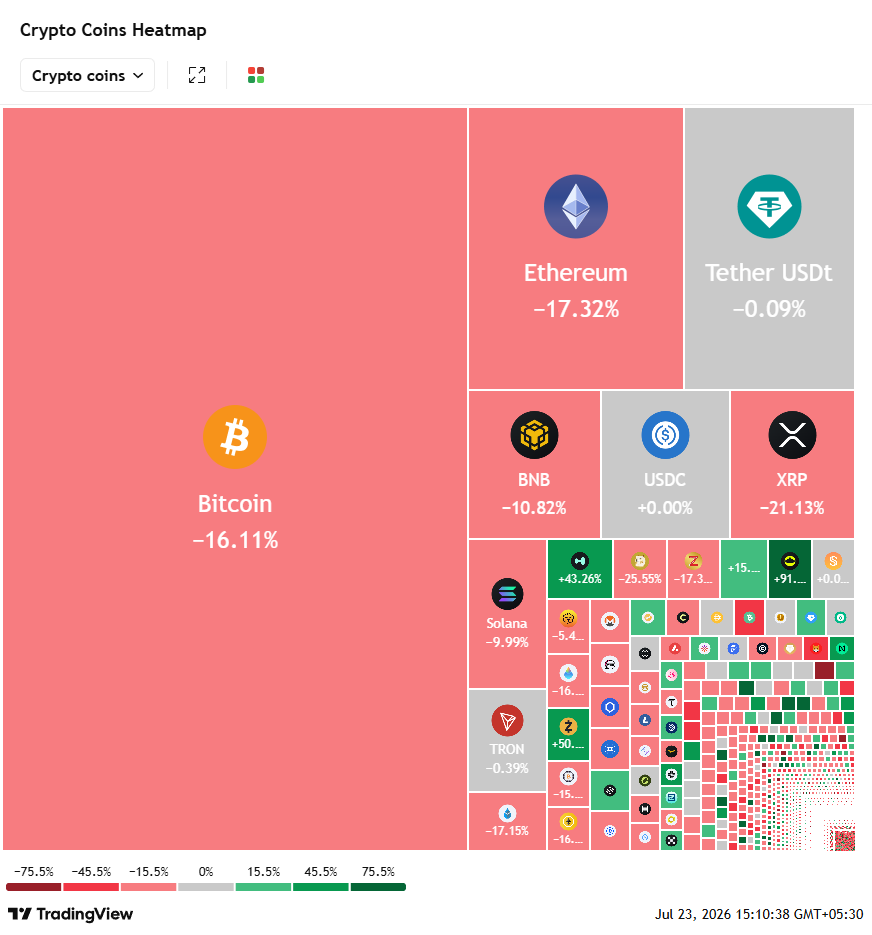
Bitcoin traded near $65,500 early Thursday, down about 0.7% since midnight. The coin had touched a high near $66,700 a day earlier, so the pullback stings. Ether, Solana, and XRP also slipped lower, dragging the crypto heatmap deeper into red territory across the board.
Source: TradingView
A New Way to Measure Blockchain Value
S&P Dow Jones Indices and Pantera Capital just launched an index built differently from older crypto benchmarks. Instead of ranking coins by price or market cap alone, it ranks blockchains by protocol revenue. That means real usage, not hype, drives the rankings.

The index pulls from the broader S&P Cryptocurrency Broad Digital Asset Index. However, it only keeps assets that clear minimum bars for revenue, market size, and liquidity. Networks then get ranked by revenue earned over the past two quarters. The largest holding is capped at 35%, while others sit under 20%.
Eighteen networks made the initial cut. Ether, BNB, Solana, TRON, and Hyperliquid lead the pack as top holdings. Although XRPUSD remains one of the most actively traded crypto pairs, XRP, along with Bitcoin, did not qualify as a major constituent. That snub says a lot about how revenue-based rankings differ from pure price-based ones.

Why This Index Matters for Investors
S&P built this benchmark for institutions first. Firms may use it to build new investment products or guide actively managed crypto portfolios. The rules-based design aims to separate genuine blockchain activity from pure speculation, according to the companies’ announcement.
This launch fits a bigger pattern, too. Hashdex debuted the first US multi-asset spot crypto ETF back in February 2025. Franklin Templeton followed soon after with its own market-cap-weighted fund. Then, MarketVector and Coinbase teamed up on a Bitcoin-and-gold index in April.
Bitwise’s chief investment officer predicted that crypto index funds would become a major theme in 2026. As the market grows more complex, picking single winners gets harder. As a result, diversified products offer investors a simpler path into digital assets.

Rates, Oil, and Regulation Add to the Squeeze
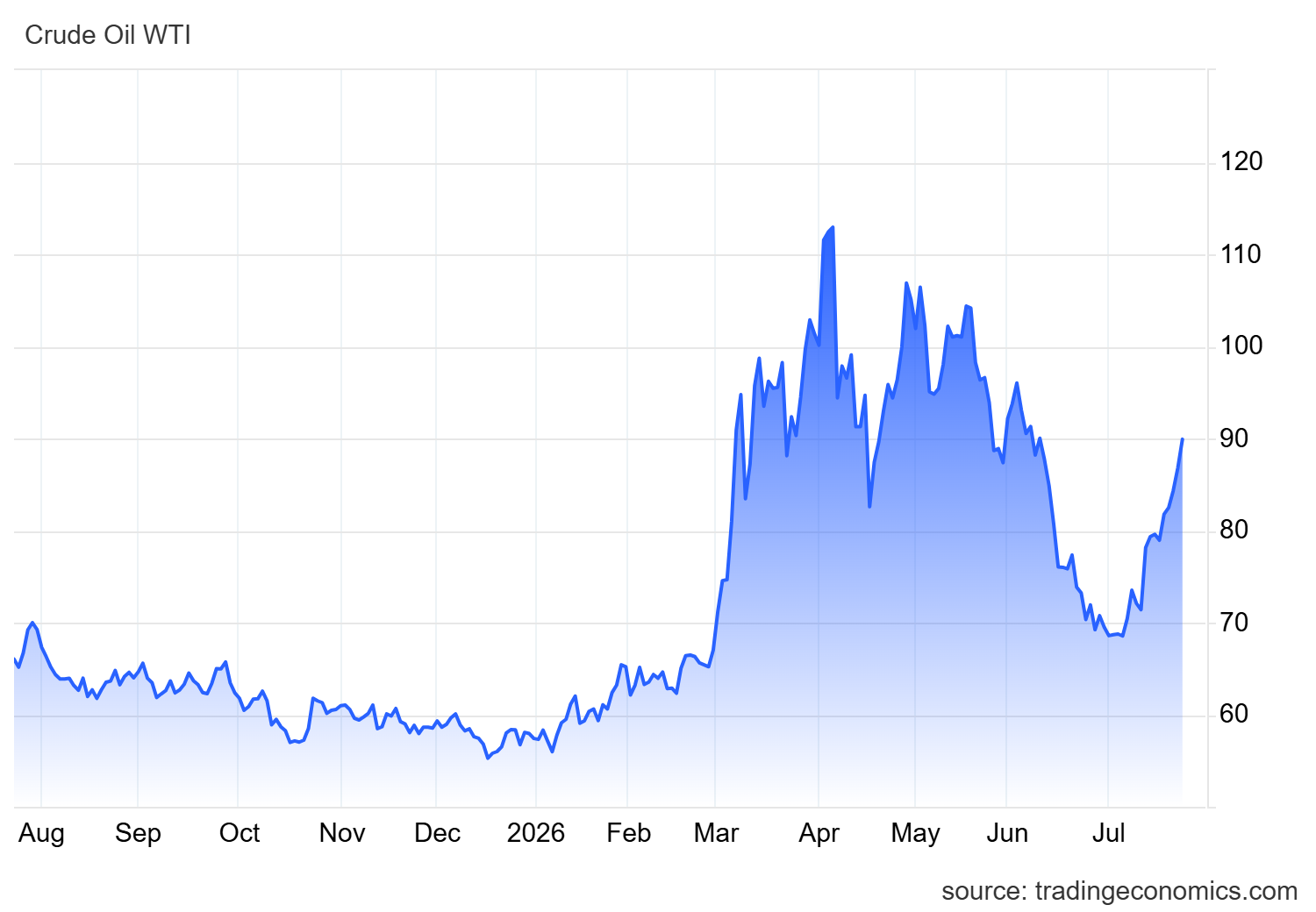
On to macro pressures which has been building up onto crypto prices. Oil futures climbed to $89.9 per barrel, the highest level since June 10. Rising oil often signals fresh inflation risk, which complicates any central bank plans to cut rates soon.
Bond yields are already responding. The two-year Treasury yield jumped to 4.31%, its highest mark since February 2025. The 10-year yield rose to 4.66%, a level not seen since May. Higher yields make non-yielding assets like Bitcoin less attractive by comparison.
Geopolitical tension adds another layer of worry. The U.S. military reportedly struck targets linked to Iran’s Revolutionary Guard Corps using a long-range bomber. This marks a clear escalation and suggests further military action could follow.
On the regulatory side, the Clarity Act hit a fresh snag. Key Senate Democrats said the latest draft still falls short on ethics protections. As a result, betting markets slashed the bill’s passage odds from 46% down to 38%.
Bitcoin’s Long Slide Through 2026
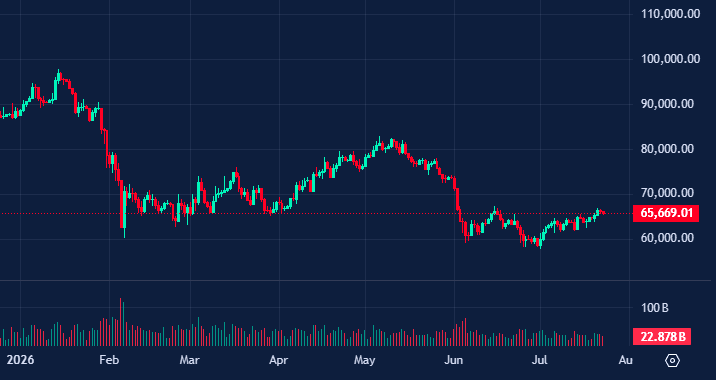
Zooming out, this week’s dip is part of a longer trend. Bitcoin has fallen from highs near $95,000 to $85,000 earlier this year. It briefly dropped below $60,000 in June, one of its weakest months in years. Altcoins fell even harder during that stretch.
Source: Coinmarketcap
Spot Bitcoin ETFs saw heavy outflows too, with June alone losing roughly $4.5 billion. Some withdrawal streaks stretched past ten straight days. That reversal drained liquidity and shook confidence built up during earlier rallies.
At the same time, investor money has rotated toward AI stocks and major tech IPOs. Crypto, seen as a higher-risk bet, has lost ground as portfolios chase steadier momentum elsewhere. Analysts call this the “AI rotation,” and it shows no signs of slowing.
Altcoins have suffered more than Bitcoin throughout this stretch. Smaller-cap tokens lose liquidity faster during risk-off periods. As a result, many altcoins now sit at multi-month lows with thin trading volumes and fading investor interest.
Still, July has brought some stability. Bitcoin now hovers in the mid-$60,000s with occasional rebounds. Whether that holds depends heavily on upcoming Federal Reserve signals and how geopolitical tensions unfold in the weeks ahead.
For now, the crypto heatmap tells a cautious story. New institutional tools like S&P’s revenue-based index may eventually restore confidence. But rates, oil, and regulatory doubts are keeping traders on edge in the meantime.
Disclaimer: The views and investment tips expressed by investment experts/broking houses/rating agencies on tradebrains.in are their own, and not that of the website or its management. Investing in equities poses a risk of financial losses. Investors must therefore exercise due caution while investing or trading in stocks. Trade Brains Technologies Private Limited or the author are not liable for any losses caused as a result of the decision based on this article. Please consult your investment advisor before investing.