Synopsis: India’s maritime sector is entering a new growth phase, driven by rising cargo volumes, increasing exports, infrastructure investments, and government initiatives such as Sagarmala and PM Gati Shakti. As India’s trade footprint expands globally, port operators and logistics infrastructure companies could emerge as key beneficiaries of the country’s maritime boom.
India handles nearly 95 percent of its trade volume and around 70 percent of trade value through maritime transport, making ports one of the most critical pillars of the country’s economy. Over the past decade, cargo volumes at Indian ports have steadily increased, supported by growing industrial activity, rising energy imports, expanding exports, and stronger domestic consumption.

The government has also committed substantial investments toward modernizing ports, improving multimodal connectivity, and expanding logistics infrastructure under initiatives such as Sagarmala, which envisions more than Rs. 5 lakh crore worth of port-led development projects. As India’s economy targets becoming a $5 trillion economy, maritime infrastructure is expected to play an increasingly important role.
While investors often focus on shipping companies, several port operators and logistics infrastructure businesses could be positioned to benefit from rising cargo throughput and long-term trade growth.

1. Adani Ports and Special Economic Zone (APSEZ)
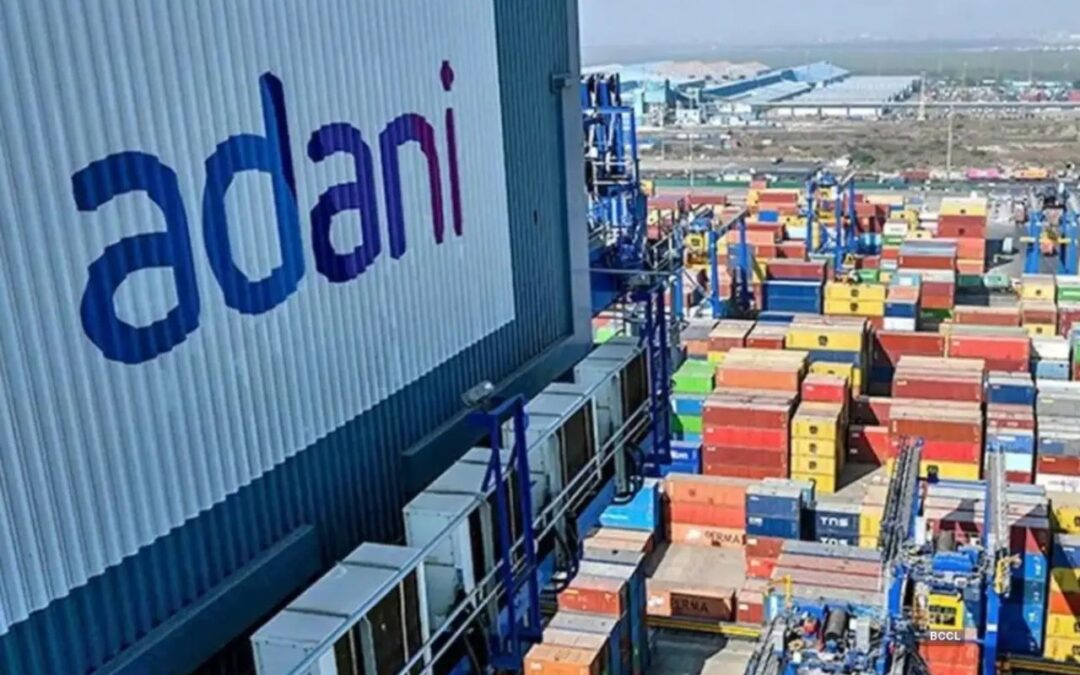
India’s maritime growth story cannot be discussed without Adani Ports, the country’s largest private port operator. The company operates a network of ports and terminals across both the eastern and western coasts, handling containers, dry bulk, liquid cargo, LNG, and automotive shipments.
The company’s shares closed at Rs. 1,845.10 apiece on the stock exchange, up by 0.90 percent for the day. The stock has remained a key proxy for India’s trade and logistics growth due to its dominant position in port infrastructure.

Adani Ports handled over 450 million metric tonnes of cargo during FY25, accounting for a significant share of India’s commercial port traffic. As trade volumes continue to rise, the company stands to benefit from higher cargo throughput, logistics integration, rail connectivity, and warehousing expansion. Its diversified cargo mix and extensive national footprint make it one of the most direct beneficiaries of India’s maritime expansion.
2. JSW Infrastructure
India’s growing industrial output and energy demand are creating increasing requirements for efficient cargo handling infrastructure. JSW Infrastructure has emerged as one of the country’s fastest-growing private port operators with assets strategically located near industrial clusters and energy hubs.
The company’s shares closed at Rs. 308.70 apiece on the stock exchange, up by 3.14 percent for the day. Since its listing, the stock has attracted investor attention due to its exposure to long-term infrastructure and logistics growth themes.

The company operates ports and terminals that handle coal, iron ore, steel products, containers, and liquid cargo. As India’s manufacturing sector expands and exports increase under initiatives such as Make in India and China+1, cargo volumes moving through private ports are expected to rise. The company’s strategy of expanding third-party cargo handling alongside captive cargo operations could provide additional growth opportunities in the coming years.
3. Gujarat Pipavav Port
As India’s containerized trade continues to expand, container-focused ports could play an increasingly important role in facilitating exports and imports. Gujarat Pipavav Port, strategically located on India’s western coast, serves as an important gateway for container, bulk, and liquid cargo movement.
The company’s shares closed at Rs. 155 apiece on the stock exchange, up by 0.25 percent for the day. The stock has remained on investors’ radar due to its strong container handling capabilities and strategic location near key industrial regions.
The port benefits from rail and road connectivity linking it to northern and western India, two of the country’s largest manufacturing and consumption hubs. Rising exports from sectors such as engineering goods, chemicals, pharmaceuticals, textiles, and consumer products could drive higher container traffic over the long term. As global companies increasingly diversify supply chains toward India, ports facilitating export growth could see sustained cargo volume expansion.
Why India’s maritime boom matters to investors
India’s logistics costs currently account for nearly 13-14 percent of GDP, significantly higher than many developed economies. Improving port infrastructure and multimodal connectivity remains a key government priority aimed at reducing logistics costs and improving trade competitiveness.
Cargo volumes at Indian ports have consistently grown over the years, supported by rising imports of crude oil, LNG, coal, and industrial raw materials, alongside growing exports of engineering goods, chemicals, pharmaceuticals, and manufactured products. Industry estimates suggest that India’s cargo handling capacity and port infrastructure investments will continue to expand significantly over the next decade.
For investors, port operators offer a unique way to participate in India’s trade growth, manufacturing expansion, and infrastructure development. As cargo volumes increase and supply chains become more integrated, companies such as Adani Ports, JSW Infrastructure, and Gujarat Pipavav Port could potentially capture a larger share of the country’s maritime growth story.
Disclaimer: The views and investment tips expressed by investment experts/broking houses/rating agencies on tradebrains.in are their own and not that of the website or its management. Investing in equities poses a risk of financial losses. Investors must therefore exercise due caution while investing or trading in stocks. Trade Brains Technologies Private Limited or the author are not liable for any losses caused as a result of the decision based on this article. Please consult your investment advisor before investing.