
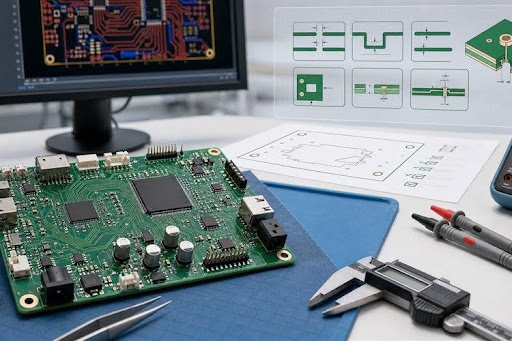
Finding PCB manufacturers in India is not difficult. The real challenge is deciding which companies are worth including in an RFQ.
Most supplier lists rely on the same descriptions: reliable quality, competitive pricing, fast delivery, and good service. These claims may sound positive, but they reveal little about whether a manufacturer can handle a particular stackup, material system, board type, or quality requirement.
A more useful evaluation starts with the manufacturer’s own technical information. Does the company clearly explain what it produces? Are materials, layer counts, surface finishes, certifications, inspection methods, factory locations, or target industries publicly listed? More importantly, does its capability profile match the project being sourced?
The following list is intended as a practical starting point rather than a fixed ranking or factory audit. These 10 Indian PCB manufacturers were selected because their official websites provide enough public information to support an initial buyer-side evaluation.
Published capabilities should still be verified during quotation. Before releasing an order, request the latest capability table, applicable certificates, DFM feedback, test methods, material confirmation, and sample evidence.
1. Ascent Circuits
Ascent Circuits presents a broader and more technically organized product range than many general PCB suppliers. Its website separates production into single-sided, double-sided, multilayer, RF, aluminum, and flexible PCB categories. It also identifies application areas including automotive, communications, consumer electronics, lighting, industrial power, space, and defense-related products.
This structure gives sourcing teams a clearer picture of where the company may fit. Rather than presenting PCB manufacturing as one undifferentiated service, Ascent organizes its capabilities by both board type and application environment.
Its multilayer PCB information includes materials and surface finishes, while the company milestones reference AOI, flying probe testing, RF and microwave PCBs, blind and buried vias, multilayer production, and flexible circuits. Certification milestones include ISO and automotive quality-system references.
Ascent is therefore worth considering for multilayer, industrial, RF, and automotive-related projects. However, the presence of a technology or certification on a company website does not automatically mean every order will be manufactured to that standard. Project-specific requirements should be included in the RFQ and confirmed in writing.
| Capability area | Public information | What it means for buyers |
|---|---|---|
| Company positioning | Indian PCB manufacturer offering several board categories rather than focusing on one product type. | Suitable for broad PCB supplier screening. |
| PCB scope | Single-sided, double-sided, multilayer, RF, aluminum, and flexible PCBs. | Separate the RFQ by board type and manufacturing route. |
| Technology signals | FR-4, PTFE, hybrid materials, OSP, HASL, lead-free HASL, ENIG, hard gold, AOI, flying probe, blind and buried vias, and RF/microwave production are referenced. | Relevant for industrial, communications, RF, and multilayer designs. |
| Quality signals | Company milestones reference ISO 9001, ISO/TS 16949, and IATF 16949. | Request current certificates and confirm the applicable facility and product scope. |
| Likely RFQ fit | Multilayer, industrial, automotive-related, RF, microwave, and selected flexible PCB projects. | Best evaluated with a defined stackup, material specification, impedance target, and acceptance standard. |
| Points to confirm | Maximum layer count, trace and space, impedance tolerance, via structure, material availability, IPC class, and test records. | Public information should be treated as a screening tool rather than final approval. |
2. Shogini Technoarts
Founded in 1979, Shogini Technoarts is one of the longer-established PCB manufacturers on this list. Its public product range includes single-sided, double-sided, multilayer, flexible, and metal-clad PCBs.
The company also lists a wide mix of application markets, including automotive, power electronics, process control, telecommunications, medical electronics, industrial electronics, computer peripherals, and LED lighting. This suggests a supplier focused on custom manufacturing across several industrial sectors rather than only quick-turn prototypes or a single PCB category.
Shogini references manufacturing facilities in Pune and places emphasis on engineering support, equipment, and contract manufacturing for global customers. Its website, however, does not publish every technical limit that an engineering team may need.
For that reason, Shogini is best approached with a structured RFQ. It may be a practical candidate for standard and moderately complex PCB production, especially for buyers looking for an established domestic manufacturer with broad application experience.
Reliability-sensitive or regulated projects should include clear requirements for certification scope, material traceability, inspection records, workmanship standards, and customer-specific acceptance criteria.
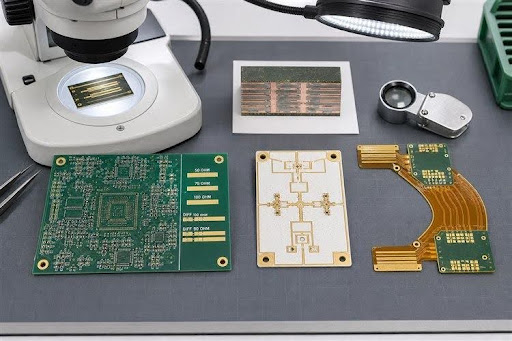
| Capability area | Public information | What it means for buyers |
|---|---|---|
| Company positioning | Indian PCB manufacturer founded in 1979, focused on custom PCB production and industrial applications. | Relevant for buyers seeking an established domestic supplier. |
| PCB scope | Multilayer, double-sided, flexible, metal-clad, and single-sided PCBs. | Covers many common board types, including thermal and flexible products. |
| Technology signals | The website emphasizes production facilities, engineering support, equipment, and custom manufacturing. | Request a current process capability sheet because numerical limits are not extensively published. |
| Quality signals | The company highlights manufacturing standards, equipment, and industry experience. | Confirm current ISO, IATF, UL, or customer-specific approvals before qualification. |
| Likely RFQ fit | Standard multilayers, flexible boards, metal-clad PCBs, LED products, industrial controls, telecom, and automotive-related projects. | Likely better suited to standard and moderate complexity unless advanced processes are confirmed. |
| Points to confirm | Layer count, trace and space, drilled-hole size, materials, surface finishes, impedance control, and inspection coverage. | The RFQ should establish the project’s technical boundaries. |
3. Fine-Line Circuits
Fine-Line Circuits stands out for the technical detail of its product portfolio. Its website goes well beyond conventional single-sided, double-sided, and multilayer PCB descriptions.
The company references high-frequency microwave hybrid PCBs, cavity multilayers, rigid-flex and flexible circuits, large backplanes, heavy-copper boards, embedded passive structures, and impedance-controlled multilayers with blind and buried vias.
Its multilayer capability information includes production up to 24 layers, sequential build-up, BGA via-in-pad with plated caps, single-ended and differential impedance control, and material families such as FR-4, PTFE, polyimide, and ceramic-filled laminates.
These details suggest that Fine-Line is comfortable discussing the manufacturing issues behind RF materials, sequential lamination, via-in-pad, blind and buried vias, thick boards, flexible interconnects, and backplanes.
It is therefore one of the stronger candidates in this list for technically demanding fabrication. Projects involving RF or microwave performance, controlled impedance, rigid-flex construction, backplanes, or special via structures should be discussed with the manufacturer before the layout is frozen.
A suitable RFQ should include more than Gerber files. Stackup intent, laminate preference, impedance targets, coupon requirements, via filling, copper weight, board thickness, and inspection expectations should all be defined.
| Capability area | Public information | What it means for buyers |
|---|---|---|
| Company positioning | Indian PCB manufacturer with a strong emphasis on advanced and special-purpose boards. | More relevant for complex fabrication than basic low-cost double-sided sourcing. |
| PCB scope | RF and microwave hybrids, cavity multilayers, flex, rigid-flex, large backplanes, heavy copper, embedded passives, and blind/buried via multilayers. | Suitable for RF, dense multilayer, backplane, and special-structure RFQs. |
| Technology signals | Up to 24 layers, sequential build-up, BGA via-in-pad, impedance control, PTFE, polyimide, and ceramic-filled laminates. | Stronger fit where fabrication decisions directly affect signal integrity or reliability. |
| Quality signals | The website includes dedicated quality and capability information. | Request current certificates, process capability data, coupons, and sample reports. |
| Likely RFQ fit | RF/microwave PCBs, complex multilayers, backplanes, rigid-flex, via-in-pad, and controlled-impedance boards. | Early engineering discussion is recommended for unusual materials or structures. |
| Points to confirm | Material inventory, impedance tolerance, via-fill method, hole size, lamination sequence, board thickness, and inspection records. | Resolve technical feasibility before comparing final commercial quotations. |
4. Meena Circuits
Meena Circuits presents a more conventional PCB product range. Its website lists single-sided, double-sided, 4-layer, 6-layer, 8-layer, multilayer, and metal-core PCBs.
This makes the company easier to position for standard FR-4 products, lower-to-mid layer-count multilayers, and metal-core boards used in LED lighting, thermal management, or power-related applications.
Compared with suppliers that emphasize HDI, RF, or special stackups, Meena’s website is more focused on product categories than detailed manufacturing limits. That is not necessarily a disadvantage for standard projects, but it means the RFQ must establish the missing technical information.
Before shortlisting Meena for production, ask for the current maximum layer count, minimum hole size, copper thickness range, trace and space limits, impedance capability, surface finishes, batch range, electrical testing policy, AOI coverage, and available metal-core materials.
Projects involving HDI, specialty RF laminates, strict automotive validation, or detailed traceability requirements should go through an additional qualification step.
| Capability area | Public information | What it means for buyers |
|---|---|---|
| Company positioning | Indian PCB manufacturer focused on standard layer counts and metal-core products. | A practical candidate for conventional PCB and MCPCB sourcing. |
| PCB scope | Single-sided, double-sided, 4-layer, 6-layer, 8-layer, multilayer, and metal-core PCBs. | Clear alignment with standard FR-4 and mid-range multilayer projects. |
| Technology signals | The website explains common PCB constructions and metal-core categories. | Request a current manufacturing capability sheet for numerical process limits. |
| Quality signals | Public product pages do not provide a complete view of the quality and inspection system. | Ask for certificates, inspection flow, outgoing reports, and acceptance standards. |
| Likely RFQ fit | Standard FR-4, 4- to 8-layer boards, LED PCBs, power products, and conventional production. | Advanced HDI, RF, or regulated applications require additional confirmation. |
| Points to confirm | Layer count, thickness, copper weight, minimum hole, trace and space, surface finish, core material, and electrical test coverage. | Use the website for initial fit and the RFQ for final qualification. |
5. PCB Power
PCB Power operates more like an integrated online manufacturing platform than a traditional factory website. It combines PCB manufacturing, online quotation, PCB layout, rigid and flexible boards, stencils, component sourcing, and PCB assembly services.
Its About page states that the business began in 1996 as Circuit Systems India Private Limited before developing into a broader electronics manufacturing platform.
One of PCB Power’s main strengths is the amount of technical information available publicly. Its rigid PCB capability page lists layer count, board thickness, trace and space, hole size, blind and buried vias, impedance measurement, via filling, surface finishes, solder mask options, and tolerances.
This makes it easier for an engineering or purchasing team to compare a design against published manufacturing limits before sending an RFQ.
PCB Power is worth evaluating when a project requires online quoting, bare PCB fabrication, component sourcing, and assembly within one workflow. However, buyers should read the capability conditions carefully. Some processes, including specific blind-via structures and laser-drilled features, may only be available within defined limits.
A convenient platform can simplify purchasing, but it does not replace DFM review, material confirmation, certificate verification, or written approval of the final process.
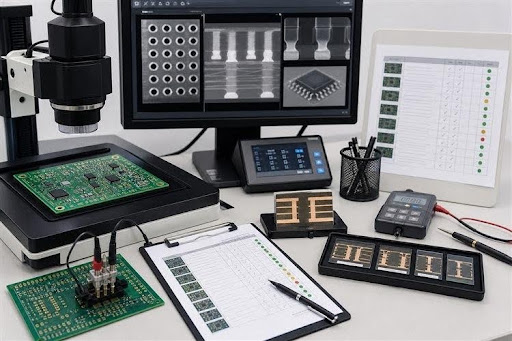
| Capability area | Public information | What it means for buyers |
|---|---|---|
| Company positioning | PCB and electronics manufacturing platform associated with Circuit Systems India Private Limited. | Relevant for buyers seeking online RFQ, fabrication, sourcing, and assembly support. |
| PCB scope | Rigid PCB, flexible PCB, stencils, component sourcing, and PCB assembly. | More suitable for an integrated workflow than a bare-board-only comparison. |
| Technology signals | Published information includes up to 24 layers, trace and space, blind and buried vias, impedance measurement, via filling, surface finishes, and tolerances. | Detailed public data makes it easier to prepare a measurable RFQ. |
| Quality signals | The company references ISO and IPC-certified facilities, while assembly pages mention AOI and X-ray. | Confirm certificate scope, IPC class, and order-specific test coverage. |
| Likely RFQ fit | Prototypes, low-to-medium volume production, multilayer rigid PCBs, selected flex projects, online quotation, and PCBA. | Provide Gerbers, BOM, centroid data, assembly notes, and test requirements. |
| Points to confirm | Via structure, laser microvia support, impedance tolerance, laminate selection, assembly inspection, functional testing, and lead-time conditions. | Published tables are useful, but final feasibility remains design-dependent. |
6. Hi-Q Electronics
Hi-Q Electronics has one of the clearest high-technology profiles in this list. Its website focuses on defense and aerospace applications, quick-turn prototypes, multilayer rigid PCBs, flexible and rigid-flex circuits, laser-drilled HDI, and manufacturing to IPC Class 3/3A or customer specifications.
The company describes a range extending from basic 2-layer PCBs to complex boards with as many as 38 layers. Its HDI information references laser drilling, blind and buried vias, up to four press cycles, copper-filled vias, stacked vias, and all-layer laser-via structures.
These are meaningful process details. They affect stackup planning, routing density, lamination risk, microvia reliability, inspection requirements, and overall cost.
Hi-Q should therefore be considered when the project involves HDI, rigid-flex, high layer counts, defense, aerospace, or another reliability-sensitive application.
Its IPC Class 3/3A references should not be treated as an automatic condition for every order. When Class 3 or Class 3A workmanship is required, the RFQ should identify the applicable standard, revision, acceptance criteria, documentation package, inspection method, and shipment records.
| Capability area | Public information | What it means for buyers |
|---|---|---|
| Company positioning | PCB supplier focused on defense, aerospace, quick-turn prototypes, multilayer rigid, rigid-flex, and laser-drilled HDI. | A strong candidate for complex and technically sensitive boards. |
| PCB scope | Double-sided and multilayer rigid PCBs, flex, rigid-flex, HDI, and quick-turn prototypes. | Suitable where stackup and via architecture require early collaboration. |
| Technology signals | 2 to 38 layers, laser drilling, blind and buried vias, copper-filled vias, stacked vias, all-layer laser vias, and up to four press cycles. | Relevant for dense HDI and rigid-flex designs, subject to stackup approval. |
| Quality signals | The website states that production can follow IPC Class 3/3A or customer specifications. | Define the exact standard, revision, inspection evidence, and documentation in the RFQ. |
| Likely RFQ fit | HDI, dense multilayer, rigid-flex, defense and aerospace prototypes, and reliability-sensitive products. | More suitable for complex boards than routine low-cost two-layer production. |
| Points to confirm | Press count, microvia stacking, copper filling, laminate options, impedance, IPC class, inspection records, and delivery documentation. | Share the proposed stackup and critical constraints before requesting final pricing. |
7. Epitome Components
Epitome Components places greater emphasis on manufacturing scale and industry coverage. Its About page describes three production units in Ahmednagar and Supa and identifies markets such as lighting, automotive, consumer electronics, communications, industrial electronics, defense, and aerospace.
The company lists single-sided, double-sided, multilayer, and RF PCB solutions. Its website also outlines a longer operating history: Epitome was founded in 1994, began serving the electronics industry in 1997, worked with Trackwise UK on RF PCB manufacturing in 2007, and expanded its Supa capacity in 2009.
This background suggests a supplier oriented toward ongoing industrial production rather than only small prototype orders.
Epitome publishes multilayer capability up to 8 layers. Based on that stated range, it is likely to be most relevant for single-sided, double-sided, RF-related, and lower-to-mid layer-count programs in lighting, communications, consumer electronics, and industrial applications.
Boards requiring advanced HDI, rigid-flex construction, very high layer counts, or extremely fine geometry should be reviewed separately before the company is added to the final approved vendor list.
| Capability area | Public information | What it means for buyers |
|---|---|---|
| Company positioning | Indian PCB manufacturer with three production units and broad industry coverage. | Relevant for buyers concerned with production capacity and supply continuity. |
| PCB scope | Single-sided, double-sided, multilayer, and RF PCB solutions. | Suitable for common boards, RF-related work, and lower-to-mid layer-count multilayers. |
| Technology signals | The website references RF PCB manufacturing history and multilayer production up to 8 layers. | Better aligned with production-oriented standard boards than extreme HDI designs. |
| Quality signals | The company emphasizes manufacturing standards, quality, and continuous improvement. | Request current capability tables, certifications, sample reports, and test coverage. |
| Points to confirm | Capacity, panel size, hole size, copper thickness, RF materials, finishes, AOI, electrical testing, and certificate scope. | Use production scale as the first filter, followed by process-level confirmation. |
8. Sulakshana Circuits
Sulakshana Circuits Limited describes itself as an Indian PCB manufacturer with more than 30 years of experience. Incorporated in 1988, the company focuses on quick-turn double-sided and multilayer PCBs.
Its website references standard FR-4, high-temperature FR-4, Rogers materials, RoHS requirements, ENIG, and electrolytic gold over nickel.
The company’s emphasis on engineering support is particularly relevant. Sulakshana discusses DFM, material selection, stackup guidance, complex designs, and support with multilayer stack construction. This can be valuable for teams that need manufacturing feedback before the design is fully released.
Fast prototype turnaround is also promoted, although such claims should always be evaluated against the actual board. Layer count, material availability, surface finish, complexity, inspection requirements, factory loading, and payment timing can all affect the final schedule.
Sulakshana is best considered as a quick-turn and engineering-support candidate. Buyers should request a lead time against the exact stackup and manufacturing package rather than relying on a general prototype category.
| Capability area | Public information | What it means for buyers |
|---|---|---|
| Company positioning | Indian PCB manufacturer incorporated in 1988, focused on quick-turn double-sided and multilayer boards. | Relevant for prototype and engineering-led RFQs. |
| PCB scope | Double-sided and multilayer PCBs using materials and finishes including FR-4, high-temperature FR-4, Rogers, ENIG, and gold over nickel. | Suitable for multilayer FR-4 and selected higher-frequency material requirements. |
| Technology signals | DFM, material selection, stackup advice, complex-design support, and stack construction are emphasized. | Useful when manufacturability input is needed before final design release. |
| Quality signals | The website references certifications and applications including automotive, industrial control, railways, telecom, defense, space, and power electronics. | Verify approval status, certificate scope, and customer-specific requirements. |
| Likely RFQ fit | Quick-turn prototypes, double-sided boards, multilayers, and projects requiring engineering discussion. | Compare technical support, cost, and production suitability with other shortlisted suppliers. |
| Points to confirm | Lead-time conditions, material inventory, maximum layers, trace and space, Rogers grades, surface finish, and inspection records. | Request timing and pricing against the exact stackup. |
9. AT&S India
AT&S India requires a slightly different introduction from the other companies in this list. It is not an India-owned PCB brand in the same sense as several domestic manufacturers. It is the Nanjangud production site of the global AT&S group.
Even so, it is relevant to a search for PCB manufacturers in India because AT&S publicly includes the Nanjangud facility in its global production network and describes AT&S India as India’s first manufacturer of HFI and HDI printed circuit boards.
The AT&S worldwide information provides useful sourcing details, including the site location, opening year, target industries, technologies, employee information, and certificates.
Published technologies for Nanjangud include HDI PCBs up to 4-N-4, reinforced double-sided PCBs, standard multilayer PCBs from 4 to 18 layers, high-frequency PCBs, and 2.5D cavity-in-PCB structures.
AT&S India is more likely to suit long-term and technically demanding supply programs than informal low-volume prototype purchasing. Automotive, industrial, medical, communications, HDI, and high-frequency projects may be appropriate candidates.
The commercial process may differ from that of a quick-turn supplier. MOQ, supplier onboarding, NPI requirements, qualification procedures, and project fit should be discussed early.
| Capability area | Public information | What it means for buyers |
|---|---|---|
| Company positioning | Nanjangud production site within the global AT&S group, described as an HFI and HDI PCB manufacturer in India. | Relevant for qualified global supply chains requiring India-based manufacturing. |
| PCB scope | HDI, high-frequency PCBs, reinforced double-sided boards, 4- to 18-layer multilayers, and 2.5D cavity-in-PCB technology. | Suitable for higher-end automotive, industrial, medical, communications, and HDI programs. |
| Technology signals | HDI capability up to 4-N-4 and dedicated high-frequency PCB technology are listed. | Begin technical engagement early when material and stackup requirements are complex. |
| Quality signals | The site lists IATF 16949, ISO 9001, ISO 14001, ISO 45001, ISO/IEC 27001, and other certificates. | Confirm current documents, facility scope, product scope, and customer approval requirements. |
| Likely RFQ fit | Automotive, industrial, medical, communications, high-frequency, HDI, and long-term production programs. | Better aligned with structured supplier qualification than small informal prototype orders. |
| Points to confirm | Onboarding process, MOQ, NPI procedure, production qualification, materials, delivery region, certificate scope, and acceptance standards. | Treat AT&S as a high-end manufacturing candidate rather than a catalog supplier. |
10. Genus Electrotech
Genus Electrotech differs from the pure PCB fabricators in this article. Its website presents the business as a vertically integrated electronics manufacturer that includes PCB production within a wider manufacturing system.
The company states that Genus Electrotech Ltd. is certified to ISO 9001:2015 and ISO 14001:2015. It also emphasizes backward integration from bare PCB manufacturing through to packaging materials for consumer electronics.
Facility information lists a Hi-Tech PCB Plant and gives monthly capacity information for double-sided, single-sided, and metal-core boards. The same manufacturing network includes SMT and manual insertion, injection molding, LED lighting, LED televisions, washing machines, air coolers, and low-voltage cables.
This makes Genus particularly relevant when the project involves more than bare PCB procurement. It may be suitable for LED lighting, appliance control boards, consumer electronics, MCPCB products, and locally integrated electronics manufacturing.
For advanced HDI, RF and microwave, high-layer-count multilayers, or complex rigid-flex boards, the public information is less detailed than that provided by Hi-Q, Fine-Line, or AT&S. Buyers should confirm these capabilities before including Genus in an advanced PCB shortlist.
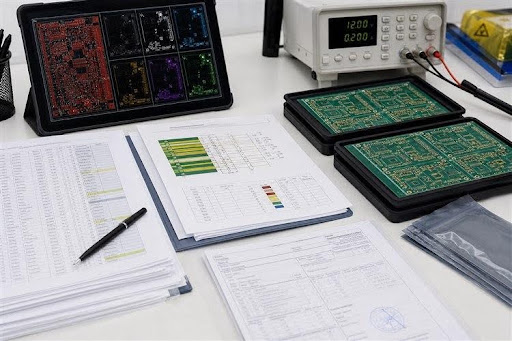
| Capability area | Public information | What it means for buyers |
|---|---|---|
| Company positioning | Vertically integrated electronics manufacturer with PCB production as part of a wider manufacturing network. | Relevant when the project extends beyond bare-board supply. |
| PCB scope | Hi-Tech PCB Plant producing double-sided, single-sided, and MCPCB products. | Suitable for conventional PCBs, thermal boards, LED products, and consumer electronics. |
| Technology signals | PCB manufacturing, SMT and manual insertion, AOI, molding, and finished-electronics manufacturing are presented within one group. | Stronger as an integrated manufacturing candidate than as a specialist advanced PCB fabricator. |
| Quality signals | The company states ISO 9001:2015 and ISO 14001:2015 certification. | Confirm whether the certificate scope includes the relevant PCB plant and product line. |
| Likely RFQ fit | LED lighting, consumer products, appliance controls, MCPCB, SMT-supported builds, and local manufacturing programs. | Consider Genus when the PCB forms part of a broader product-manufacturing plan. |
| Points to confirm | Maximum layer count, MCPCB materials, capacity conditions, AOI coverage, SMT inspection, and whether bare PCBs can be purchased separately. | Submit a product-level RFQ rather than comparing only bare-board unit price. |
An Alternative Outside India: PCBCool
When the sourcing strategy is not limited to India, PCBCool can also be included as an alternative supplier. PCBCool should not be described as an Indian PCB manufacturer. It operates as a global PCB and PCBA service brand under PS Electronics.
Its value lies in combining PCB fabrication, component sourcing, PCB assembly, inspection, testing, and finished-product assembly across a broader manufacturing network.
PCBCool’s public capability information lists FR-4, halogen-free laminates, metal-core materials, polyimide, Rogers, Taconic, Teflon, and mixed-lamination constructions. Published capabilities include 1 to 40 layers, HDI up to 4+N+4, laser-drilled holes down to 0.08 mm, mechanical holes down to 0.15 mm, and listed trace and space limits of 64 μm/64 μm.
Surface-finish options include lead-free HASL, ENIG, OSP, immersion silver, immersion tin, gold fingers, carbon ink, and other project-dependent finishes.
PCBCool is also relevant when the project requires assembly or regional manufacturing outside India. Its capability information separates PCBA resources in Mainland China, Malaysia, and Mexico. Available processes include SMT, THT, mixed assembly, SPI, AOI, X-ray, ICT, functional testing, and burn-in, depending on the production base and project.
This gives buyers serving North American, European, and global markets another sourcing route to compare with India-based production.
As with every supplier in this article, published maximum values should not be treated as default design rules. A 40-layer board, 33 oz copper construction, 0.08 mm laser hole, advanced HDI stackup, RF laminate, or accelerated assembly schedule remains dependent on the design, materials, quantity, test plan, and engineering review.
| Capability area | Public information | What it means for buyers |
|---|---|---|
| Company positioning | Global PCB and PCBA service brand under PS Electronics, covering fabrication, assembly, inspection, testing, and finished-product support. | Use PCBCool as an international alternative rather than an India-based manufacturer. |
| PCB scope | FR-4, halogen-free, metal core, polyimide, Rogers 4350B/3003/4003C/5880, Taconic, Teflon, mixed lamination, and other laminates by request; 1 to 40 layers and HDI up to 4+N+4 are listed. | Relevant for multilayer, HDI, RF, high-speed, thick-copper, flexible, and metal-core PCB discussions. |
| Technology signals | Published capabilities include 0.08 mm laser holes, 0.15 mm mechanical holes, 64 μm/64 μm trace and space, copper from 1/3 oz to 33 oz, AOI, 100% electrical testing, DFM, via-in-pad, resin plugging, edge plating, impedance control, carbon ink, and gold fingers. | Detailed public information supports early screening, but extreme limits remain project-dependent. |
| PCBA network | PCBA resources are listed in Mainland China, Malaysia, and Mexico, with SMT, THT, mixed assembly, SPI, AOI, X-ray, ICT, functional testing, and burn-in. | Useful for turnkey assembly and regional supply planning. |
| Quality signals | Public information references ISO 9001, ISO 14001, ISO 13485, UL, RoHS, and REACH-related compliance. | Request current certificates and verify the facility and product scope. |
| Likely RFQ fit | Global PCB and PCBA sourcing, turnkey assembly, HDI, RF, high-speed, thick copper, flexible circuits, metal-core boards, and prototype-to-production projects. | Suitable when buyers require fabrication, sourcing, assembly, and test support from one supplier. |
| Points to confirm | Stackup, material availability, IPC class, exact process limit, certificate scope, testing, lead time, logistics, inspection records, and DFM findings. | Final decisions should rely on written project confirmation rather than headline capability values. |
Conclusion
Based on the capabilities publicly presented by the manufacturers reviewed in this article, India’s PCB industry appears to be particularly well suited to conventional 1- to 4-layer boards. Several suppliers can also produce higher-layer-count, RF, HDI, rigid-flex, and other specialized PCBs, but these capabilities are concentrated among a smaller number of manufacturers and often require more detailed technical qualification.
When a project moves beyond four layers, cost can become a more important part of the sourcing decision. Buyers that need multilayer, HDI, high-frequency, heavy-copper, or other complex PCBs while maintaining competitive production costs may also consider PCB manufacturers in China as an alternative. China’s larger PCB manufacturing base provides a wider selection of materials, processes, production capacities, and suppliers across different price levels.
