
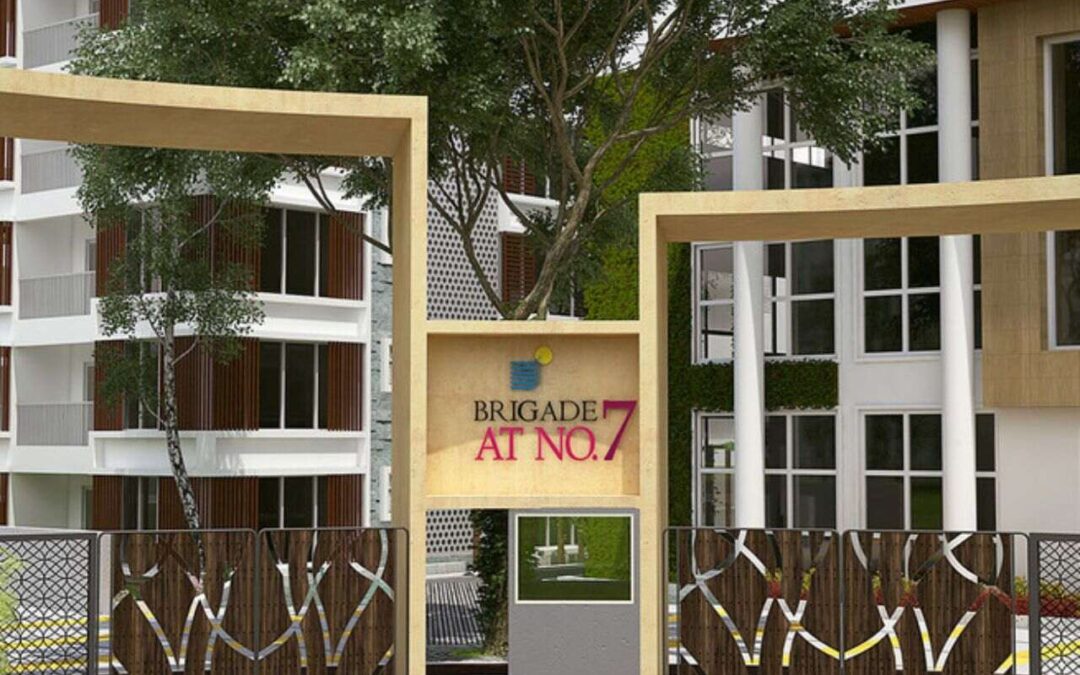
Synopsis: Approval delays, a regulatory setback in Chennai, and flat collections dragged performance through most of FY26. Even as Q4 showed signs of recovery, the cumulative disappointment was enough to send the stock into a prolonged decline.
Indian real estate has had a strong run over the past three years, with demand in cities like Bengaluru, Chennai and Hyderabad holding up better than most expected. But a strong market does not always protect a stock from execution hiccups. When approvals stall, launches slip, and collections come in flat, even well-run developers find themselves on the wrong side of market sentiment.

Brigade Enterprises finds itself at a crossroads after a bruising year for its stock, even as the company insists its fundamentals remain intact. Here is what went wrong – and what investors are watching now.
Brigade Enterprises, which has a market capitalisation of ₹16,285 crore, has seen its shares tumble around 40% over the past year, falling from the ₹800-840 range in early July 2025 to about ₹500.

The Numbers That Worried the Street
When a real estate company misses its own launch targets by nearly a third, the market notices. That is exactly what happened in FY26. The company had set out to launch 12 million square feet of residential projects during the year but ended up launching only 8.3 million square feet. Around 3.3 million square feet got pushed into FY27, largely on account of regulatory delays. The result was a 5% decline in full-year pre-sales, which came in at 7,424 crore against FY25 levels.
For a stock that had been priced for consistent growth, this kind of miss is enough to shake investor confidence. Markets tend to price in expectations, and when execution falls short, re-rating follows. That re-rating, in this case, has been steep.

Approvals Blocked the Pipeline
The management was candid about what happened. A large portion of launches were stuck waiting for approvals through much of the year, and when they finally came through, many landed in the last few weeks of March. Projects like Brigade Lumina and Belvedere in Bengaluru were launched so close to the financial year-end that there was barely enough time to build sales momentum within the same year.
Brigade Lumina, for instance, sold over 85% at launch – which shows demand was never the real problem. The bottleneck was entirely on the supply side, with regulatory pipelines creating an artificial squeeze. But markets do not always reward good intent when the financial year numbers have already been filed.
Chennai Added to the Pain
Making matters worse was Brigade Morgan Heights in Chennai. The project ran into a regulatory dispute post-launch, forcing the company to pause sales of Phase 1. Although the Madras High Court ruled in Brigade’s favour in February, the company chose not to resume sales immediately, waiting instead for state elections to conclude. The entire Morgan Heights project is now being relaunched in Q1 FY27.

Chennai alone accounted for most of the 3.3 million square feet that slipped into the next year. The combination of a legal overhang, election-related caution, and delayed launches from a key market hit sustenance sales figures and overall collections for the year.
Margins and Collections Disappointed Too
Beyond pre-sales, the financial profile of FY26 also raised questions. Collections remained broadly flat at 7,476 crore, similar to the previous year, despite higher construction activity. Cash flow from operations moderated, as construction spend rose significantly with the total area under construction growing by about 4.5 million square feet year-on-year.
Residential EBITDA margins stayed in the low-to-mid teens on a reported basis, which looked underwhelming even if the underlying POCM-based margins were tracking closer to 30%. The explanation – that older, lower-priced inventory was coming up for recognition – is technically sound but does little to reassure investors looking at headline numbers.
Financial Highlights
FY26 consolidated revenue came in at 5,909 crore, up 11% year-on-year, with an EBITDA of 1,638 crore and an EBITDA margin of 28%. Consolidated PAT stood at 725 crore, a growth of 7% over FY25, while PAT after minority interest was 644 crore.
On a quarterly basis, Q4 FY26 revenue stood at 1,523 crore with an EBITDA of 430 crore, again at a 28% margin. Consolidated PAT for the quarter was 190 crore, with PAT after minority interest at 145 crore.
Pre-sales for the full year came in at 7,424 crore, 5% lower than FY25, while Q4 alone delivered pre-sales of 2,521 crore, a sequential jump of 44%. Full-year collections held broadly steady at 7,476 crore. Gross debt stood at 5,231 crore against cash and equivalents of 2,953 crore, leaving net debt at 2,278 crore. The debt-equity ratio for the year was a comfortable 0.27.
Where Does This Leave Investors?
The company has guided for at least 20% growth in pre-sales in FY27, with a target of 9,000 crore. It has a launch pipeline of 11.6 million square feet with a GDV of nearly 11,900 crore. Approval-related issues are said to be largely behind it, and Q4 FY26 already showed signs of recovery with pre-sales jumping 44% sequentially.
The crash in the stock may well be capturing the worst of FY26 rather than signalling structural damage. But until the launch pipeline starts converting into actual pre-sales numbers – and until collections reflect that progress – the stock is likely to stay under pressure.
Disclaimer: The views and investment tips expressed by investment experts/broking houses/rating agencies on tradebrains.in are their own, and not that of the website or its management. Investing in equities poses a risk of financial losses. Investors must therefore exercise due caution while investing or trading in stocks. Trade Brains Technologies Private Limited or the author are not liable for any losses caused as a result of the decision based on this article. Please consult your investment advisor before investing.