Synopsis: Amid the government’s commencement of an Offer For Sale to divest a 4% equity stake with an option to offload an additional 4% via greenshoe shares of Central Bank of India fell nearly ~8 percent on Friday, as institutional bidding opened under the SEBI Minimum Public Shareholding compliance drive.
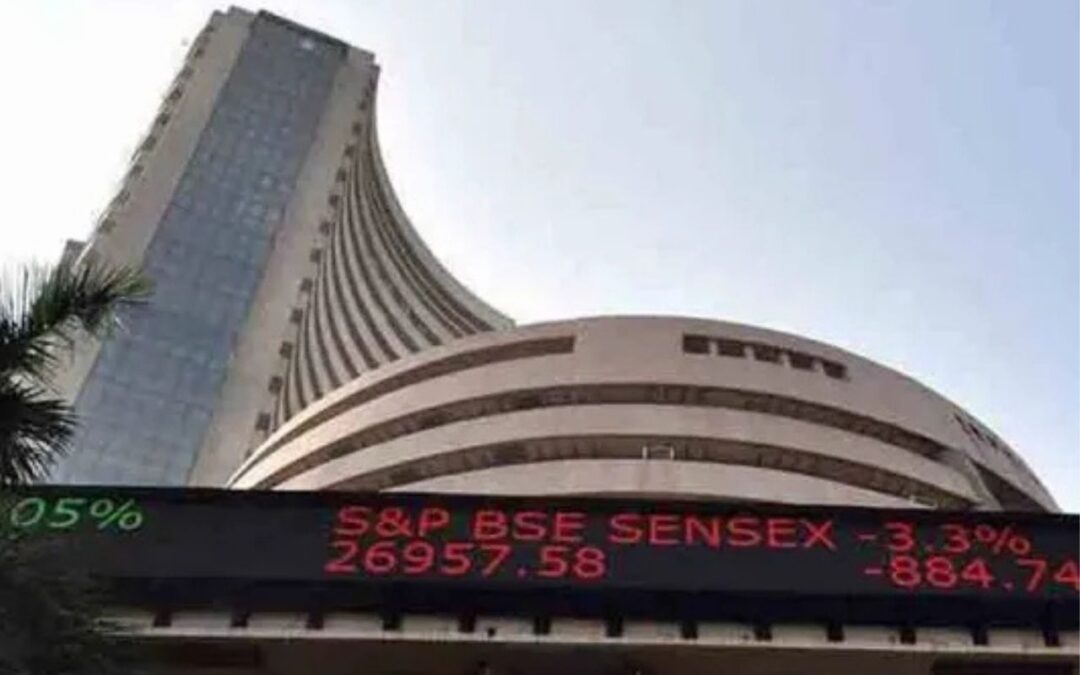
Shares of a state-owned lender came under sharp selling pressure on Friday, May 22, as the government formally kicked off an Offer For Sale to reduce its holding in the bank. The stock fell close to ~8 percent intraday, reflecting the near-term supply pressure that OFS announcements typically introduce to already thinly floated public sector banks. Non-retail investors began placing bids today, with the retail window scheduled to open on Monday, May 25.

With a market capitalization of approximately Rs. 29,009.74 crore, the shares of Central Bank of India were trading at Rs. 32.05 per share, down 5.8 percent from its previous closing price of Rs. 33.92 apiece. It is trading at a P/E of 6.85.
The Central Government, through the Department of Investment and Public Asset Management (DIPAM), is divesting a 4 percent equity stake in the lender via an OFS. DIPAM has also retained a greenshoe option to offload an additional 4 percent, bringing total potential divestment to 8 percent in a single exercise. Goldman Sachs has been appointed as the sole transaction advisor, managing the sale across four public sector banks simultaneously.

The OFS is being executed under a regulatory deadline that makes continued divestment unavoidable. As of the March quarter, the government held 89.27 percent of the bank, with the public float at just 10.73 percent, well short of SEBI’s Minimum Public Shareholding requirement of 25 percent. Bridging that gap requires offloading 14.27 percent in total. Even if the full greenshoe is exercised, the government’s stake would fall to approximately 81.27 percent, leaving roughly 6 percent still to be divested in subsequent tranches. This OFS, in other words, is the first instalment of a multi-round process.
The stock’s position relative to recent institutional entry adds a layer of complexity. The bank raised Rs. 1,500 crore through a Qualified Institutions Placement in March 2025 at Rs. 40.49 per share. At the current market price of Rs. 31.95, the stock is trading approximately 21 percent below that QIP level, meaning investors who subscribed in that round are sitting on mark-to-market losses. The OFS floor price, once disclosed by DIPAM, will likely be benchmarked against both the QIP issue price and prevailing market levels and how aggressively the floor is set will determine the transaction’s institutional appetite.

Q4 FY26
The Central Bank of India reported its Q4 FY26 results last month. Net interest income rose 17.8 percent year-on-year to Rs. 4,002 crore, a healthy operational read. Net profit, however, fell 30 percent to Rs. 724.4 crore from Rs. 1,033.6 crore in the year-ago quarter, a divergence that points to elevated provisions or below-the-line drag rather than core business deterioration. On asset quality, gross NPA improved marginally to 2.67 percent from 2.70 percent sequentially, while net NPA edged up to 0.49 percent from 0.45 percent in the prior quarter, a drift that warrants tracking over the next two reporting cycles.
Business Overview
Central Bank of India is a public sector commercial bank. Its operations span treasury, corporate/wholesale banking, and retail banking. In Q4 FY26, the bank posted net interest income of Rs. 4,002 crore (up 17.8 percent YoY) against a net profit of Rs. 724.4 crore (down 30 percent YoY).
Disclaimer: The views and investment tips expressed by investment experts/broking houses/rating agencies on tradebrains.in are their own, and not that of the website or its management. Investing in equities poses a risk of financial losses. Investors must therefore exercise due caution while investing or trading in stocks. Trade Brains Technologies Private Limited or the author are not liable for any losses caused as a result of the decision based on this article. Please consult your investment advisor before investing.