
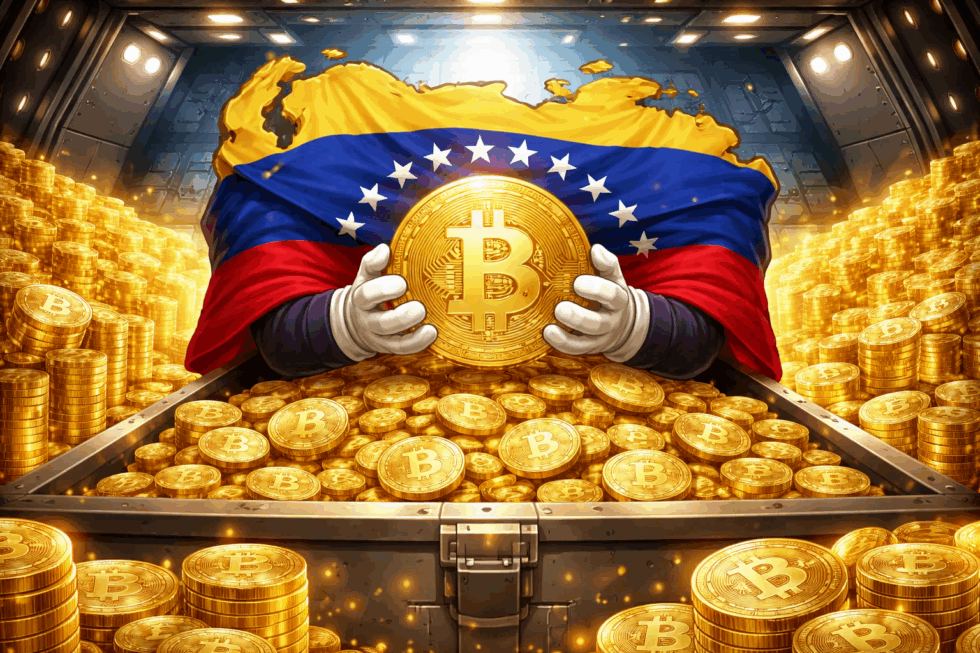
Synopsis: Venezuela’s government likely doesn’t hold a rumored $60 billion bitcoin stash due to extreme corruption, operational incompetence, and unreliable infrastructure, argues Venezuelan-born Ledn co-founder Mauricio Di Bartolomeo.
Speculation about Venezuela holding a massive bitcoin reserve worth $60 billion has sparked intense debate in crypto circles. The claims emerged after reports suggested the Maduro regime secretly accumulated between 600,000 and 660,000 bitcoin over several years. However, experts familiar with Venezuela’s internal corruption and mismanagement dismiss these assertions as unlikely.

Mauricio Di Bartolomeo, co-founder of Ledn and a Venezuelan native, strongly challenges the narrative. Having mined bitcoin in Venezuela and witnessed government seizures firsthand, he argues the regime lacks the competence to manage such wealth. His skepticism stems from decades observing systemic corruption that has bankrupted the nation’s resources.
The Origins of the Bitcoin Rumors
The alleged bitcoin hoard supposedly originated from three primary sources between 2018 and 2024. First, reports claim a $2 billion gold sale in 2018 was converted to bitcoin when prices hovered around $5,000 per coin. This transaction allegedly involved Alex Saab, a controversial minister who served as Maduro’s financial fixer.
Furthermore, Venezuela’s state oil company PDVSA reportedly accepted cryptocurrency payments to circumvent international sanctions. These payments in stablecoins like Tether were then supposedly converted to bitcoin for storage. Additionally, the government confiscated mining equipment and seized bitcoin from private miners starting in 2017.
Digital publication Project Brazen cited unnamed sources for the $60 billion estimate, but blockchain data remains inconclusive. According to Bitcointreasuries.net, Venezuela holds only 240 bitcoin worth approximately $22 million based on verified analytics. The massive discrepancy highlights the speculative nature of these claims.

Why the Regime Likely Doesn’t Hold Bitcoin
Di Bartolomeo points to Venezuela’s entrenched corruption as the primary reason these claims don’t hold water. Between 2020 and 2023, high-ranking officials at SUNACRIP, the supposed crypto regulator, embezzled $17.6 billion through irregular oil sales. Any profits from crypto operations would have been siphoned into personal accounts rather than state treasuries.
Moreover, Alex Saab spent years in U.S. custody from 2020 to 2023, limiting his ability to manage complex financial operations. At his December 2023 release, the alleged bitcoin holdings would have been worth $10-$20 billion. This figure dwarfed Venezuela’s official central bank reserves of $9.9 billion, which contained no disclosed bitcoin holdings.
The regime’s track record of operational incompetence further undermines the bitcoin narrative. Venezuela inherited a world-class oil industry producing 3.5 million barrels daily in 1999. Under Maduro’s leadership, production collapsed to just 800,000 barrels per day despite having massive reserves. The government has expropriated and bankrupted thousands of private businesses over the past 25 years.
Also Read: How Venezuela Accumulated 600,000 BTC Worth $55B Through Illegal Oil Trades
Infrastructure Challenges Make Mining Impossible
Venezuela’s crumbling electrical grid presents another insurmountable obstacle for large-scale mining operations. Citizens endure programmed blackouts exceeding four hours daily, sometimes occurring multiple times per day. The Guri Dam hydroelectric complex supplies 70-80% of the country’s electricity but suffers from chronic underinvestment and poor maintenance.
Subsequently, unreliable power sources create devastating conditions for sensitive mining equipment that requires consistent energy flow. Di Bartolomeo witnessed this deterioration firsthand before his family’s mining equipment was confiscated by authorities. The regime has demonstrated it cannot even maintain inherited infrastructure, let alone operate sophisticated bitcoin mining operations profitably.
Venezuela banned bitcoin mining entirely in 2024 due to energy concerns, though the country still contributes 0.6% of global hash rate. This minimal contribution suggests small-scale private operations rather than massive government-controlled facilities. The combination of power shortages and operational incompetence makes state-level accumulation highly improbable.
What This Means for Bitcoin Markets
If the $60 billion stash existed and was confirmed, it would position Venezuela as one of the top global bitcoin holders. The holdings would rival MicroStrategy’s treasury, which currently holds bitcoin valued above $62 billion. Such a revelation could significantly impact market dynamics and supply considerations.
However, experts emphasize that on-chain analysis can track transactions but cannot definitively identify wallet owners. The regime could theoretically spread holdings across thousands of wallets controlled by military generals and insiders. Nevertheless, the absence of credible blockchain evidence linking large wallets to Venezuelan state control remains problematic.
Di Bartolomeo’s conclusion reflects cautious realism about bitcoin’s presence in his home country. “I do think there’s Bitcoin in Venezuela,” he stated. “It’s just not in the hands of the regime”. This assessment aligns with Venezuela’s documented history of resource mismanagement and elite corruption rather than strategic asset accumulation.
Written By Fazal Ul Vahab C H
