
Synopsis: Godawari Power & Ispat Limited has infused a fresh Rs. 100 crore into its wholly owned subsidiary Godawari New Energy Private Limited, raising its total investment to Rs. 450 crore as it pushes ahead with a 20 GWh Battery Energy Storage System plant in Maharashtra.
Shares of Godawari Power and Ispat Limited, with a market capitalization of Rs. 18,866.60 crore, were trading at Rs. 280.45, down 1.94% from the previous close of Rs. 286.00. The stock touched an intraday high of Rs. 287.95 and a low of Rs. 280.00. The company is currently trading at a P/E ratio of 24.18.

In a regulatory filing submitted to the BSE and NSE on June 5, 2026, Godawari Power and Ispat Limited (GPIL) disclosed that its wholly owned subsidiary, Godawari New Energy Private Limited (GNEPL), has allotted 10 crore equity shares of Rs. 10 each at par to GPIL on a rights basis, aggregating to a fresh infusion of Rs. 100 crore. The allotment was completed on June 4, 2026, with GPIL receiving formal intimation on June 5.
This latest capital infusion is not a standalone event, it is part of a phased and deliberate investment strategy that GPIL has been executing across multiple tranches. The company had previously communicated similar investment intentions to the exchanges on February 6, 2026 and May 19, 2026. Following the completion of this allotment, GPIL’s cumulative investment in GNEPL has risen from 35 crore equity shares aggregating Rs. 350 crore to 45 crore equity shares aggregating Rs. 450 crore representing 100% of GNEPL’s paid-up capital.

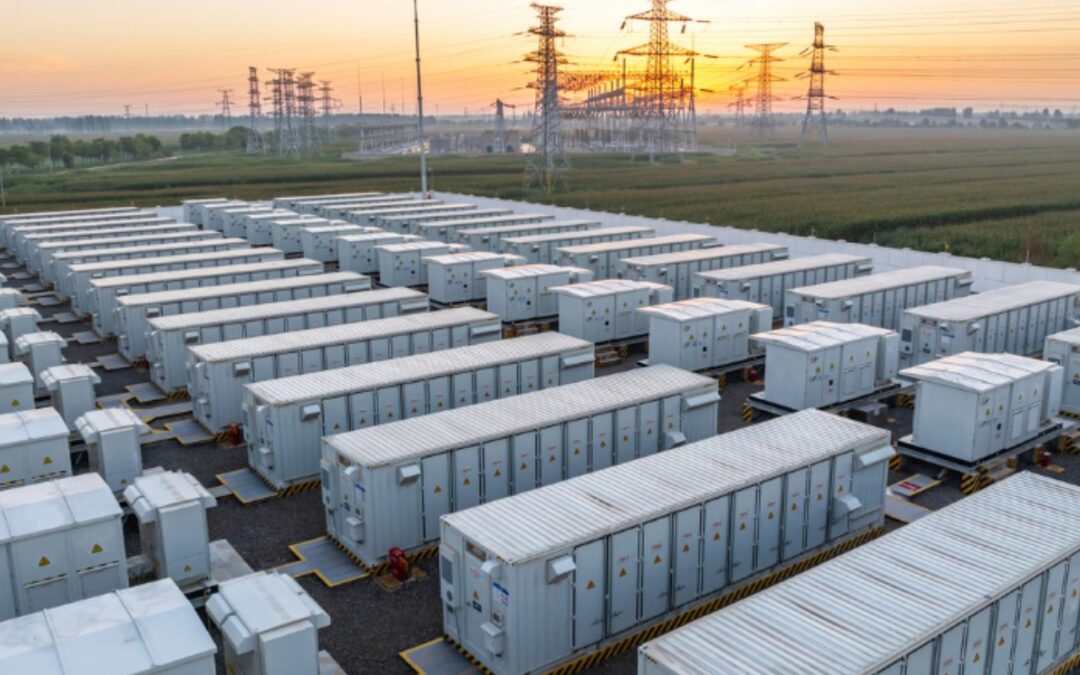
The funds are being deployed specifically to meet the capital expenditure and working capital requirements of GNEPL as it sets up a 20 GWh Battery Energy Storage System (BESS) plant in its first phase. GNEPL, incorporated as recently as June 25, 2025, is a pre-revenue entity with a net worth of Rs. 298.01 crore as of March 31, 2026 and nil turnover reflecting that the BESS project is still in its construction and setup phase. The subsidiary’s registered office is in Raipur, Chhattisgarh, while operations will be established in Maharashtra.
The investment constitutes a related party transaction given GNEPL’s status as a wholly owned subsidiary, though the filing confirms that no other promoter group or group company holds any interest in GNEPL beyond GPIL’s direct ownership.

The scale and speed of GPIL’s capital commitment to GNEPL deserves careful attention from investors. Deploying Rs. 450 crore into a subsidiary that was incorporated less than twelve months ago and which has yet to generate a single rupee of revenue signals a high-conviction, long-horizon strategic bet on India’s rapidly evolving energy storage landscape.
Battery Energy Storage Systems are fast emerging as one of the most critical infrastructure components of India’s clean energy transition. As the country aggressively scales up intermittent renewable energy sources like solar and wind targeting 500 GW of non-fossil fuel capacity by 2030 the need for large-scale grid-level storage solutions to manage supply-demand mismatches has become increasingly urgent.
The government has backed this with policy support, including the Production Linked Incentive (PLI) scheme for Advanced Chemistry Cell (ACC) battery storage and multiple tenders for grid-scale BESS projects floated by central and state utilities.

A 20 GWh BESS capacity in the first phase is a substantial commitment. To put that in context, India’s total installed grid-scale battery storage capacity remains relatively nascent, and a single 20 GWh project would represent a meaningful addition to the national energy storage infrastructure. If GPIL executes this successfully, GNEPL could emerge as one of the larger domestic BESS players, a market that global consulting firms estimate will grow into a multi-billion dollar opportunity in India by 2030.
For GPIL itself, this pivot into clean energy storage represents a strategic diversification away from its core steel and power businesses, which remain subject to commodity price cyclicality and fuel cost volatility. Establishing a foothold in BESS now while the market is still in its early stages gives GPIL the opportunity to build technological capabilities, forge utility partnerships, and develop a project execution track record before competition intensifies.
The choice of Maharashtra as the operational base for GNEPL is also strategically sound. Maharashtra is one of India’s largest power consumers and has been among the most active states in issuing BESS tenders, driven by its high renewable energy penetration targets and peak demand management challenges.
From a financial structuring standpoint, routing the investment through rights-basis equity allotments within a wholly owned subsidiary rather than external debt or third-party equity keeps the capital structure clean and avoids dilution at the listed entity level, preserving GPIL shareholder value in the near term.
Company Overview
Godawari Power and Ispat Limited, part of the Hira Group and headquartered in Raipur, Chhattisgarh, is an integrated steel and power producer with operations spanning iron ore pellets, sponge iron, steel billets, wire rods, and captive power generation. The company is now actively expanding into the clean energy space through its wholly owned subsidiary Godawari New Energy Private Limited, which is developing a large-scale Battery Energy Storage System facility in Maharashtra as part of India’s broader renewable energy integration agenda.
Disclaimer: The views and investment tips expressed by investment experts/broking houses/rating agencies on tradebrains.in are their own, and not that of the website or its management. Investing in equities poses a risk of financial losses. Investors must therefore exercise due caution while investing or trading in stocks. Trade Brains Technologies Private Limited or the author are not liable for any losses caused as a result of the decision based on this article. Please consult your investment advisor before investing.