
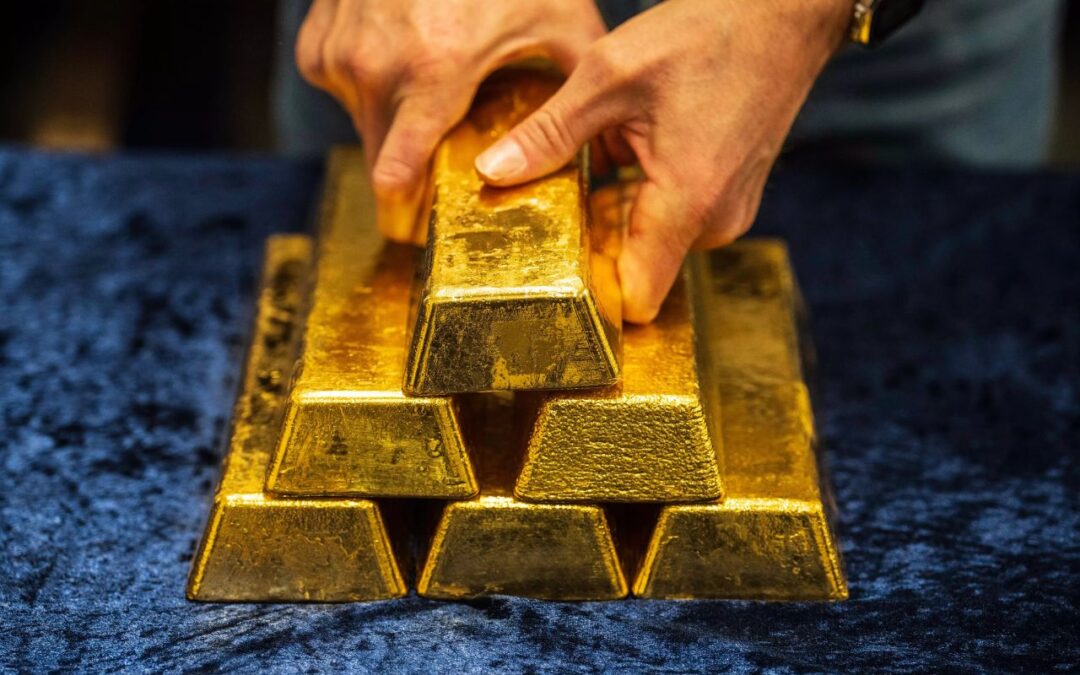
Synopsis:- Gold and silver extended their slide on the MCX and COMEX on June 23, with bullion giving back further ground from January’s record highs as easing US-Iran tensions and a hawkish Federal Reserve combine to drain safe-haven demand. Major banks have already trimmed their price targets, though some analysts argue silver’s industrial-demand story keeps its long-term case intact even through this correction.
Gold and silver extended a sharp slide on June 23, with both metals giving back a meaningful chunk of the gains built during their historic run-up earlier this year. The benchmark August gold contract on the MCX fell by Rs. 1,161 to trade near Rs. 1,46,957 per 10 grams, opening weak against its previous close of Rs. 1,48,118 and sitting well below its yearly record of Rs. 1,80,779. On COMEX, spot and futures gold slipped by $44.80 to trade around $4,157.90 an ounce, a steep retreat from its peak above $5,580.

Silver’s correction has been sharper in percentage terms. The July MCX silver contract crashed by Rs. 6,469 to Rs. 2,27,841 per kilogram, down from a previous close of Rs. 2,34,310 and far removed from its yearly high near Rs. 4,20,048. On COMEX, silver shed $2.48 to trade around $63.10 an ounce, against a 2026 high above $121.
Why Bullion Is Giving Back Gains
Two forces are driving the pullback, and both point in the same direction. The first is geopolitical: progress toward a peace framework between the United States and Iran has eased fears around the Strait of Hormuz, a route that had earlier come under direct threat during the Middle East conflict that flared in late February. As that risk premium fades, oil prices have pulled back, and with them, some of the urgency that had pushed investors into gold and silver as a hedge. Reports this week pointed to Washington granting Iran a temporary licence to resume oil exports, with shipping activity through Hormuz already picking up and regional producers finding alternative routes to keep crude flowing.

The second, and arguably more persistent, force is monetary policy. At its mid-June meeting, the Federal Reserve under new chair Kevin Warsh held rates steady but struck a notably hawkish tone, with the central bank’s projections showing nine of its nineteen policymakers now expecting at least one rate increase later this year, with a September move increasingly priced in by markets. Higher rates raise the opportunity cost of holding non-yielding assets like gold and silver, and the shift has pushed the US Dollar Index back above the 101 mark, making dollar-denominated bullion more expensive for buyers outside the US and further dampening demand.
Banks Are Cutting Targets, Not Abandoning the Bull Case
The scale of the pullback, with gold down roughly 28 percent from its January peak, has prompted several large banks to revise their forecasts downward, though notably without abandoning a constructive medium-term view. Deutsche Bank has trimmed its gold price forecast by as much as 22 percent, moving its third-quarter target down to $4,300 an ounce, while Goldman Sachs cut its year-end outlook by $500 to $4,900 an ounce.

Other institutional voices remain considerably more bullish over a longer horizon. J.P. Morgan’s commodities team has maintained a year-end 2026 average forecast near $6,000 an ounce, arguing that central bank gold buying, even where unreported through official channels, continues to provide a structural floor under prices, with Chinese net gold imports having risen sharply in the first quarter of the year. The split between near-term caution and longer-term bullishness across these houses is itself a signal that this correction is being read as a positioning unwind rather than a reversal of the broader thesis that drove gold to records in the first place.
Silver’s Industrial Demand Story Hasn’t Gone Away
Even with the sharper absolute fall in silver prices this week, the metal’s underlying demand picture looks different from gold’s. Silver is now in its fifth consecutive year of a structural supply deficit, driven less by safe-haven flows and more by industrial consumption, particularly from solar panel manufacturing and electronics. That distinction matters for how investors should read this correction: gold’s slide is largely a function of receding geopolitical risk and rising rates, both of which are macro and sentiment-driven, while silver carries an additional industrial-demand layer that doesn’t necessarily unwind just because Fed policy turns hawkish.
Some analysts expect that once supply chains normalise post-conflict and rate expectations settle, renewed ETF inflows could lift both metals again toward the end of the year, though that view depends on the Fed’s rate path actually playing out as currently priced, which remains far from certain given how quickly sentiment has swung in both directions through 2026.

What to Watch From Here
For now, the two variables worth tracking closely are the pace of any US-Iran agreement, given how directly the Strait of Hormuz risk has fed into bullion pricing this year, and the Fed’s actual rate decisions rather than its projections, since the gap between a hawkish dot plot and a confirmed hike has repeatedly moved gold and silver prices on its own. Investors holding bullion through this correction are, in effect, making a call on whether 2026’s geopolitical premium was a temporary spike or a more durable repricing of safe-haven demand.
Disclaimer: The views and investment tips expressed by investment experts/broking houses/rating agencies on tradebrains.in are their own, and not that of the website or its management. Investing in equities poses a risk of financial losses. Investors must therefore exercise due caution while investing or trading in stocks. Trade Brains Technologies Private Limited or the author are not liable for any losses caused as a result of the decision based on this article. Please consult your investment advisor before investing.