
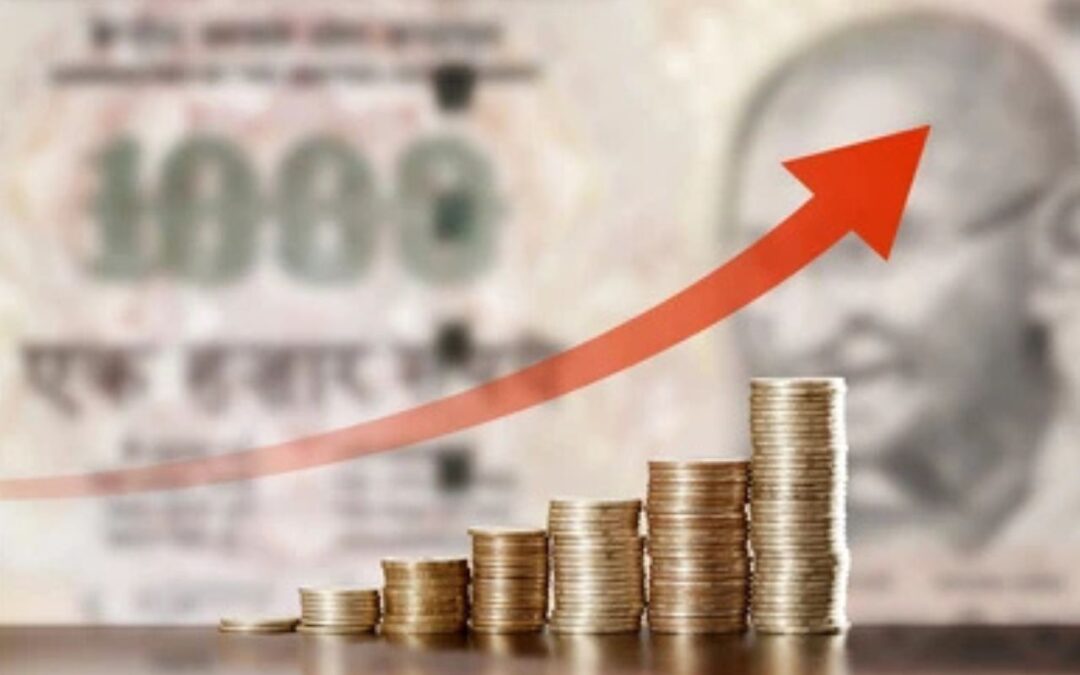
Synopsis: A sharp retreat in global crude prices, triggered by a fragile US-Iran truce reopening the Strait of Hormuz, has pulled the Indian rupee back from near-record lows of 97 to the dollar to around 94.61, delivering its first quarter-on-quarter gain since March 2025. The relief has already shown up in upgraded growth forecasts and a foreign bond inflow wave, but the trading range remains fragile and the mechanics of who actually benefits, and who doesn’t, are more layered than the headline currency move suggests.
The rupee’s recovery this quarter did not come from anything India itself did differently. It came from a 20 percent collapse in Brent crude, back to the $72-74 a barrel range from a wartime peak of $126, after a 60-day US-Iran truce reopened the Strait of Hormuz to oil tanker traffic. For a country that imports roughly 85 percent of its crude needs, that price move mechanically eases the import bill, which is the single biggest driver of India’s current account and, by extension, the rupee’s exchange rate.

What Actually Moved
The math is straightforward enough to walk through. India spends a large share of its import bill on crude oil, so every dollar shaved off the price of Brent reduces the outflow of dollars needed to pay for it, which eases pressure on the rupee from the trade side. That is distinct from the capital account side, where the Reserve Bank of India’s own actions, depleting foreign exchange reserves to a one-year low of USD 671.6 billion through defensive interventions and forward dollar sales, plus a new non-resident dollar deposit scheme aimed at diaspora inflows, did the heavier lifting on the financing side.
Both forces pushed in the same direction this quarter, but they are not the same lever, and conflating them risks overstating how durable this rupee strength actually is once oil prices normalise or reverse.

Strategic and Financial Impact by Sector
A weaker oil import bill and a steadier rupee do not affect Indian companies uniformly, and retail investors reading this as a blanket positive miss where the actual earnings impact concentrates.
Oil marketing companies and downstream consumers of crude derivatives are the most direct beneficiaries. Refiners and fuel retailers benefit from lower input costs, and to the extent that retail fuel prices stay administered rather than fully passed through, marketing margins on petrol and diesel tend to widen when crude falls faster than pump prices adjust. Aviation is similarly sensitive, since jet fuel typically accounts for a third or more of airline operating costs, making a sustained crude pullback one of the more reliable margin tailwinds for that sector. Paint, tyre, and other companies that use crude derivatives as feedstock see a similar input cost relief, though the benefit usually shows up with a lag of a quarter or two as existing inventory works through.

The currency side cuts differently. A stronger rupee is a headwind, not a tailwind, for IT services and pharmaceutical exporters, since a meaningful share of their revenue is dollar-denominated while a large share of their costs are rupee-denominated; every percentage point the rupee gains against the dollar compresses that spread on translation.
This is the part of the story that gets lost when currency strength is reported as uniformly good news. Importers of non-oil goods, and companies carrying unhedged dollar-denominated debt, are the more straightforward beneficiaries on the currency side, since their repayment and purchasing costs in rupee terms fall as the currency strengthens.
The foreign portfolio investment wave into Indian government bonds, described as the strongest since August 2024, has its own separate transmission mechanism. Heavier FPI bond inflows tend to push bond yields down at the margin, which is constructive for rate-sensitive sectors like banks, NBFCs, and real estate, and it reinforces the rupee’s strength independent of the oil story. Investors should treat this as a third, somewhat independent driver rather than folding it into the oil narrative, since bond index inclusion flows operate on their own calendar and are less reversible than an oil price swing tied to a 60-day geopolitical truce.

The Fragility Retail Investors Should Price In
The entire recovery rests on a temporary arrangement. Washington’s sanctions waiver on Iranian oil runs for only 60 days, and the truce enabling Strait of Hormuz traffic is similarly time-bound rather than a settled peace. Weekend retaliatory strikes by Iran on US military sites in Kuwait and Bahrain are an early signal that the underlying conflict has not actually been resolved, only paused. If the truce breaks down and shipping risk returns to the Strait, the oil price relief that did most of the work on the rupee this quarter could reverse quickly, and reverse faster than it built, given how thin the current 94-96 trading range already is.
It is worth being precise about what “reversal” would actually mean for portfolios. A renewed spike in Brent toward its earlier wartime peak would widen India’s import bill again, pressure the rupee back toward the weaker end of its recent range, and unwind much of the input-cost relief that oil marketing companies, airlines, and crude-derivative users have only just started to see flow through. Sectors that look attractive today on the assumption of sustained cheap crude carry asymmetric risk if that assumption breaks, since the same mechanical relationship that delivered the tailwind works just as quickly in reverse.
There is a second risk sitting underneath the first: US Federal Reserve policy. Expectations of further monetary tightening keep the dollar index elevated globally, which caps how much room the rupee has to appreciate even in a best-case oil scenario. Retail investors positioning around this rupee strength, whether through currency-sensitive sector bets or assumptions about cheaper imported inputs persisting, should treat the current window as conditional on two factors largely outside India’s control: how long the Iran-US truce holds, and how the Fed’s rate path evolves through the rest of the year. Goldman Sachs’s upgraded growth and inflation forecasts for India embed assumptions about both holding, which is a reasonable base case but not a guaranteed one.
Disclaimer: The views and investment tips expressed by investment experts/broking houses/rating agencies on tradebrains.in are their own, and not that of the website or its management. Investing in equities poses a risk of financial losses. Investors must therefore exercise due caution while investing or trading in stocks. Trade Brains Technologies Private Limited or the author are not liable for any losses caused as a result of the decision based on this article. Please consult your investment advisor before investing.