
Synopsis: Shares of Indian airline and travel companies surged sharply on Monday after an initial peace agreement between the United States and Iran raised hopes of easing geopolitical tensions in the Middle East. The development is expected to reduce crude oil prices, lower airline operating costs, restore disrupted international routes, and improve overall travel demand, leading to strong buying interest across aviation and tourism stocks.
Indian aviation and tourism-related stocks witnessed strong buying interest on Monday after global sentiment improved following an initial agreement between the United States and Iran aimed at ending the ongoing conflict and reopening the strategically important Strait of Hormuz.

The development triggered optimism across global markets, particularly in sectors directly affected by crude oil prices and international travel, with Indian airline and tourism stocks emerging as major beneficiaries of the sentiment shift.
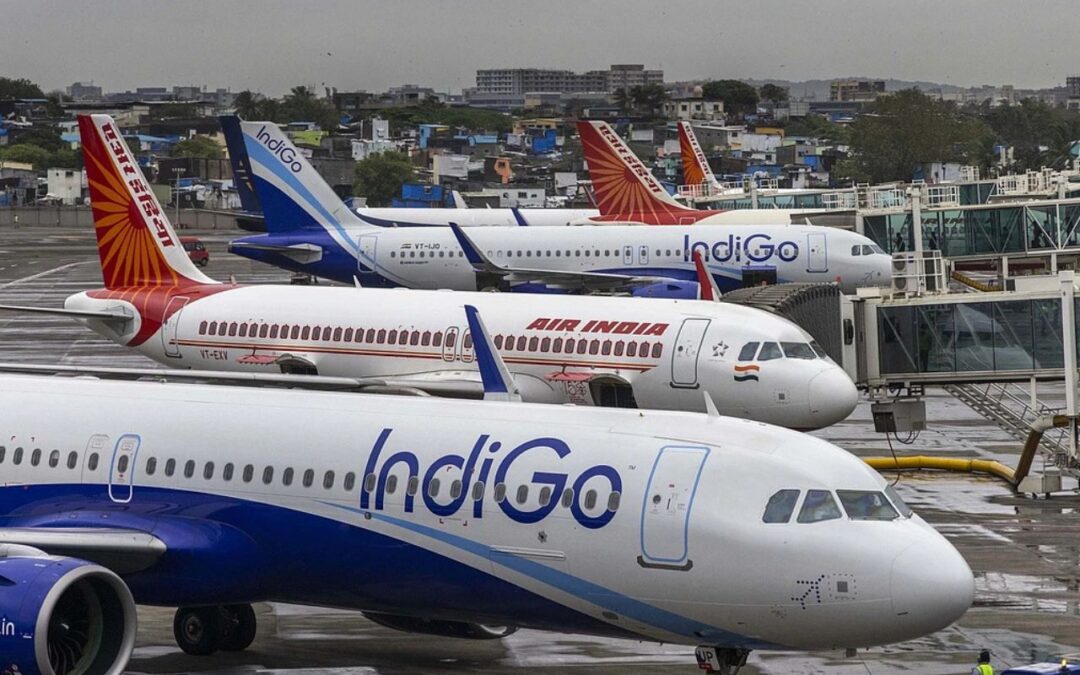
Shares of InterGlobe Aviation Limited, the parent company of IndiGo, opened with a strong 2.34% gap-up and surged nearly 4.6% during intraday trade, touching a high of Rs. 4,941.50. Meanwhile, SpiceJet Limited outperformed the sector and jumped 8.34%, reaching an intraday high of Rs. 13.38.

The rally extended beyond airlines into online travel companies as well. Shares of Le Travenues Technology Limited, which operates ixigo, initially gained close to 6%, although volatility later brought the stock closer to Rs. 180.50 during midday trade. Shares of Easy Trip Planners Limited, which runs EaseMyTrip, traded near Rs. 8.49 while holding modest gains of around 2%.
The positive reaction came after U.S. President Donald Trump announced that an initial agreement had been reached with Iran to end hostilities and restore global shipping movement through the Strait of Hormuz, one of the world’s most critical energy trade routes. Trump stated that vessels would soon be able to pass through the route freely again, signaling the possible end of one of the biggest geopolitical risks impacting global oil markets.

For airline companies, the peace agreement creates a major financial advantage because aviation fuel costs are heavily linked to crude oil prices. Aviation Turbine Fuel (ATF) typically accounts for nearly 40% of an airline’s operating expenses, making fuel price movements one of the biggest profitability drivers for the sector.
With the peace agreement announced, crude oil prices immediately reacted lower, giving investors confidence that airlines may soon benefit from reduced fuel costs. This creates a direct cost advantage for companies like IndiGo and SpiceJet, both of which have been facing rising operating expenses due to elevated fuel prices over recent weeks.
The agreement also improves operational efficiency for airlines. During the conflict period, many international routes passing through Middle Eastern airspace faced disruptions, forcing airlines to take longer alternate routes that increased fuel consumption, crew costs, and flight times. Reopening the Strait of Hormuz and reducing regional tensions could gradually normalize international flight operations and remove these additional operating pressures.

Among Indian carriers, IndiGo stands out as one of the biggest structural beneficiaries because of its dominant market position. The airline currently controls nearly 64% of India’s domestic aviation market and has been rapidly expanding its international footprint. During the peak of the conflict, international routes passing through or heading to the Middle East faced intense airspace restrictions. Reopening these skies removes the need for costly detours, dramatically reducing flight times and auxiliary crew costs.
However, management had earlier indicated that these routes could be reinstated sooner if geopolitical conditions improved. The latest peace agreement may now create conditions for faster restoration of these suspended international services. The positive sentiment was not limited to aviation and tourism stocks. Other crude-sensitive sectors also rallied strongly as investors anticipated lower raw material and energy costs across industries.
Other notable stocks include JK Tyre & Industries Limited rose nearly 4.6%, while Apollo Tyres Limited gained close to 3%. Paint manufacturers such as Asian Paints Limited and Berger Paints India Limited also moved higher by nearly 2.5% to 3%, as lower crude prices directly reduce the cost of petroleum-based raw materials used in production.
For investors, the broader takeaway is clear. If geopolitical tensions continue to ease and global oil prices remain under control, sectors heavily dependent on fuel and oil-linked raw materials could witness margin expansion in coming quarters.
For now, the market will closely watch how quickly shipping routes through the Strait of Hormuz normalize, whether airlines begin restoring suspended international routes, and if lower crude prices sustain long enough to meaningfully improve profitability across aviation, travel, and other oil-sensitive sectors.
The peace agreement may have removed one of the biggest short-term uncertainties facing global travel markets, and investors are already positioning for a possible recovery cycle ahead.
Disclaimer: The views and investment tips expressed by investment experts/broking houses/rating agencies on tradebrains.in are their own, and not that of the website or its management. Investing in equities poses a risk of financial losses. Investors must therefore exercise due caution while investing or trading in stocks. Trade Brains Technologies Private Limited or the author are not liable for any losses caused as a result of the decision based on this article. Please consult your investment advisor before investing.