
Latest IPOS Details and Reviews
Here, you can find the details of all the Upcoming IPOs and recently closed IPOs. Look into the company details, IPO objectives, IPO dates, IPO offered price & more before you make your decision of whether to apply in that IPO or NOT.

Latest IPO Reviews
Learn the honest review of the upcoming IPOs

Upcoming IPO Details
Get Details of upcoming IPO Dates, Offer Price, Size & More

Historical Performance
Track the performance and details of past IPOs
COURES
Latest IPO Reviews

Amara Raja Commissions ₹500 Cr Lithium-Ion Cell Qualification Plant in Telangana
Synopsis: Amara Raja Energy & Mobility, through its subsidiary Amara Raja Advanced Cell Technologies, has commissioned a Customer Qualification Plant at its Telangana Giga Corridor, marking a key milestone toward its planned commercial-scale lithium-ion cell...

FMCG Stock Falls 5% After Announcing Q1 Results
Synopsis: Heritage Foods reported strong Q1 FY27 revenue growth driven by its dairy business, while lower profitability impacted earnings despite an extensive distribution network and robust operational capabilities. This Small-Cap FMCG Stock, engaged in the...

Sadhav Shipping Bags ₹18.07 Cr Contract From Mumbai Port Authority for Pilot Launches
Synopsis: Shares of Sadhav Shipping Limited are likely to remain in focus after the company secured a work order worth crores from the Mumbai Port Authority (MPBA) for providing pilot launch services. The contract carries an initial tenure of seven years, with a...

Reliance Group Stock Rallies 6% After Revenue Surges 227% YoY
Synopsis: Jio Financial Services shares surged 6% after strong Q1 results, with revenue rising 227.5% YoY to ₹2,004 crore and net profit jumping 155.4% to ₹830 crore. EPS improved to ₹ 1.26, boosting investor sentiment. The shares of the large-cap company, which...

BHEL Q1 Results: Turnaround to ₹382 Cr Profit; Stock Hits 52-Week High on Largest Export Order
Synopsis: BHEL has secured its largest-ever single export order for gas turbine generators while posting a Q1 FY27 turnaround with EBITDA and PAT swinging positive, as the company scales strategic non-thermal businesses across nuclear, coal gasification, defence, and...

PC Jeweller Stock in Focus After Board Approves ₹1,000 Cr QIP And Authorised Capital Increase By ₹150 Cr
Synopsis: PC Jeweller Limited's board has approved raising up to Rs. 1,000 crore through a Qualified Institutions Placement (QIP) and increasing the company's authorised share capital by Rs. 150 crore. The proposed fundraise is expected to strengthen the company's...

Ather Energy and 3 Other Stocks in Which Axis Group Bought Fresh Stakes Worth ₹1,706 Cr in Q1
Synopsis: Axis Group bought fresh stakes worth Rs. 1,706 crore in TD Power Systems, Suprajit Engineering, Happy Forgings, and Ather Energy during Q1 FY27. Axis Group is one of India's leading financial institutions, and its investment decisions are closely tracked by...
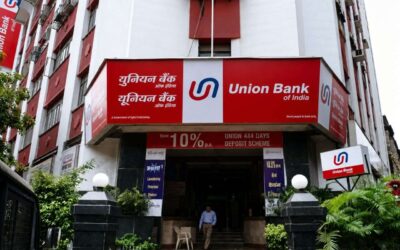
Union Bank Stock: 6 Positive Signals Investors Should Know After Q1 FY27
Synopsis: Bank improves loan growth, reduces bad loans, strengthens its capital position, and delivers better returns in Q1 FY27, making its overall business stronger. The article outlines the factors that improved for the company, which is engaged in the Business of...

Motilal Oswal’s Top Picks: 5 Bank Stocks That Could Deliver Returns of Up to 37%
Synopsis: The shares of these five banks are among Motilal Oswal's top picks, backed by strong credit growth, healthy balance sheets, and upside potential of up to 37 percent. Banking stocks are back in focus as the Q1 FY27 earnings season begins. This article...
FAQ
Frequently Asked Questions on IPOs
What is IPO – Initial Public Offering?
When a privately held company offers its shares for the first time to the public, then it is called Initial public offering (IPO). It is a way for companies to enter the stock market. Until a company offers IPO, the public is not able to buy the company’s share.
Before the IPO of a company, its shareholders include limited people like founders, co-founders, relatives, friends and initial investors (like an angel investor, venture capitalist etc). However, after the company offers its IPO, anyone (public, institutional investors, mutual funds etc) can buy the shares of the company.
What does ‘Going public’ mean?
Going public means that a ‘privately owned company’ is conducting an initial public offer (IPO) to the public in order to enter the stock market as a ‘public company’. In short, when a company is offering an IPO, it is said that the company is going public.
Why do companies conduct IPOs?
The basic reason why companies issue their shares or go for an IPO is to raise capital or funds.
Stock exchanges facilitate the exchange of shares for capital. The process involves shares being offered, shares being allotted to investors, and finally the shares being listed on an exchange where they can be bought and sold. By doing so companies can get access to a wider pool of investors which includes retail and domestic/foreign institutional investors.
There can be a number of reasons why any company offer an IPO. Here are a few of the top ones:
- For a new project or expansion plan of the company
- To raise capital (financial benefit)
- For carrying out new research and development works
- To fund capital expenditures
- To pay off the existing debts or reduce the debt burden
- For a new acquisition
- To create public awareness of the company
- For the group of initial investors desiring to exit the company by selling their stakes to the public.
In addition, IPOs generate lots of publicity for the company and hence helps in creating market exposure, indirect exposure, and brand equity.
Why are people excited about IPOs?
There are a few common reasons why people are excited about IPOs. They are:
- Under-pricing myth: When a company announces its IPO, it’s presumed that the offered price is less than its true value. People are excited about the fact that they are the first one to buy the stock and will be rewarded handsomely when the company’s true price will be realized by the market. However, it’s very rare that the owners will be willingly underpricing the shares.
- Herd-mentality: As everyone they know will be applying for the IPO, people do not want to be missed out.
- Overhype by media/ underwriters: Media gets a high advertisement fee for the promotion of the IPO. Moreover, IPOs are intentionally overhyped by the investment banker and the underwriters. They make sure that these IPO’s get enough attention as this is their job to promote and sell the shares.
- ‘The Next …’ strategy: People compare the upcoming IPO with the Winners in the same industry and conclude that it will perform the same. ‘The next Eicher motors’, ‘The next symphony’, ‘The next Infosys’ etc. This ‘Next’ philosophy makes a lot of people excited about the upcoming IPO.
Why are the Disadvantages of Conducting IPOs?
Here are the few disadvantages for the companies who offer their IPOs:
- Public disclosure: When a privately held company offers its IPO, it has to disclose a number of documents to the public like its financials, promoters list, debts etc.
- Entering a regulated market: Indian stock market is highly regulated by Securities and exchange board of India (SEBI) and hence the newly public company has to play by the rules of SEBI. There has been a number of cases of companies getting delisted by SEBI as they do not follow the norms of the market.
- Market pressure: The companies performance are closely scrutinized by the public and investors. Hence, the company’s management is consistently is pressure. Sometimes the companies focus more on short-term performance over long-term due to market pressure.
- Loss of control: As the shares are distributed among the investors, the decision making power is now in the hands of the shareholders.
- Failing of IPO: Many companies fail to attract investors during its IPO and the offered shares might remain under-subscribed. In such a scenario, the company is not able to raise enough capital that is expected to achieve the goal of IPO.
Why do most IPOs come in the bull market?
The promoters of the company sell their stakes only when they are confident of getting a good price. This generally happens only in a bull market. During a bull market, the owners of the company can raise enough fund for their cause as the public is optimistic. People are willing to pay good prices to buy shares of the company.
Why do not many IPOs come in bear market?During bear market, people are pessimistic and are not willing to pay a good price for the shares of a newly public company. The owners feel that they won’t be getting the right price for their shares and hence most owners do not introduce their IPO during a bear market
Who gets MOST Benefits from IPOs?
There is a common myth that the company’s shares are undervalued during its IPO and hence the early subscribers of the IPO feel that they have made a very good deal.
However, IPOs are the by-products of a bull market and they are generally over-priced.
The owner and the initial investors of the company (like angel investors, venture capitalist etc) are the ones who get maximum profits during an IPO as they are able to sell the shares at a good price.
Is it worth investing in IPOs?
A lot of investors have made huge wealth by investing in IPOs. Had you invested in ‘INFOSYS’ when it got listed, you might have been sitting at a huge pile of wealth today.
However, the performance of the majority of the IPOs in the Indian stock market is under-satisfactory. The number of IPOs underperforming in long-term are comparatively quite larger than the number of IPOs that performs well in the market.
Further, IPOs are never priced in the benefits of the public. In the case where few IPOs are fairly priced, it gets a lot of demand from the public during its offerings and gets over-subscribed. Moreover, it soon becomes over-priced once it starts trading in the market. A few IPOs might give you a good return in the one or two months of its listing as they are introduced in the bull market, however, in the long run, their performance is quite poor.
If you are willing to invest in the long-term, then be cautious about investing in IPOs. Focus on the quality of the company, not the hype generated by media or underwriters.
Nevertheless, you can always pick these companies from the secondary market once the hype is over and the price is attractive. There are over 5,000 companies listed in Indian stock market. It’s better if you pick a good one among them than picking the upcoming hyped company


