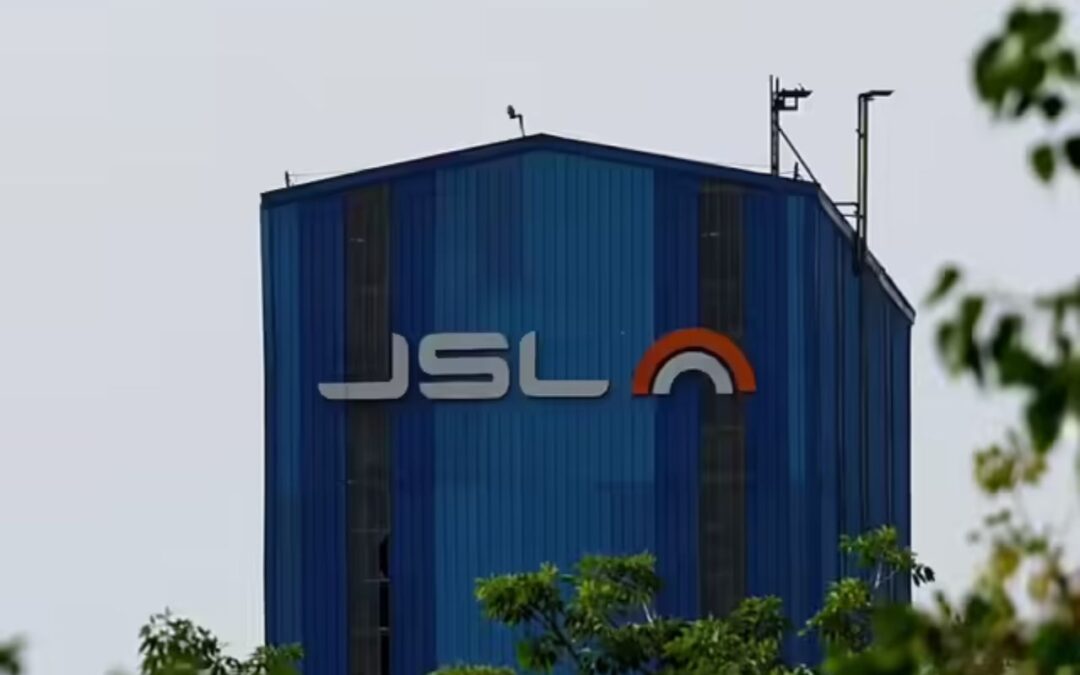
Synopsis: Backed by a full-year PAT of ₹3,185 crore and the timely commissioning of its 1.2 MTPA Indonesia melt shop, Jindal Stainless has closed FY26 as the year its international capacity bet moved from blueprint to balance sheet, with total global melting capacity now at 4.2 MTPA and net debt nearly halved to ₹3,040 crore.
India’s largest stainless steel manufacturer just delivered its strongest quarterly earnings in recent memory and the market took notice. But buried beneath the headline numbers is a bigger story: an offshore capacity bet that moved from blueprint to balance sheet in FY26, reshaping how this company sources its most critical raw material.

With a market capitalization of Rs. 63,064 crore, the shares of Jindal Stainless Limited were trading at Rs. 765 per share, with a 52-week range of Rs. 884 to Rs. 568.10. It is trading at a P/E of 22x.
Q4 & FY26 Financial Performance
On a consolidated basis, revenue for Q4 FY26 came in at ₹11,337 crore, up 11 percent year-on-year and 8 percent sequentially. EBITDA for the quarter stood at ₹1,455 crore, a 37 percent jump over Q4 FY25, with the full-year EBITDA at ₹5,560 crore, up 19 percent over FY25’s ₹4,667 crore. PAT for FY26 on a consolidated basis reached ₹3,185 crore, a 27 percent improvement over the previous year. On the standalone side, FY26 revenue came in at ₹42,680 crore with EBITDA of ₹4,322 crore, both marking 11 percent and 6 percent full-year growth, respectively.

Sales volumes for the full year touched 2,566 thousand metric tonnes an 8 percent increase over FY25, with domestic sales accounting for 92 percent of the mix. Notably, net debt on a consolidated basis fell sharply to ₹3,040 crore from ₹3,991 crore in March 2025, bringing the Net Debt/EBITDA ratio down to 0.55 from 0.86. Long-term debt ratings remain AA/Positive and short-term ratings at A1⁺. The company also announced a final dividend of ₹3 per share on a face value of ₹2 per share, which is 150% of face value.
The Indonesia Angle: Raw Material Security Meets Capacity Expansion
The more consequential story sits outside the P&L. During FY26, Jindal Stainless commissioned a 1.2 MTPA stainless steel melt shop in Indonesia, ahead of schedule. This facility, a joint venture, lifted the company’s total global melting capacity to 4.2 MTPA, complementing its existing 3 MTPA domestic base. The Indonesia operation is not merely a production outpost; it is the anchor of Jindal’s raw material strategy.

Since India has no domestic nickel reserves, and nickel prices have remained volatile, averaging USD 17,356 per MT in Q4 FY26 after troughing near USD 14,892 in Q3 FY26, JSL entered a joint venture with New Yaking Pte. Ltd. to commission a Nickel Pig Iron smelter in Indonesia. The 49 percent stake, acquired for approximately $157 million, gives the company a direct, long-term feed of nickel outside spot market dependency. This is a structural cost advantage that does not show up cleanly in any single quarter.
The third piece is PT Jindal Stainless Indonesia, a cold rolling facility in Gresik, Surabaya, with a 150,000-tonne annual capacity, which has operated since JSL acquired it from PT Maspion’s stainless division in 2004. Together, these three assets, the NPI smelter, the new SMS and the cold rolling unit form an integrated offshore value chain that improves margin resilience during periods of nickel price pressure.
Investor Verdict
Jindal Stainless’s Indonesian bet is no longer a thesis; it’s operational. With the melt shop commissioned ahead of schedule and an NPI smelter anchoring nickel supply outside spot markets, the company has quietly built an integrated offshore value chain that structurally insulates margins from raw material volatility. For long-term investors, this is the kind of moat that takes years to price in.

Disclaimer: The views and investment tips expressed by investment experts/broking houses/rating agencies on tradebrains.in are their own, and not that of the website or its management. Investing in equities poses a risk of financial losses. Investors must therefore exercise due caution while investing or trading in stocks. Trade Brains Technologies Private Limited or the author are not liable for any losses caused as a result of the decision based on this article. Please consult your investment advisor before investing.