Synopsis:- Completing a transaction first approved by its board in April 2026, Max Healthcare has acquired a 58.28 percent controlling stake in Kalinga Hospital Ltd. for Rs. 297.97 crore funded entirely through an External Commercial Borrowing making Bhubaneswar’s 250-bed Kalinga Hospital a subsidiary, while pushing consolidated borrowings to approximately Rs. 3,573 crore in a period when interest costs have already tripled from FY24 levels.
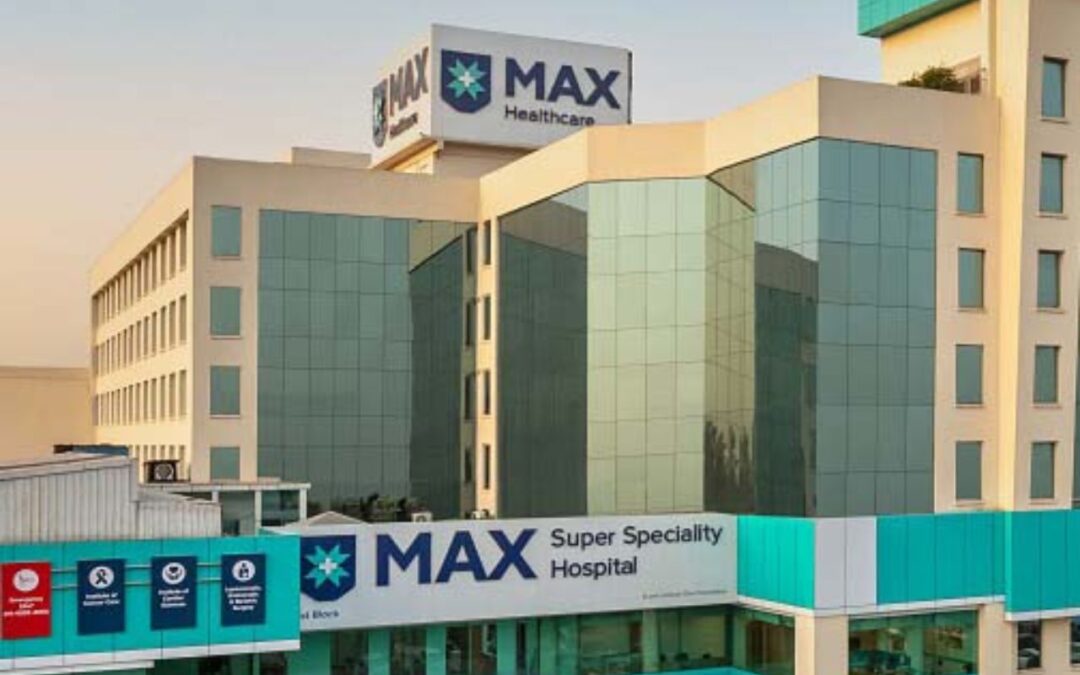
India’s largest hospital chain by market capitalisation formally closed its entry into Odisha on May 18, 2026, completing the acquisition of a 58.28 percent controlling equity stake in Kalinga Hospital Ltd. (KHL), the operator of the 250-bed multi-specialty Kalinga Hospital in Bhubaneswar. The company received credit confirmation of KHL equity shares at 5:18 PM (IST) on the same day, bringing the deal from board approval to subsidiary status in just over five weeks.

With a market capitalisation of approximately Rs. 98,614 crore, the shares of Max Healthcare Institute Limited were last recorded at Rs. 1,013 per share, down 0.24 percent from its previous closing price of Rs. 1,015 apiece. The stock trades at a P/E of 67.6.
Acquisition Update
The aggregate consideration for the 58.28 percent stake stood at Rs. 297.97 crore, funded entirely through a Senior Secured Term Loan availed in the form of External Commercial Borrowings (ECB). This is a fully debt-funded acquisition with no equity dilution and no internal accruals deployed. The deal was first sanctioned by the board on April 8, 2026, when it simultaneously approved the share purchase agreement and an ECB term loan facility of up to Rs. 300 crore. The final stake of 58.28 percent is marginally lower than the 58.39 percent originally approved, with the Rs. 297.97 crore consideration falling Rs. 2 crore below the ECB ceiling, a minor variance common in stake acquisitions where precise share counts are settled only at closing.

Financial Impact
The acquisition’s more consequential financial dimension is not the Rs. 298 crore consideration in isolation, but where it sits on a balance sheet that has been expanding rapidly through an acquisitive cycle. Max Healthcare’s consolidated borrowings stood at Rs. 689 crore at the close of FY23. They rose to Rs. 1,299 crore by FY24, and then nearly doubled again to Rs. 3,010 crore in FY25, a 337 percent increase over two years. By September 2025, borrowings had already climbed further to Rs. 3,275 crore. Adding Rs. 297.97 crore via this ECB takes estimated gross consolidated debt to approximately Rs. 3,573 crore.
Interest costs have followed this trajectory upward. Consolidated interest charges were Rs. 60 crore in FY24 a figure that nearly tripled to Rs. 165 crore in FY25 as prior-year acquisitions were fully recognised in the balance sheet. On a trailing basis, quarterly interest has run at Rs. 52-60 crore per quarter through FY26, pointing to an annualised run-rate above Rs. 220 crore before this ECB. The incremental annual interest on Rs. 298 crore depends on the rate agreed, but at typical ECB blended rates (benchmark plus spread), the additional charge would likely fall in the range of Rs. 18-24 crore per year.

The ECB structure introduces a variable that domestic term loans do not: foreign currency exposure. ECBs are typically denominated in USD or EUR, meaning the company’s rupee repayment obligation will move with the exchange rate. Max Healthcare has not disclosed in this filing whether the ECB exposure is hedged. An unhedged dollar borrowing of this scale creates mark-to-market risk on the balance sheet and potential cashflow pressure on repayment if the rupee depreciates materially.
Acquisition Strategy in Context
The Kalinga Hospital deal follows a pattern Max Healthcare has pursued over the past three years: acquiring operational hospitals with established patient bases in geographically underpenetrated markets, folding them into the network, and then lifting ARPOB through clinical protocol standardisation, specialist recruitment, and payor agreements negotiated centrally. The financial record of this approach has been consistent.
Consolidated revenue has grown from Rs. 3,937 crore in FY22 to Rs. 7,028 crore in FY25, with the trailing twelve-month figure at Rs. 8,140 crore roughly a 21 percent CAGR over three years. Throughout this expansion, operating margin has held at 26-28 percent, which suggests the acquired hospitals have not dragged on group-level profitability at the EBITDA line, at least not in a way that is visible in the aggregate numbers.

Odisha is a logical geographic next step. The state capital Bhubaneswar has seen rising demand for tertiary care, with patients currently travelling to Hyderabad, Kolkata, and Chennai for complex procedures that a branded multi-specialty chain could provide locally. Kalinga Hospital’s existing patient base and Bhubaneswar brand recognition reduce the time required to build referral volume which is the critical variable in the first two to three years after an acquisition.
Business Overview
Incorporated in 2000, Max Healthcare Institute Limited operates multi-specialty and super-specialty hospitals across a network concentrated in North India. The company is India’s largest hospital chain by market capitalization and the second-largest by revenue and EBITDA.
Disclaimer: The views and investment tips expressed by investment experts/broking houses/rating agencies on tradebrains.in are their own, and not that of the website or its management. Investing in equities poses a risk of financial losses. Investors must therefore exercise due caution while investing or trading in stocks. Trade Brains Technologies Private Limited or the author are not liable for any losses caused as a result of the decision based on this article. Please consult your investment advisor before investing.