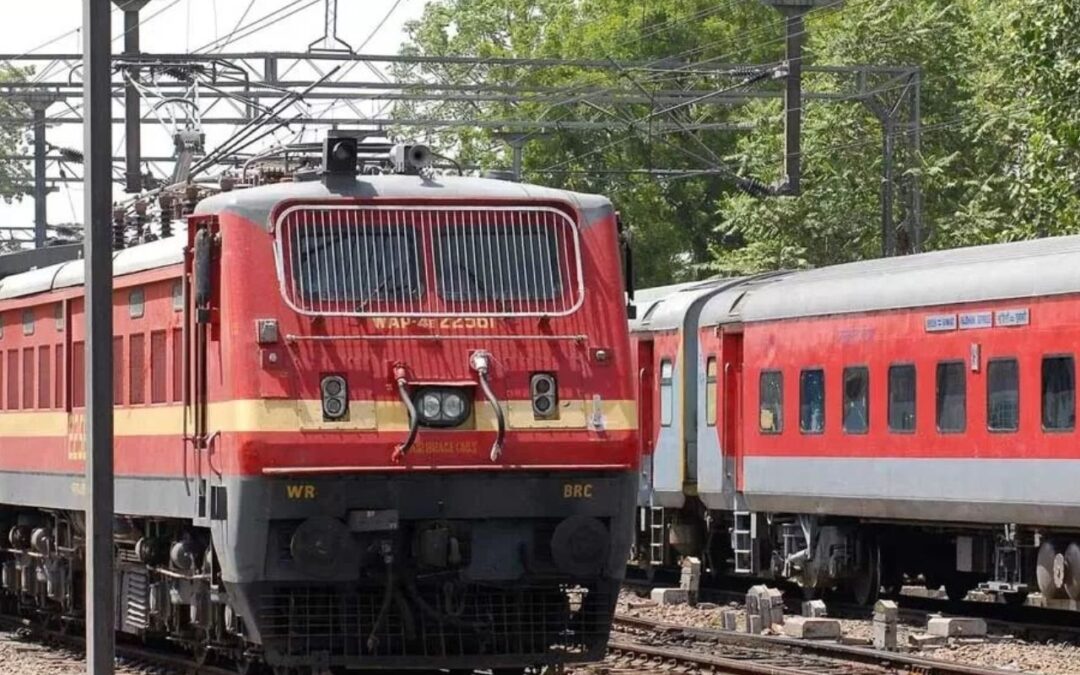
Synopsis: The Union Budget of 2025-26 has allocated ₹2.65 lakh crore for the Indian Railways’ Capital Expenditure. Indian Railways is carrying out mega infrastructure projects are strengthening national integration, improving logistics, and providing better connectivity across the nation.
The Indian Railways is to modernize its infrastructure, more than at any other time during its history, with the megaprojects involving the connection of different parts of the nation, better logistics, and the development of some regions. The NRP (National Rail Plan) Vision 2030 and the year 2051 are also the time frame for this ambitious project, which is to make up the transportation backbone of the country with an investment of ₹5.4 lakh crore (₹54 trillion) in total.
Flagship Connectivity Projects
Udhampur-Srinagar-Baramulla Rail Link
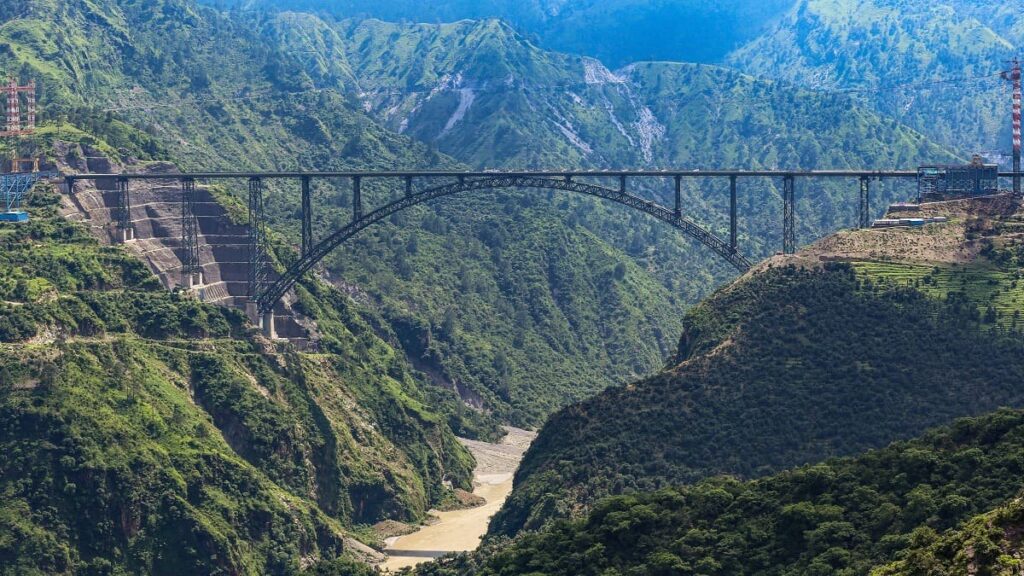
The opening of this 272km corridor, which was built at a cost of ₹44,000 crore, was inaugurated in June 2025. This rail infrastructure to the Kashmir Valley. It traverses a very challenging Himalayan terrain by boring 36 tunnels that are a total of 119 km long, and building 943 bridges. The Chenab Rail Bridge is the highest railway arch bridge in the world at 359 meters, thereby exceeding the height of the Eiffel Tower and being able to endure severe earthquake and wind forces.
The Dedicated Freight Corridor (DFC)
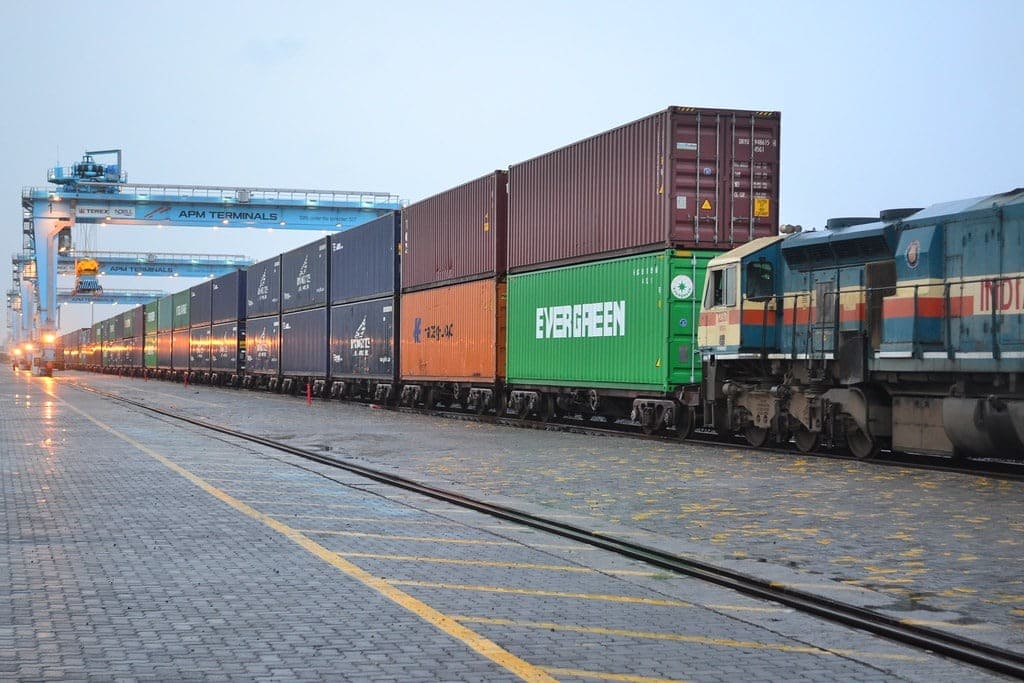
This project was completed at a cost of ₹94,662 crores for a total length of 1,337 km. It was declared ready for full operation in 2021, and the DFC, together with the introduction of fast freight trains, has brought about a significant drop in logistics costs. The slowdown in movement along the lines reserved for passengers is also a consequence of the DFC managing about 391 trains a day in January 2025 and allowing freight trains to run at an average speed of 60 km/h.
Western Dedicated Freight Corridor
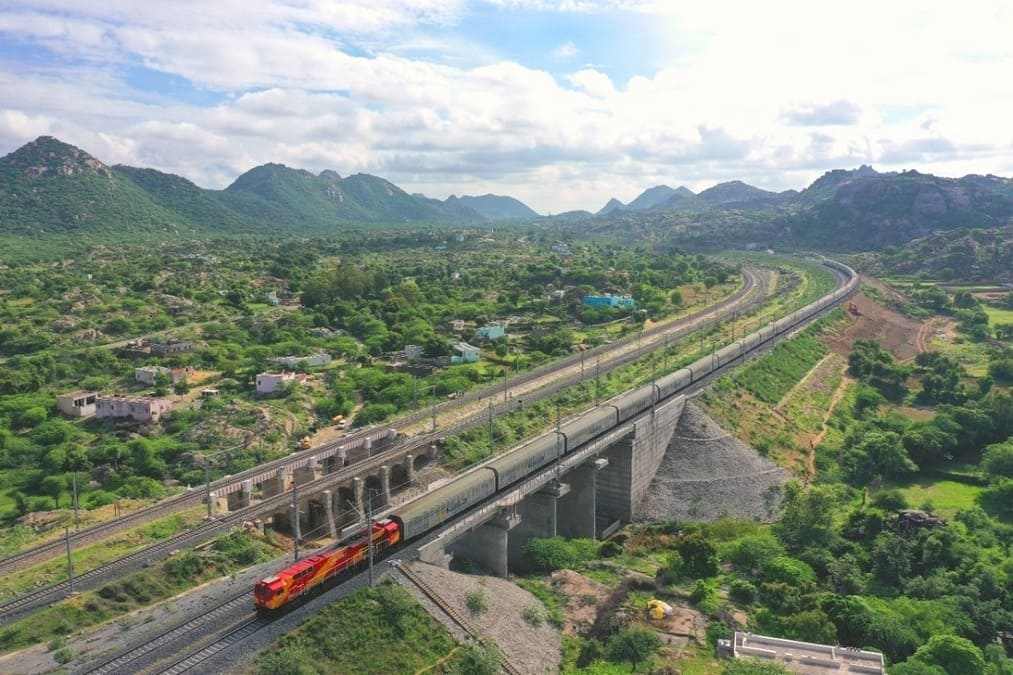
The WDFC is a 1,506 km long corridor which is built at an approximate cost of ₹94,091 crore. The current progress of the project is at 93.2% completion, and the target date for full operation is December 2025. Once it becomes fully operational, the corridor will link the six major ports and domestic airports of the country, making Indian goods more competitive in the export market and increasing the efficiency of the whole supply chain.
Also read: Uttar Pradesh Expressways: 5 Mega Projects Set to Boost Connectivity Across the State
Mumbai to Ahmedabad High Speed Rail, A Bullet Train
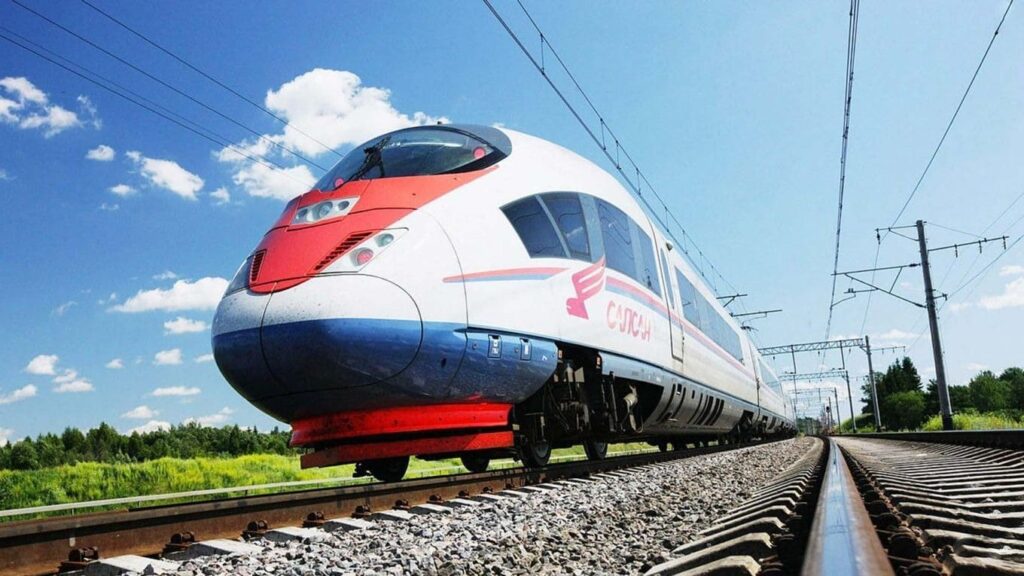
India’s first bullet train project is a stretch of 508 km, with an investment of ₹1.08 lakh crore being the cost of the project. So far, the project has completed 55.63%, and the goal is to start trial runs by August 2027 and have it fully operational by 2029. This project will reduce the travel time to less than two hours and introduce the Japanese Shinkansen technology to India at the same time.
The Northeast that links Aizawl with the farther areas
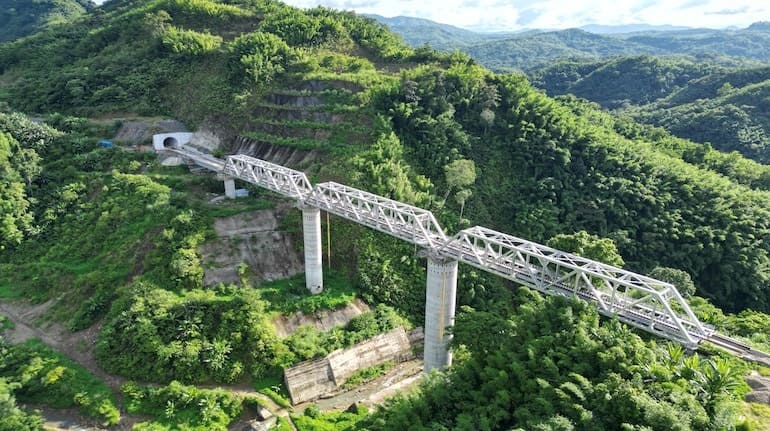
The crucial part of the project was the Northeast section of the Bairabi to Sairang railway line, 51 km long, and was completely opened up in September 2025. Dimapur-Kohima line finished the Shokhuvi to Molvom section in March 2025 and is expecting the remaining sections’ completion by December 2029. Another major project in this context is from Jiribam to Imphal line (110.625 km), which is expected to be operational by March 2028, thus linking the capital city of Manipur to the national railway network.
The New Pamban Railway Bridge
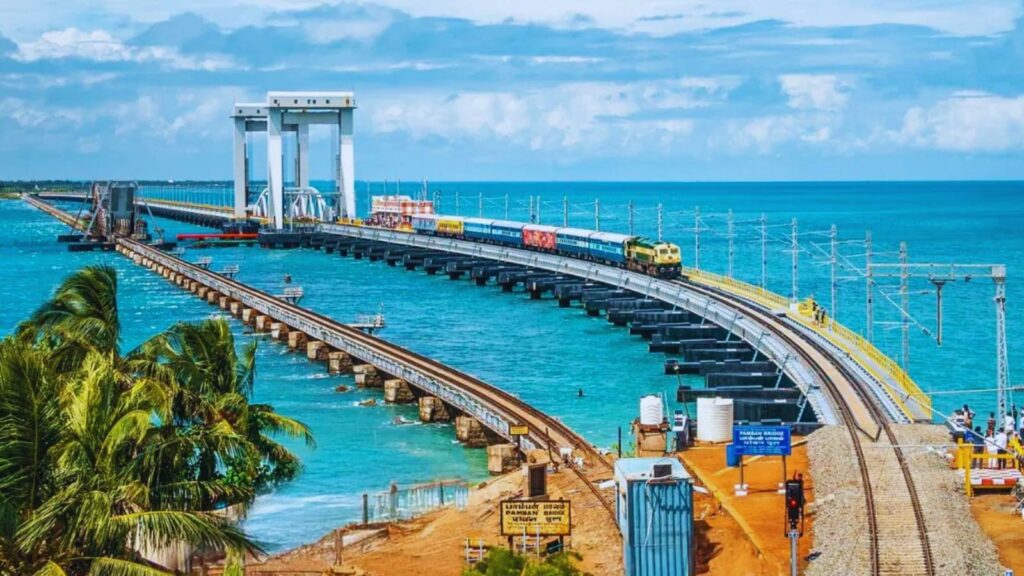
This spans 2.08 km and became operational in April 2025. It is India’s first vertical-lift sea bridge and has improved connectivity to Rameswaram while allowing seamless maritime traffic, thus giving a glimpse of India’s rising engineering skills.
| Project Name | Length | Cost | Status | Completion |
| Udhampur-Srinagar-Baramulla | 272 | ₹44,000 | Fully Operational | June 2025 |
| Eastern Dedicated Freight Corridor | 1337 | ₹94,662 | Fully Operational | 2021 |
| Western Dedicated Freight Corridor | 1506 | ₹94,091 | 93.2% Complete | Early 2026 |
| Mumbai-Ahmedabad High-speed Rail | 508 | ₹108,000 | 55.63% Complete | Operates 2029, Trail Aug 2027 |
| Bairabi-Sairang | 51 | Not specified | Fully Commissioned | Sept 2025 |
| New Pamban Railway Bridge | 2.08 | Not specified | Fully Operational | April 2025 |
Strategic Outcomes and Economic Implications
As per the PIB news report, the investments made in infrastructure are remodeling India’s logistics cost structure, which is one of the factors that determine the global competitiveness and long-term economic growth. The government projects that the faster transit on Dedicated Freight Corridors and the improvement of the multimodal connectivity under Sagarmala will help to reduce the logistics costs in the rail-intensive sectors like coal, cement, steel, and automobiles.
The high-speed rail project is seen as a major step by India, already being considered the best among the few countries where bullet trains are operating, towards a ₹30 trillion economy by 2047 through better mobility between cities.
Conclusion
The mega railway infrastructure development, including USBRL, DFCs, MAHSR, Northeast lines, and Amrit Bharat stations, is reorganizing the country’s connectivity, transporting goods with better speed and less cost, and fusing the regions. The risks involved in the execution related to delays and cost overruns are kept under control; then these properties would reduce the logistics costs greatly, increase the freight rail share up to 45%, and be a part of India’s long-term, high-growth, export-oriented path.
Written by Yatheendra N