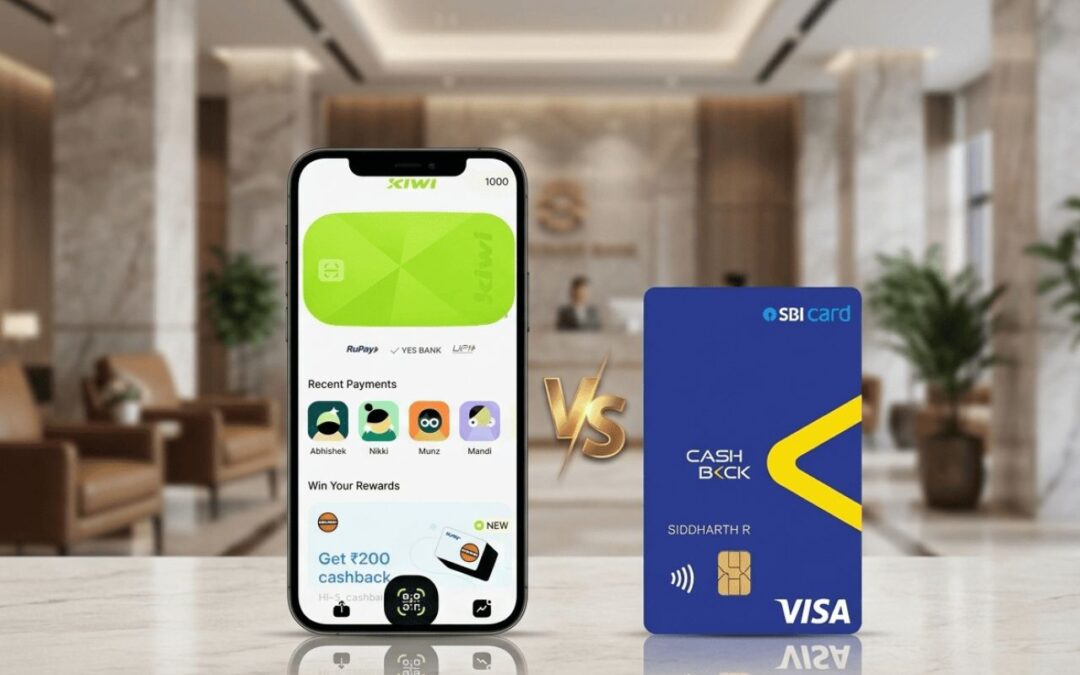
Synopsis: The article compares Kiwi, a fintech-driven UPI credit card, with SBI Cashback, a traditional bank cashback card. SBI offers a fixed online cashback system, while Kiwi provides rewards for UPI transactions. The article presents a detailed analysis of product features and reward systems and cost structures and practical applications in real life.
India’s credit card system undergoes transformation because both fintech companies and traditional banks enter the market. The Kiwi card, which YES Bank Klick supports, introduces UPI-based rewards to create a new payment system, while the SBI Cashback Credit Card maintains its basic cashback function. A comparison like that will help you figure out if a fintech-driven path or the traditional bank is more attuned to your spending tendencies.
SBI Cashback Credit Card
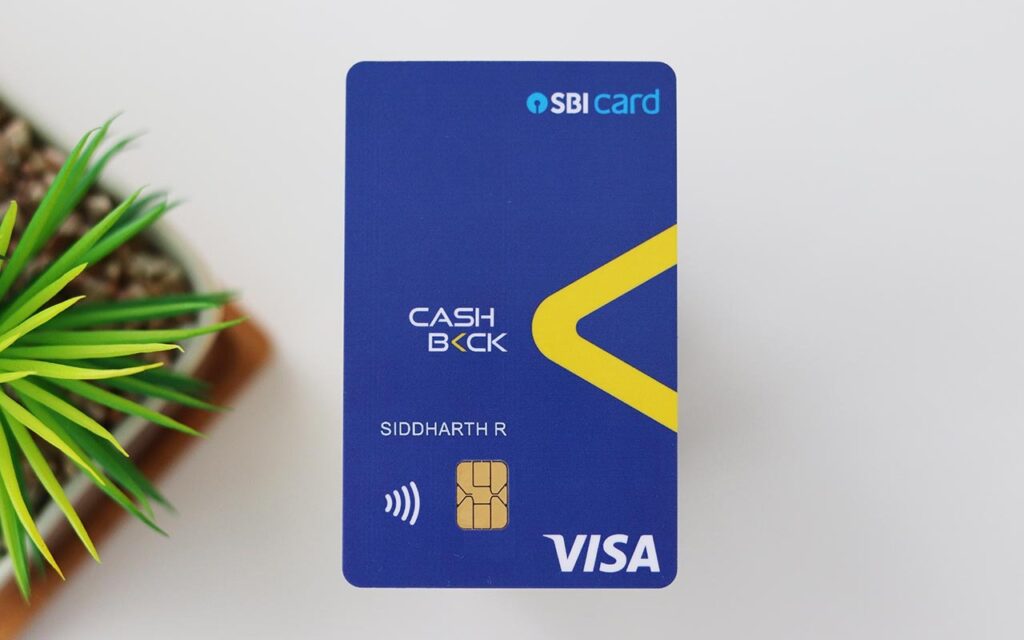
- Joining Fee: ₹999 + taxes
- Annual Fee: ₹999 + taxes (Annual Fee Waiver: On spending ₹200,000 in a year)
Benefits:
- 5% cashback on all online spends (no merchant restriction) and 1% cashback on offline spends
- Maximum cashback capped at ₹5,000 per statement cycle (combined)
- 1% fuel surcharge waiver on transactions between ₹500 and ₹3,000 on all petrol pump across India
- Maximum waiver capped at ₹100 per statement cycle
- Accepted at millions of outlets worldwide and works across online and offline merchants
- Contactless (tap-and-pay) enabled
- Cashback is not applicable on fuel, rent, wallet loads, EMI transactions, and cash advances
To apply for the card, please visit the Official Website
Kiwi Credit Card
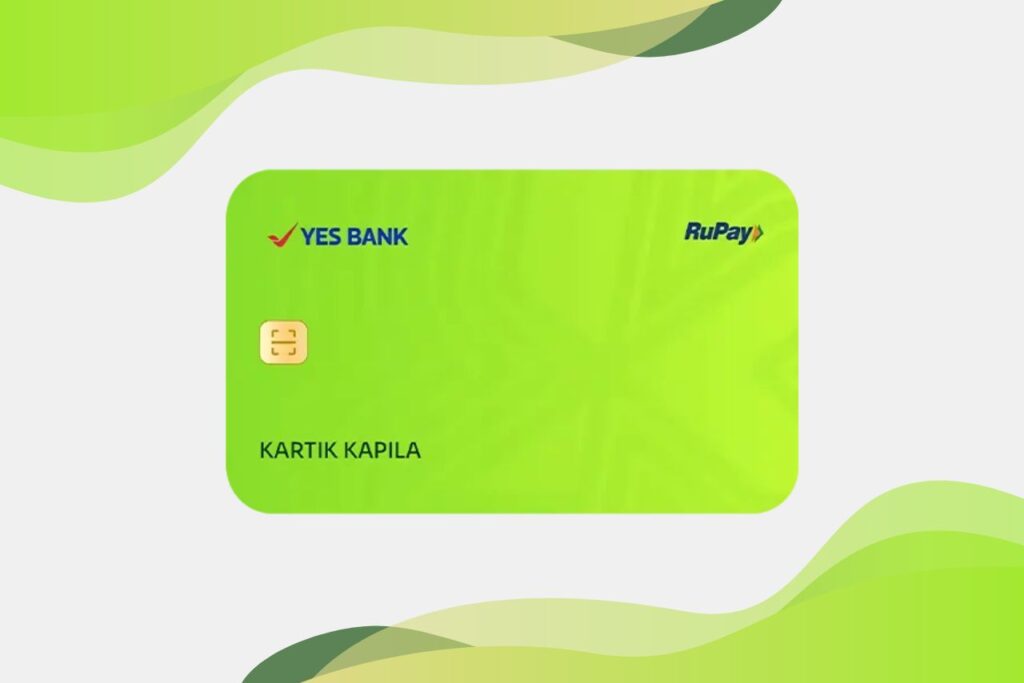
- Joining Fee and Annual Fee: ₹0 (lifetime free)
Benefits:
- 1.5% cashback on UPI Scan & Pay transactions and 0.5% cashback on online spends
- Up to 5% cashback on spends above ₹1.5 lakh (with Kiwi Neon membership)
- 1% fuel surcharge waiver
- 2 reward points per ₹200 on non-UPI spends
- 100% virtual credit card (no physical card issued)
- UPI transactions are allowed only for merchant payments (not peer-to-peer transfers)
- Works via UPI Scan & Pay using RuPay credit card
- Enables credit card payments on UPI (Scan & Pay / merchant payments)
- Requires Kiwi app for usage and rewards tracking
- Existing YES BANK credit card holders may not be eligible for this card
To apply for the card, please visit the Official Website
Also read: Scapia vs IndusInd Bank Tiger Credit Card: Which Is Perfect for Travel & Lifestyle Lovers?
Comparison: SBI Cashback Credit Card vs Kiwi Credit Card
| Feature | SBI Cashback Credit Card | Kiwi Credit Card |
| Type | Traditional bank credit card | Fintech + bank co-branded card |
| Annual Fee | ₹999 (waived on ₹2L spend) | ₹0 (lifetime free) |
| Core Strength | Online cashback | UPI cashback |
| Online Cashback | 5% | 0.5% |
| UPI Cashback | Not supported | 1.5% (base) |
| Maximum Cashback | ₹5,000/month cap | No fixed cap mentioned; depends on milestones |
| Reward Type | Direct cashback | Reward points in the form of Yes bank rewards |
| Card Form | Physical + digital | 100% virtual |
| Card Network | Visa | RuPay (UPI-enabled) |
| App Dependency | Not required | Required |
| Global Acceptance | High | Limited (UPI-focused) |
Which One Is Best for You?
- The SBI Cashback Credit Card provides its users with a straightforward 5% cashback solution, which becomes their most effective option for online spending.
- The YES Bank Klick Credit Card becomes a better choice because it offers benefits for users who make payments through UPI.
- SBI uses a basic cashback system, while Kiwi offers rewards specifically for UPI transactions.
Conclusion
The SBI Cashback Credit Card and the YES Bank Klick Credit Card represent two clear directions in today’s credit card space: one built on simple, high cashback and the other on UPI-driven rewards. The online spending value relationship that SBI provides to customers remains consistent, whereas Kiwi offers customers a digital payment solution that supports their daily spending activities. The two cards provide different options for spending, which creates a situation where users must select their preferred card based on their actual spending patterns.
Written By Ameet S