
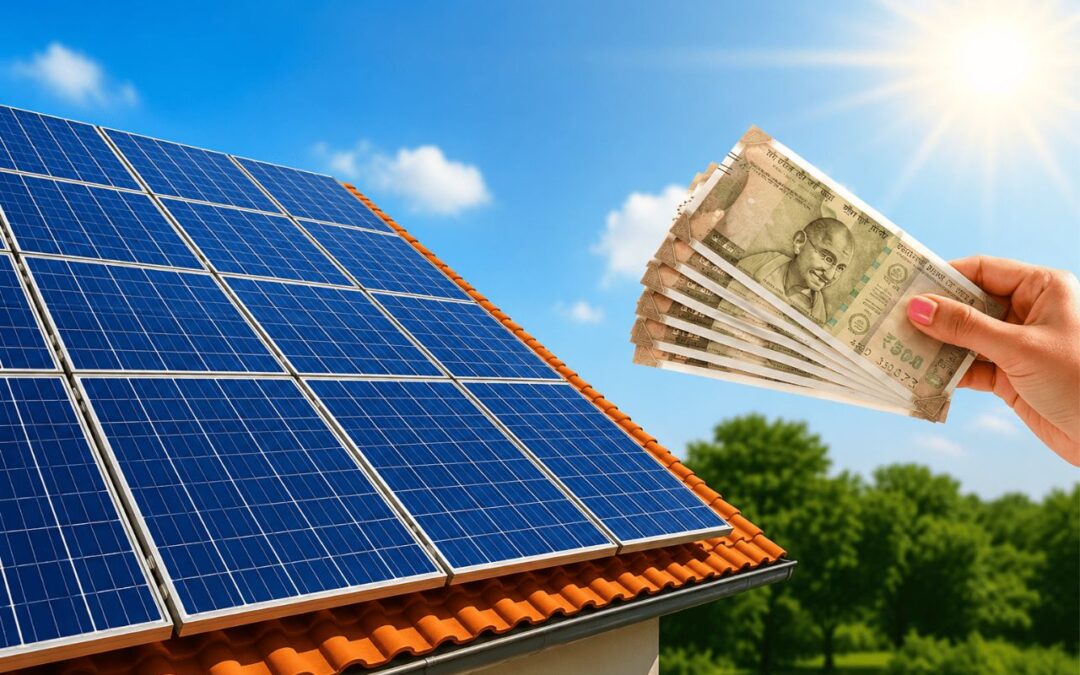
Synopsis: This article mentions the best solar panel loans in India under the PM Surya Ghar Yojana, comparing the interest rates, EMIs, subsidy benefits, repayment tenure, and eligibility to help you choose the right rooftop solar loan for your home.
Solar technology is changing the way we produce & consume energy, it is connecting urban and rural households towards sustainability. India is one the fastest growing solar markets globally and with government’s support solar panels are becoming affordable for Indian homeowners to install at their respective homes.
Why Are Solar Panel Loans Becoming Popular?
Solar panel loans are becoming popular because they eliminate major upfront costs, they cover the whole solar power ecosystem including batteries and inverters and their repayment might be lower than or equal to your electricity bill. You don’t need to own a house to have a solar panel as many solar loan providers are now creating financing products not just for individual homeowners but also for housing societies, apartment associations, and even tenants with the landlord’s approval.
Government Subsidies?
In order to increase solar adoption in India , the government of India launched PM Surya Ghar: Muft Bijli Yojana. Under this scheme, homeowners can get subsidies of up to 60% for installing rooftop solar systems (₹30,000/kW (up to 2kW) and a fixed ₹78,000 for 3kW and above). Some Indian states offer additional top-up incentives on top of the central subsidy to promote rooftop solar installations. The solar panel subsidy is available to people who live in – homes that have panels connected to the power grid, group housing societies and residential welfare associations with panels that can produce up to 500 kilowatts of power.
Best Solar Panel Loans in India Under PM Surya Ghar Yojna
SBI Solar Rooftop Loan
Provides installation of Solar Roof Top for loan amount up to 2 lacs starting at 5.75% interest rate and for amount up to ₹ 6 lac with effective interest rate of 7.90%.There is no prepayment penalty and repayment tenure is up to 120 months/ 10 years which reduces EMI burden. Interest rate and approval depends on the profile of the borrower and minimum annual income of the borrower should be 3 lacs.This loan is eligible under the PM Surya Ghar subsidy scheme which makes it one of the most affordable financing options.
Bank of Baroda Solar Loan
Offers Up to 90% financing with interest rate starting from 6.75% – 7.90 % pa. Government Subsidy up to Rs.78,000, there are no foreclosure charges and options of floating & fixed rate are available. The best part is that there is no requirement for income documents for loan amounts up to ₹2 lakhs. The loan is suitable for homeowners looking for moderate EMIs and longer repayment periods (up to 10 years).
Punjab National Bank Solar Loan
This loan offers Installation of a new rooftop solar power system at residential houses with maximum capacity up to 10 kw. Interest rate is starting from 7.00%- 8.25% for non home loan borrowers and varies by your CIBIL score. Maximum Loan amount is ₹6 Lakhs, depending upon the capacity of rooftop solar power system, repayment period is up to 10 years. There is zero upfront fee and subsidy is capped at ₹78,000.
Canara Bank Solar Loan
The loan amount can go up to ₹6 lakhs for homes. If you borrow up to ₹2 lakhs the interest rate is around 7.75% per year and for ₹6 lakhs the interest rate is 8.15% per year. You can choose how much to pay each month and the repayment tenure is up to 10 years. The Canara Bank Solar Loan is also part of the PM Surya Ghar subsidy scheme. This means you can get up to ₹78,000 off. This loan is good for people who do not want to pay too much interest.
Union Bank Solar Rooftop Loan
This loan is up to ₹6 lakhs depending on system capacity and borrower eligibility. Interest rates for loans up to ₹2 lakhs generally start from around 7.60% p.a., while loans up to ₹6 lakhs may have rates starting from around 8.00% p.a. The bank offers repayment tenure up to 10 years. This loan may suit homeowners looking for competitive public sector bank financing and easier repayment flexibility.
Also read: Top 5 Banks Offering Green Home Loans at the Lowest Interest Rates in 2026
Direct Comparison Table
Example: Let’s say a homeowner puts up a solar system that costs ₹2 lakhs. Under the PM Surya Ghar Yojana they might get a subsidy of up to ₹78,000. This depends on the system’s size. After getting the subsidy they need to borrow ₹1,20,000. Now if they borrow this amount for five years at an interest rate of 8% per year their monthly EMI would be ₹2,475 – ₹2,500. This is less than the electricity bill that many people receive monthly.
Things to Check Before Taking a Solar Loan
Before you get a loan you should really look at things like the subsidy, the interest rate, repayment period and how much money you have to pay right away. You should also make sure the solar installer and the equipment are approved under the government subsidy scheme. Another thing to think about is your roof space, maintenance costs, warranty for solar panels and how much money you will save on electricity over time.
Conclusion
The cost of electricity is going up , the government is giving subsidies so that rooftop solar systems can become cheaper for people in India. The PM Surya Ghar Yojana and banks are making it easier for people to get loans, which is reducing the amount of money people have to pay upfront. Looking at multiple options and comparing them saves your time and money in future and helps you make an informed decision that you would not regret later.
Written by Shreya Tiwari