
Synopsis: EV insurance in India is witnessing a surge of 670% in FY26, largely driven by EV adoption in Tier-2 and Tier-3 cities. This article explores the six key reasons contributing to this remarkable growth seen beyond the city metro-lines.
The EV revolution has started a wave across the country and the smaller cities are the active participants of this. EV adoption in Tier-2 cities has risen since 2022 at 10.67% from 4.16% while for Tier-3 cities the sales are from 1.69% to 8.68%. As more residents are switching to EVs the demand for EV insurance is also rising.
Top 6 Reasons for the Surge
1. Rising EV Adoption
A surge of 670% is seen in EV insurance between 2025 and 2026, making it the fastest-growing motor segment with tier-2 and tier-3 cities contributing 77%. Insurance for EV cars has risen from 0.50% in 2023 to 3.50% in 2024 and has further increased to 8.2% in 2025. This rise in adoption of electric vehicles (EV) is translating into the increase in insurance policies.
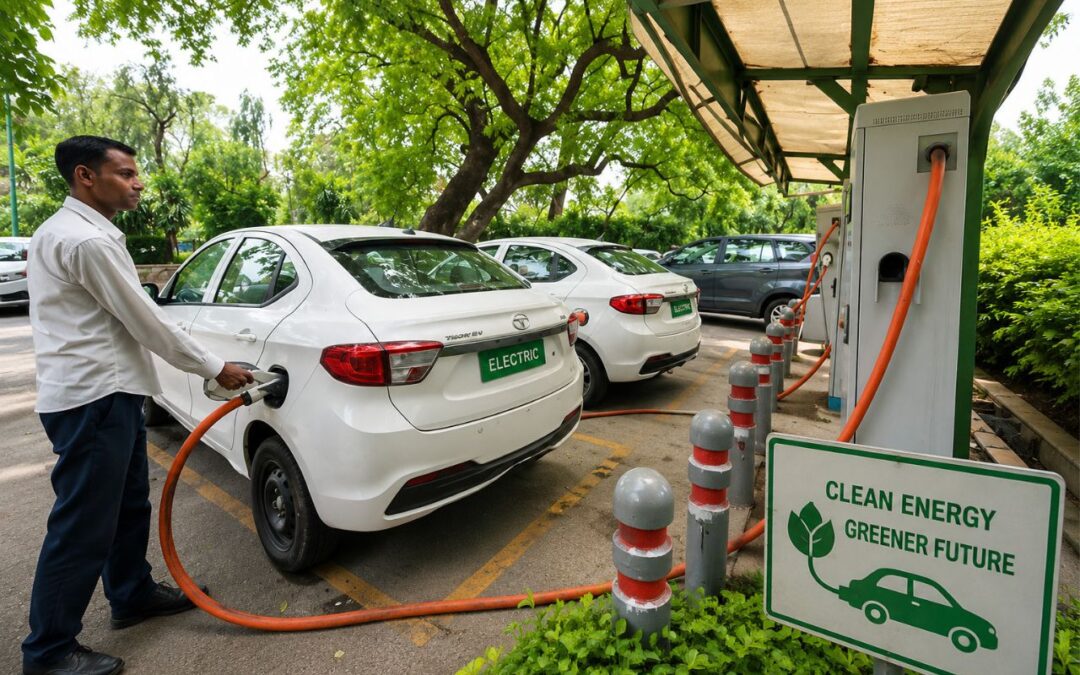
2. Rapidly Developing Charging Infrastructure
A ₹2000 crore allocation under the PM E-DRIVE Scheme for establishing charging stations across India, including the tier 2 and tier 3 cities has resulted in 4,625 operational charging stations as of April 1, 2025. Cities like Surat, Lucknow, and Noida are the key examples where the charging station infrastructure is scaling rapidly.
3. Government Policy Support and Incentives
Support from the central and state government schemes have made EVs more accessible especially in the tier 2 and tier 3 cities. Buyers can save up to ₹4 lakh on electric cars and up to ₹25,000 on 2-wheelers through schemes like FAME-II and PM E-DRIVE, and along with state-level benefits like road-tax exemptions and registration fee waivers and easily accessible EV loans.
Also read: Top 8 Indian Cities With the Highest Property Price Appreciation in 2026 – Mumbai Isn’t at the Top
4. Increase in Fuel Prices Pushing Consumers Towards EV
Rising fuel prices resulting from the West Asia conflict has triggered EV demand across India, with a report of a 23% rise in customer interest in EVs during March-April 2026. The cost-conscious consumers in tier-2 and tier-3 cities are slowly moving towards EV as the cost of charging an EV is significantly lower which reduces the cost of the consumer.
5. Ease of Online EV Insurance
In tier-2 cities like Pune and Lucknow there has been a growth of 70% in online motor insurance, while in tier-3 cities it is 110% growth as these online facilities are easily accessible and provide less paper-work, making it easier for EV owners to purchase insurance online.
6. Special EV Insurance Products for New Buyers
EV policies are now coming with benefits of covering battery replacements and other needs offering EV owners with customized policies which are not covered by the standard motor insurance. These products also cover battery damage, fire risks, and charging equipment which are relevant for the first-time EV-consumers living in smaller cities who need comprehensive protection.
Conclusion
Infrastructural developments, better policies, and the current economic necessities are the factors reflected in the surge for EV adoption hence resulting in EV insurance across Tier-2 and Tier-3 cities. As EVs are slowly becoming a vehicle of choice beyond the metro cities, EV insurance is expected to become one of the significant growth segments in India’s financial services ecosystem.
Written by Jahnavi