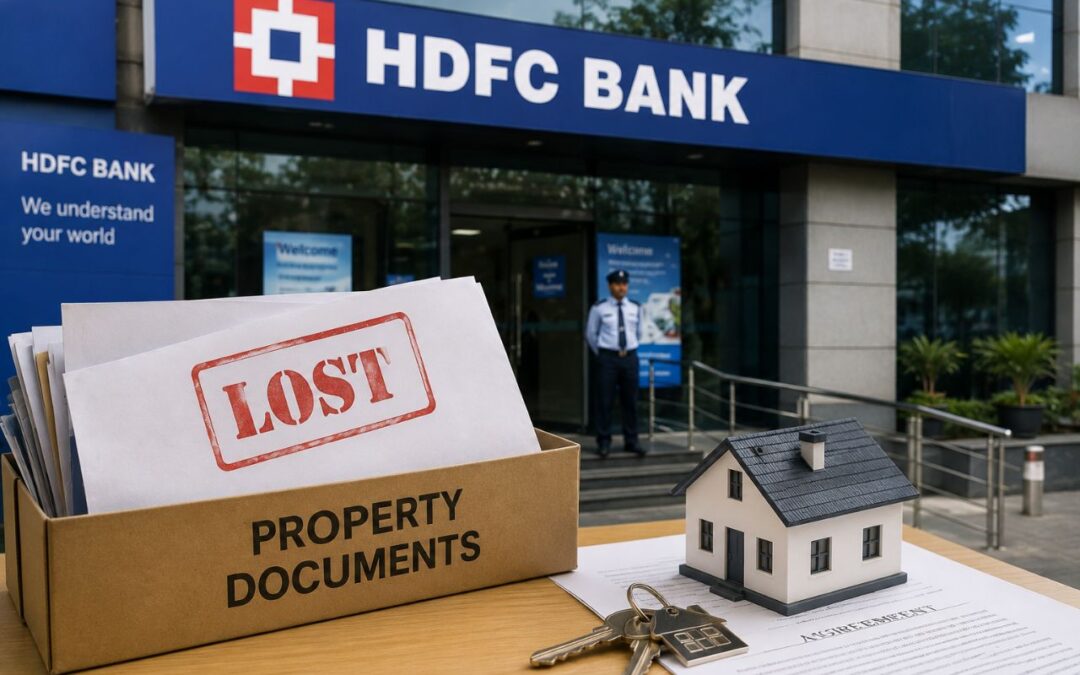
Synopsis: Banks will keep your property documents as security when you take out a home loan from them. So what do you do if those property documents get lost? The Indian courts have made some decisions, in real life cases and these decisions tell us what rights the borrowers and the people who take the home loan have when it comes to the property documents.
Why Do Banks Keep Original Property Documents?
When you get a home loan the bank will take the sale deed, the title deed and all the other documents that prove you own the place. They keep these documents until you pay back the loan, the bank does this because these documents are like a promise that they can take the property if you do not pay back the loan.
The bank also wants to make sure that you really own the property and that there are no problems with it. If they have the documents you cannot use the property to get another loan or sell it without paying back the money you owe.
After you pay back the home loan the bank will take the mortgage out of their records and give you back all the documents that prove you own the property. They do this after they finish all the paperwork, this means the bank does not have any claim on the property anymore and you are free to sell it, give it to someone or use it to get another loan if you want to.
What Happens If a Bank Loses Your Documents?
Banks have to keep the property documents safe for the entire time you have a loan. If a bank is careless and loses these documents it can cause problems for you. When the original documents are missing it is hard to sell your property, get another loan, prove that you own the property or do legal things later on.
Case 1: Central Bank of India was told to pay ₹2.5 Lakh Compensation in July 2026
A woman named Smt. Sathyavalli and her son Mr. Saseendran from Kerala had given the Central Bank of India the Pattayam, which is the land title deed of their property, to get an agricultural loan. When they went to the bank in 2018 to ask for a top-up loan, they found out that the bank could not find the original title deed. The bank argued that the borrowers had defaulted on the loan and that recovery proceedings had already been started.
However,the District Consumer Disputes Redressal Commission did not accept this argument, they said that the loan default did not excuse the bank’s carelessness in keeping the property papers safe.The Commission also noted that even if the borrowers paid back the loan amount,they would still be, in trouble because they would not have the original proof that they own the property.This could cause problems with the value of the property as it might go down and it could become hard to sell the property or use it to get another loan.
The District Consumer Disputes Redressal Commission in Thrissur said that the Central Bank of India did not take care of the original property documents. The Commission did not agree with the bank when they said that only Smt. Sathyavalli could file a complaint because she was the one who took the loan. The Commission said that both Smt. Sathyavalli and her son Mr. Saseendran were affected by this and told the bank to pay ₹2.5 lakh, plus ₹10,000 towards litigation costs, as compensation. This shows that every bank, even if it is a big name like the Central Bank of India, has a legal responsibility to safely protect customers’ original property documents.
Case 2: State Bank of India Ordered to Pay ₹10 Lakh Compensation in March 2025
V.R. Nagarajan, a manager of the State Bank of Mysore took a home loan of ₹2.37 lakhs and an education loan of ₹11.22 lakhs for his daughter from the State Bank of India branch on NSC Bose Road in Chennai. He paid back both loans, then he asked the bank to return his property papers, the bank told him they had lost the documents. Without these papers Nagarajan could not use his property to get a loan, so he had to borrow money at a higher interest rate for his daughter’s wedding. He went to the consumer court in Chennai and in March 2025 the court said the State Bank of India was guilty of deficiency in providing service.
The court asked the bank to pay him ₹10 Lakh as compensation and ₹10,000 for his court expenses.The bank also had to get copies of the lost papers and sign a promise to protect Nagarajan from any future problems with the property papers.The State Bank of India had to do all this because they lost Nagarajan’s property papers, the bank had to pay because they did not keep the property papers safe.
What Compensation Can Borrowers Receive?
If a bank loses your property documents you might have to face a lot of problems, the consumer courts can ask the bank to pay you some money to make up for the trouble they caused you and the loss of value of your property due to the lost documents. The bank will also have to do things like get certified copies of the documents that are missing, sign a special bond that says they will take responsibility, put an advertisement in the newspaper about the lost documents and pay for the costs of going to court if you had to hire a lawyer.
What Should You Do If Your Bank Loses Your Property Papers?
When this happens the bank should tell you right away, go to the police and file a report, put out a public notice that the documents are lost, help you get certified copies from the Sub-Registrar’s Office and give you a special bond that protects you from legal problems in the future.
How Can You Protect Yourself?
If the bank does not do these things or if their carelessness causes you to lose money or feel stressed you can go to a consumer court or other legal places to get help and money back. Many courts, like the Supreme Court and consumer commissions have said that banks are responsible when they lose the property documents and they have to pay the people who were affected. Banks are responsible for keeping your property documents safe and if they lose them they have to compensate the losses due to the lost documents.