
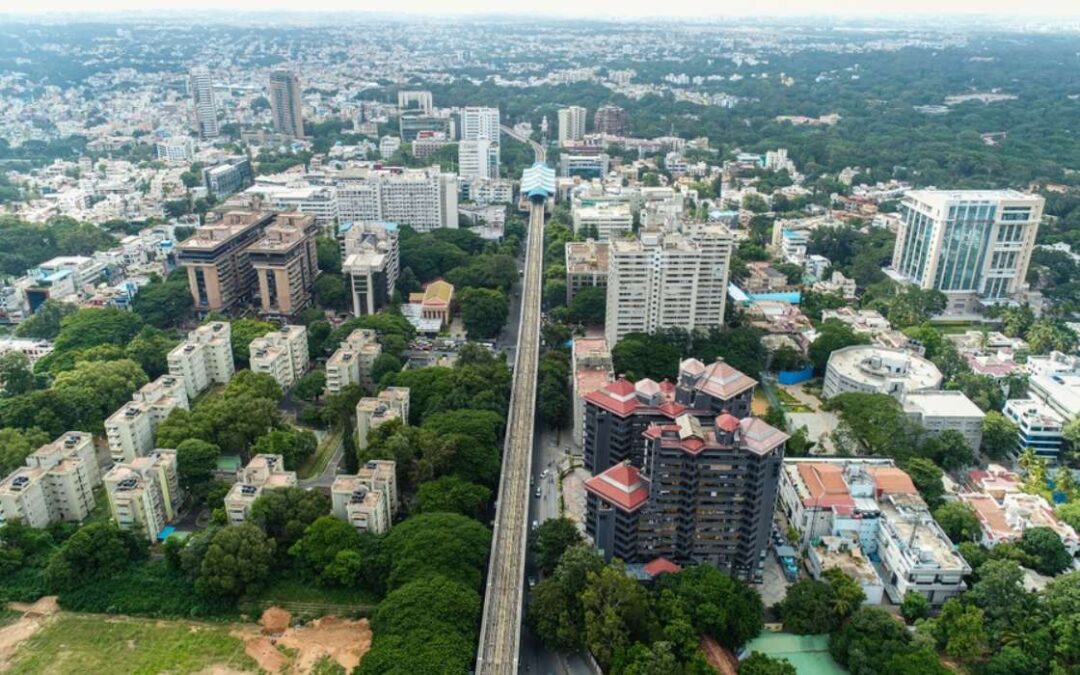
Synopsis: Driven by its airport and infrastructure development, Devanahalli has a good potential to become the best satellite city of Bengaluru, although it is important to make it happen proactively to avoid the traps of the latter city.
Bengaluru is the Silicon Valley of India that struggles with the issue of overcrowding, traffic and out-of-capacity infrastructure since the population has reached more than 13 million people. Similar to the 1970s and 1980s in Delhi, the city requires satellite centers in order to decongest the center and promote balanced development. A prime example of this model is Gurgaon (now Gurugram) only 30 km away, as once rural villages it went booming in 1991 after liberalisation, multinationals such as Google and Microsoft now engage in it, due to its development by the private sector, lax land policies and its close location to the capital. Devanahalli, the location of Kempegowda International Airport (KIA) in the north of Bengaluru is today emerging as a competitor in the north, with the same drivers: global connectivity, industrialization and real estate rush. This report looks at whether Devanahalli can follow the path of Gurgaon balancing the opportunities against risks.
Transformative Journey in Gurgaon
Gurgaon is the satellite city of Delhi which started as farmland in the 1970s during the housing boom in the capital. The government of Haryana allowed the city to be taken over by the privatized giants such as DLF where one was able to bypass all the regulations and the government was allowing the townships to be built with office towers and luxury enclaves attracting fortune 500 companies by the 2000s. IT parks in Cyber city and Udyog Vihar have propelled urban population to increase to more than 2.4 million in 2012 compared to 100,000 in 1991. Among the success factors were access to Delhi (through highways and metro), policy facilitation such as the Haryana Urban Development Authority Act and talent pool of the nearby institutions. Housing prices also shot up and the Golf Course Road became the most expensive part in India.
Rising Foundations by Devanahalli
Devanahalli, 40 km to the north of the core of Bengaluru, replicates the airport-edge position of Gurgaon KIA accommodates 50 million passengers each year and is the driver behind an Aerotropolis vision. The major boosters are the KIADB Aerospace Park (where Boeing, Airbus have their plants), the iPhone factory by Foxconn and the BIAL IT Investment Region, which is expected to generate lakhs of jobs. The infrastructure is nearly matching: NH-44 highway takes 30 minutes to reach Hebbal, Satellite Town Ring Road (STRR, 280+ km) serves 12 satellite towns, ₹4100 crore airport rail spur and Namma Metro extension to Devanahalli in progress. One business park adjacent to KIA worth 400 acres is projected to invest in IT, hospitals and retail to the tune of 2.2 billion dollars.
Real estate mirrors Gurgaon-like boom: the price of apartments will reach to ₹5,500-₹9,000/ sq ft in 2026 (compared to ₹4,500-₹7,500 in 2024), and the annual growth will be 12-18%, with a high of 20-25 in prime areas. The premium plotted developments and villas being introduced by developers such as Prestige, Godrej and Sumadhura are providing 3-5 percent rentals (₹35,000/month on 2BHKs). Nandi Hills location provides a lifestyle, similar to the Golf Course that Gurgaon offers.
Also read: Why KIADB Aerospace Park Is Emerging as a Major Investment Hub in North Bengaluru
Gurgaon struggles and learning
The model of flooding in Gurgaon, which is privately led, failed without state control: the Golf Course Road is submerged yearly, transport is sluggish (150 buses per 2.4M residents), dust pollution makes the streets hard to breathe, and even luxury towers do not stop the water shortage problems. The result of no single municipal administration until 2008 to potholes in the streets, lack of foot pavements and heavy congestion of landfills contaminating Aravalis. The marginal communities have to put up with long commutes and evictions at long last.
Devanahalli runs the risk of comparison: Bengaluru water crisis strikes become fringe in Devanahalli with borewells having gone dry at 1,200 ft when they have to rely on tankers with high TDS. There is no piped sewage in place; the traffic may increase with the airport traffic (1 lakh vehicles/day). At the initial stage of development is mitigation: STRR offloads heavy traffic, metro offloads congested access.
Strategic Edge of Devanahalli
Devanahalli also enjoys the lessons of Bengaluru as opposed to ad-hoc growth of Gurgaon. The Karnataka budgets focus on suburban rail (₹4,100 crore approved January 2026) and townships with facilities. ITIR and 10,000 acre areas are planned to develop as a whole and not as isolated segments. It has a potential of 20-25% ROI and it appeals to end-users more than speculators do.
Conclusion
Devanahalli had the potential of becoming Bengaluru Gurgaon should infrastructure provide and services to the people scale proactively- Gurgaon with the IT magnetism and STRR and metro withholding traffic ills. Real estate patterns indicate a boom but to avoid the floods and the lack of property in the Gurgaon region requires a strong governance. By 2030, it is set to accommodate 5 lakh people in equitable townships, relieving Bengaluru on a sustainable basis. Inclusive planning should be prioritized by investors and policymakers in order to achieve this vision.
Written By Jayanth R Pai