
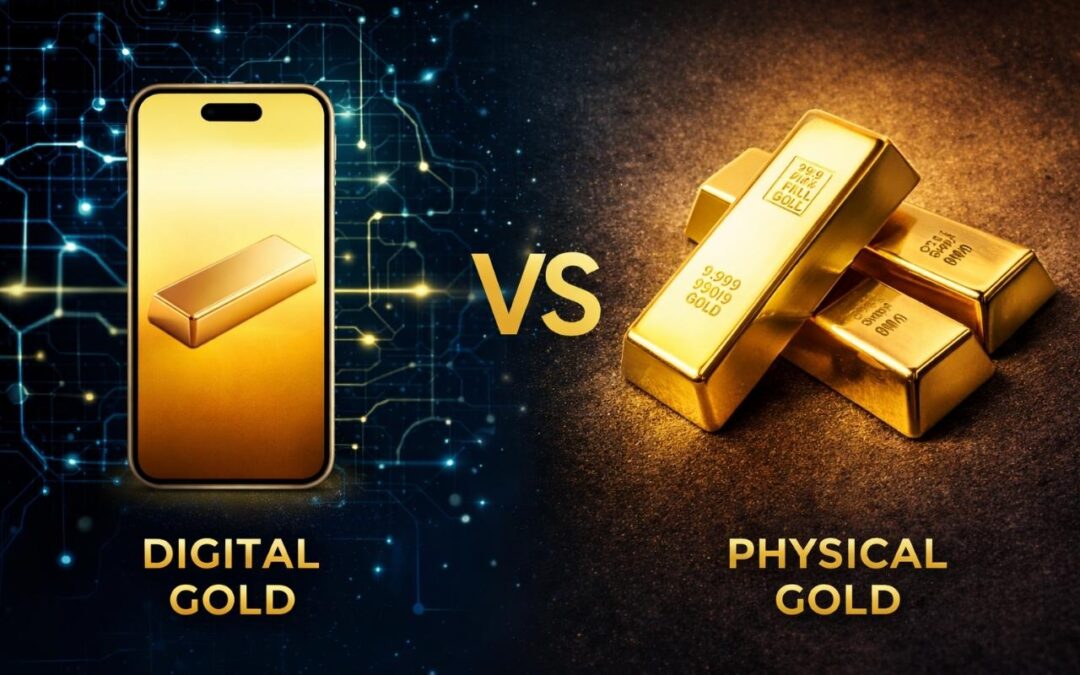
Synopsis: this blog compares the significance of digital gold and physical gold as investment options, highlighting their key differences in pricing, demand, storage and long-term returns. The blog is a reader’s guide to choose the right gold investment based on their financial objectives.
Gold has been one of the trusted and reliable forms of investment in Indian households. With advancements in technology, the way we invest in gold has completely changed. Digital gold has emerged as a modern alternative to traditional physical gold. They both serve the same purpose but differ in terms of rates, safety, liquidity and convenience.
Difference between digital gold and physical gold
Both digital gold and physical gold have their own benefits when it comes to investing in gold. Digital gold often benefits first-time or beginner-level investors by letting you buy gold through trusted online platforms in affordable amounts and great convenience – making it easy to buy, sell and track the performance, for people who prefer flexibility.
On the other hand, physical gold is considered as tangible assets that can be in the form of gold coins, gold bars and gold jewelry that the investors can physically possess. Physical gold comes with storage and safety costs.
What is digital gold?
Digital gold refers to the form of gold that can be possessed or invested through digital platforms. The gold is safely insured by authorized partners. It allows individuals to purchase gold in a digital form which eliminates the need for physical possession. Investors can buy digital gold in smaller fractions and invest the amount every month for the value to grow.
Each unit of gold is backed by 24K 99.9 forms of purity. An investor can buy gold with an amount as low as Rs 100 and ensures complete transparency in the transaction.
Benefits of investing in digital gold
- Small amount investments: digital gold allows an investor to invest an amount as low as Rs 100. There are no restrictions on purchases. Hence, one can consider digital gold for smaller investments.
- Quality: most of the gold put out for investment in the market is 24K 99.9% in the purest form of gold. As of today, there has not been a single concern in regards with the protection or the purity of the gold.
- Redemption: the process to redeem gold can be done quickly and easily. An investor can cash out their investment without any hassle and can easily buy and sell the units.
- Track investments: investors can easily track their investments through online portals and can further assess their investment performance through an analysis.
- Safety: the safety measures of digital gold have gone off the charts. In terms of safety, digital gold has an upper hand because the digital gold is insured and deposited into a vault, this eliminates the risk of any robbery.
What is physical gold?
Physical gold refers to the tangible assets in the form of bars, coins or any physical form. Unlike digital gold, physical gold can be seen and touched. Physical gold has traditionally served as a reliable form of investment in Indian households due to its ease of purchase and liquidity and can be stored in vaults or safe deposit boxes that need a security fee.
Physical gold investors can achieve the sense of ownership that allows individuals to have direct control over their investments. This form of gold still stands out as an investment preference seeking a physical sense of ownership and long-term hedge against market volatility.
Also read: 5 Best ICICI Bank Credit Cards Offering Complimentary Lounge Access in 2026
Benefits of investing in physical gold
- Possession: gold has always been a precious metal, rising in demand and fulfils the appetite of one’s possession over this metal.
- High demand: gold never loses its value. The rate and demand for gold have been rapidly increasing. Even during a crisis, one can easily sell a unit and overcome a crisis.
- Loan asset: an investor can simply pledge their physical gold as an asset to repay a loan amount due to its impossible depreciation in value or even in emergencies.
- Long-term wealth: the possession of physical gold can be passed on to generations.
Digital Gold vs Physical Gold: Which one is a better investment?
So, which one is a better investment?
When it comes to choosing between digital gold and physical gold, the way you use your gold in your portfolio plays such an important role in your investment. Digital gold is best suited for modern investors who prefer flexibility and convenience and small investments without having to worry about storage issues. Digital gold works well for short-term goals.
On the other hand, physical gold holds a sentimental and a cultural value to the traditional investors in India. Physical gold is more preferred for long-term goals or possession. Although, physical gold comes with barriers like manufacturing charges, storage charges and theft risk. From a pure investment perspective, digital gold is often more practical, while physical gold makes sense when personal use and tradition matter more than returns.
In conclusion
Digital and physical gold have their own set of pros and cons although each investment stands out in their own fields. The sole purpose of investing in gold is to benefit from good returns. Digital gold is suited for investors that seek convenience in small-time investments and quick liquidity.
On the other hand, physical gold can appeal to those who seek value in tangible ownership and cultural significance. By understanding the benefits and limitations of each, the investors can choose their form of investment that aligns with their interests and overall financial strategy.
Written by: Atin Kevin Fernandez