
Synopsis: The latest rise of gold, copper and silver due to geopolitical uncertainty, persistent inflation concerns immense demand in AI data centers, solar and EV demand and nuclear expansion. Gold, Silver and Copper are added to the critical minerals list by U.S. Geological Survey because of their acute shortage.
In November 2025, when gold, copper and silver were added to the list of critical minerals by the U.S. Geological Survey, they became national security-level minerals. Silver and copper are consumed industrially to new highs due to industrial applications and data centers respectively. This discussion will provide an analysis of applications, dynamics, and India-based investment strategies.
Market Divergence
A deep divergence occurred in the global commodity markets in December 2025. Over supply drove the price of Brent crude oils to less than 62 per barrel and the price of gold went over to 4,500 per ounce, silver went over 78 per ounce and copper hit an all time high of 1,400 per pound. This Great Divergence is an indicator of the movement towards material-intensive rather than fuel-intensive economies.
Gold: Financial Reserve Holding
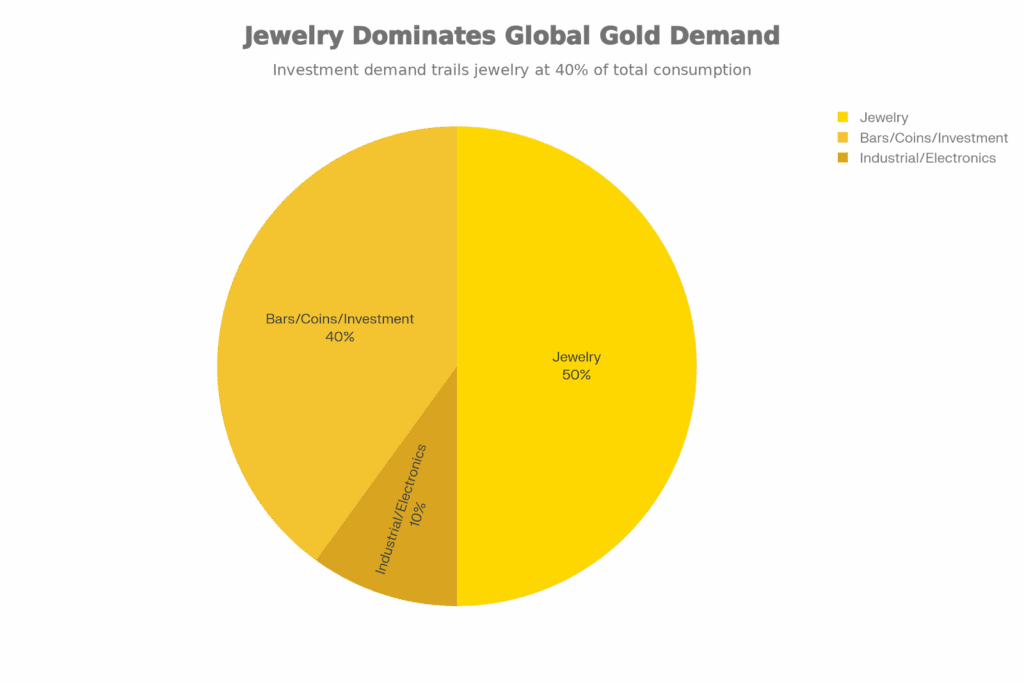
Gold is mainly used as a savings stock and hedge. Jewelry fabrication is the main source of demand in the global market, especially at the festival seasons in India and China, and is approaching 50 percent. The remainder 40% goes to bars, coins, ETFs, and central bank reserves to offer portfolio diversification and protection against inflation. Only 10 percent finds industrial use, primarily electronics plating as well as connectors. Gold has a low consumption loss as compared to industrial metals because after its use, it is returned back to vaults hence maintaining price stability.
India’s gold reserves jumped to $108 billion in FY25–26, up by $31 bn, as RBI buys more gold, bringing home 64 tonnes, and diversifies assets globally. RBI has reduced its holdings in US treasuries, bringing it down below $200bn, a strategic move to increase the gold reserves in the Central bank.
Also read: 4 Major Gold Discoveries in Indian States that Could Cut Gold Imports by 15–20% by 2030
Silver: Two-Purpose Metal Industry
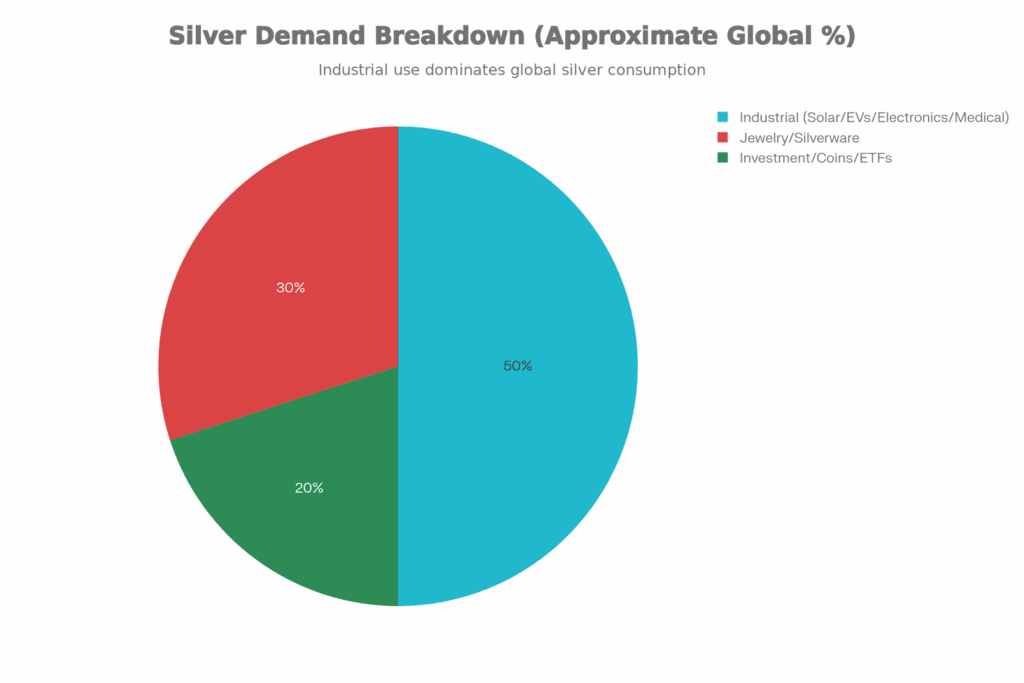
Silver stands at a special status of being an intermediate between old-fashioned fabrication and dynamic industrial uses. An average solar panel of approximately 2 square meters can use up to 20 grams of silver. Demand is about 50 percent to industry: solar photovoltaics burn 29 percent of supply (paste consumption increased 85 percent in 2024), electric vehicles use 67-79 percent more silver than internal combustion engine vehicles (25-50 grams per vehicle) and electronics, 5G infrastructure, AI semiconductors and medical antimicrobial uses.
Jewelry and silverware is 30% and 20% goes into investment products- Nippon India Silver ETF passed ₹10,000 crore in assets. The consumptive nature of silver has left behind a 117 million ounce deficit in the year 2025. The export licensing issued by China in January 2026 limits the supply even more.
Copper: Backbone Conductivity
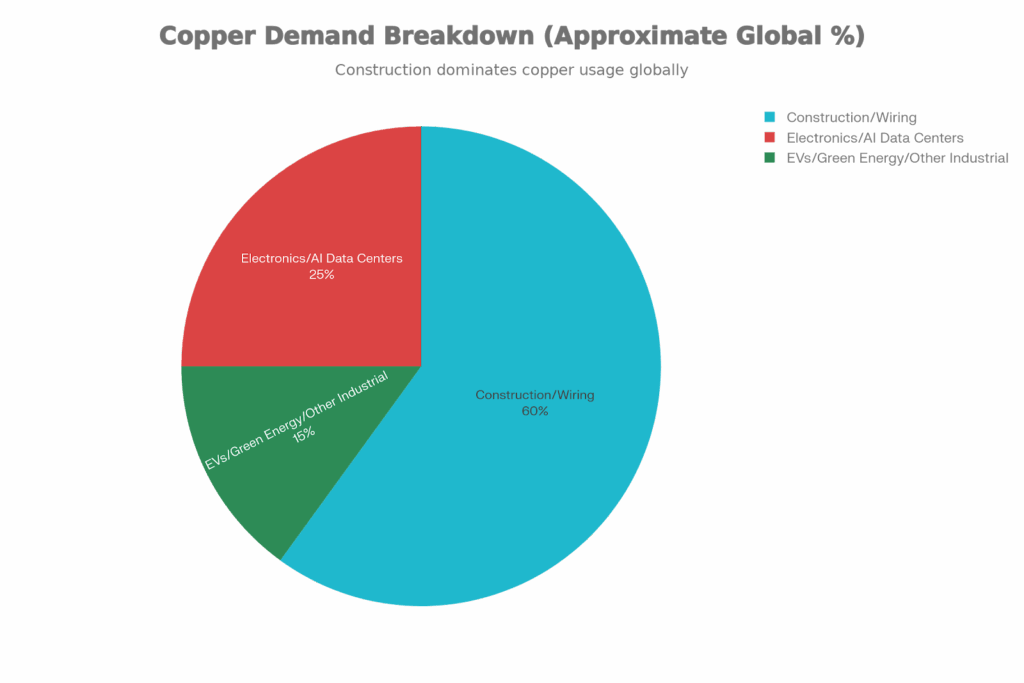
The high level of electrical and thermal conductivity makes copper one of the best electricity conducting metals, corrosion resistant and malleable. Construction and wiring prevails at 60 percent demand. Electronics and AI data centers use a quarter of it, and single hyperscale facilities can use up to 50,000 tonnes of cabling, busbars, and liquid cooling with no aluminum alternatives. AI and defence sectors will boost global copper demand 50 percent by 2040, but supplies are expected to fall short by more than 10 million metric tonnes annually. Electric cars, solar and wind make up 15% of the global demand, which is reinforced by the critical status of minerals. According to BloombergNEF, data centers will require 572,000 tonnes of data each year by 2028 which is 1.8 to 1.9 times the current requirement.
Ukraine conflict and moves by Japan, Germany and others to increase defence spending are likely to also fuel copper demand, report says.
In 2026, gold, silver, and copper are emerging as the world’s new power currency as global economies shift from fuel-intensive growth to material-intensive expansion. Unlike oil, which is facing oversupply and long-term demand uncertainty, metals are becoming strategically critical as they play important roles in financial stability, artificial intelligence, clean energy, defence, and infrastructure. India too as it builds this metals-intensive foundation for its clean energy future, the role of integrated domestic producers becomes increasingly important.
Written By Jayanth R Pai