
Synopsis: Property prices are very different in cities around the world, in this article we will see how much prime property ₹10 crore can buy in big cities around the world.
In India, a property budget of ₹10 crore sounds very luxurious but in some cities around the world it will only get you a small apartment. If you look at expensive cities like Monaco and Hong Kong and then compare them to cities like Dubai where you can get more space you will see a big difference in what ₹10 crore can buy.
Why Property Prices Differ Across Global Cities
Property prices are really different in cities around the world because of things like land availability,foreign investment, demand for luxury houses, taxes, how crowded the city is and how important the city is for business. When there is not a lot of land in a city but a lot of people want to live, the price of property goes up very quickly.
Cities that are centers for business and places that are really nice to visit attract rich people from all over the world who want to buy the best properties. When a city has population density, good infrastructure and job opportunities property prices are bound to go up.
How Much Space Can ₹10 Crore Buy Around the World?
According to reports by Knight Frank Wealth Report and other studies the prices of residential property are very different from one city to another.
Monaco: The World’s Most Expensive Real Estate Market
Monaco is still ranked one of the world’s most expensive places to live in due to its limited land availability, luxury lifestyle, and strong demand from extremely wealthy individuals. It attracts wealthy residents because of its tax-friendly environment, premium waterfront properties, and global luxury appeal. According to the Knight Frank Wealth Report, a budget of ₹10 crore may buy only around 17 square metres of prime residential space in Monaco. This means buyers may only be able to afford a compact studio-sized apartment in some of the city’s premium locations.
Hong Kong and Singapore: Small Homes, Massive Prices
Hong Kong and Singapore have some of the most expensive properties in the world. This is because both are centers for global finance attracting investors, rich people and big companies, this keeps pushing up the prices of homes and apartments. Reports about property around the world say that if you have ₹10 crore you can only buy a space of about 21-23 square meters in the most prime location in Hong Kong. In Singapore you can buy a space of around 28-34 square meters in the central areas with the same amount.
London and New York: Luxury Living Comes at a Premium
London and New York are still really desirable for people who want to buy expensive homes. These places have a lot to offer in terms of quality of life – good infrastructure, social life and plenty of wealthy individuals live there from all around the world. However, owning property in prime areas of these cities comes at a significant cost. Reports suggest that ₹10 crore may buy around 33-34 square metres in London and New York’s premium residential market. While buyers may get slightly larger homes compared to Monaco or Hong Kong, the prices still remain extremely high compared to many Indian cities.
Why Dubai Offers More Space for the Same Budget
Compared to big cities around the world Dubai offers much bigger homes for the same amount of money. The city has grown fast in the past ten years with lots of fancy new buildings, modern roads and systems with lower taxes on properties, which has brought in investors from everywhere. According to experts, if you have ₹10 crore you can buy a luxury home in Dubai of about 105 square metres, with that kind of money you can get a spacious apartment or even a villa in some of the best areas. Dubai has crowded areas, lots of fancy properties for sale and rules that are easy for investors to understand, which has helped keep prices lower compared to places, like London, Singapore or Hong Kong.
Mumbai vs Bengaluru: How Indian Cities Compare
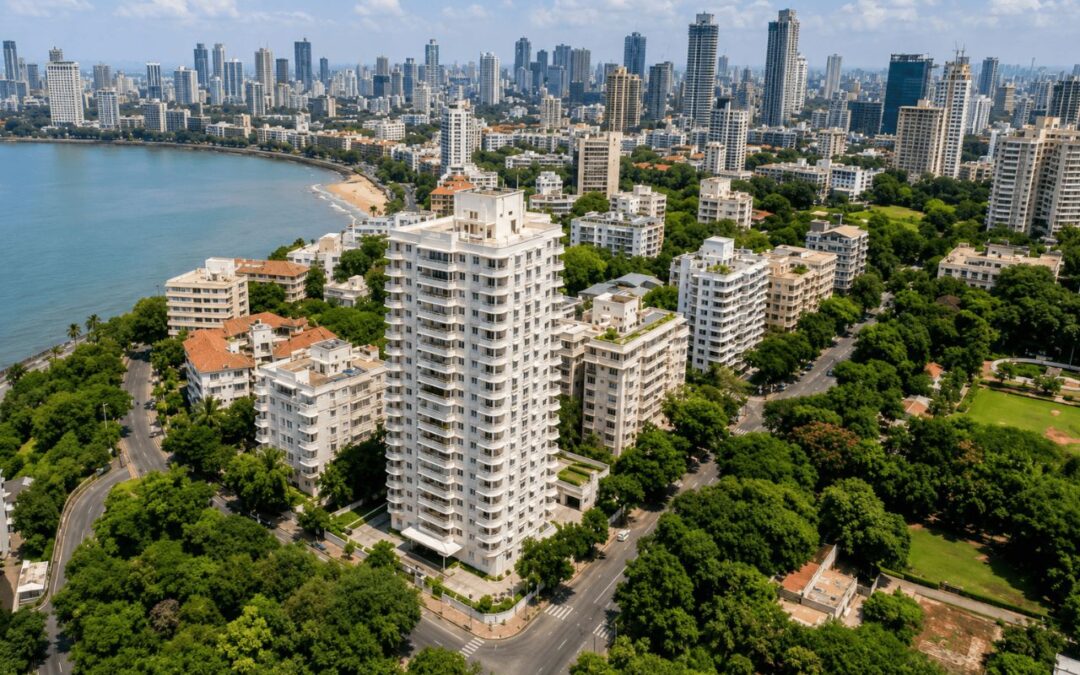
Mumbai is one of the most expensive cities in India when it comes to buying a home. This is because there is no land available, lot’s of bollywood celebrities and rich businessmen live in the prime areas due to which the property prices there are sky high.If you have ₹10 crore you can buy a home that’s around 96 square metres in Mumbai. If you compare this to Bengaluru you can get a bigger home for the same amount of money. In Bengaluru ₹10 crore can buy you a home that’s around 300-357 square metres and this includes big houses and nice apartments in prime areas.
What Drives Luxury Property Prices Globally?
Luxury property prices depend on multiple things like availability of land, foreign investors wanting to invest, job opportunities,good roads, schools and hospitals, tax systems and how many people live there. Cities that are hub business and money often have people wanting to buy high-end homes. Government and Tourism also plays an important role as Infrastructure projects can make a place more attractive, government policies can make it easier or harder to buy a home.
Could Indian Cities Become More Expensive in the Future?
India’s economy is getting bigger, prices of nice homes in cities like Mumbai, Bengaluru and Delhi will probably keep going up over time. More people are moving to cities where better infrastructure, social life and opportunities are there, all of these things are making the prices of homes in India go up. Mumbai is already one of the most expensive places in the world to buy a really nice home, Bengaluru is also seeing a lot of growth because many rich people and startup founders want to live.
Even though you can still get a home in India than in many other countries this might not always be the case. If population density increases in urban areas the difference between India and other countries will get smaller.
Written by Shreya Tiwari