
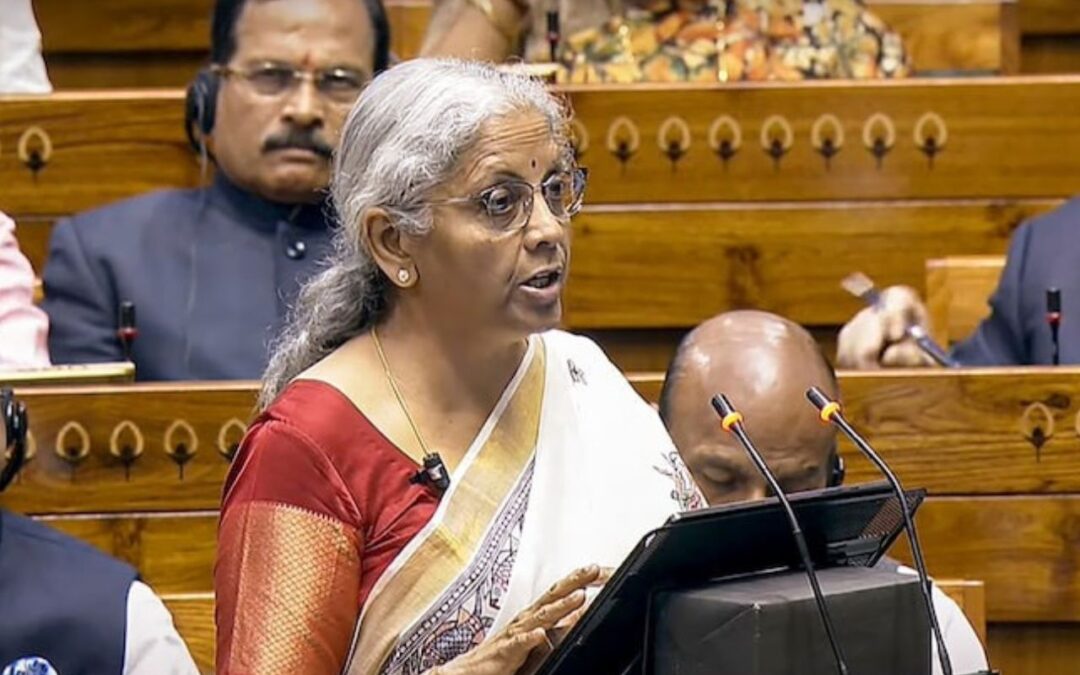
Synopsis: Union Finance Minister Nirmala Sitharaman is set to present the Union Budget for FY 2026–27 on Sunday, February 1, 2026, at 11 am. As the date approaches, Indian taxpayers are optimistic that Budget 2026 will offer additional relief, particularly through further rationalisation of income tax slabs under the new tax regime.
The article discusses the likelihood of reduction in LTCG tax rates, higher exemption limits and the return of indexation benefits. It also examines expert and government views on the impact on investors and the economy. The Union Budget 2026, presented annually by the Government of India, which answers three big questions:
- Where will the government earn revenue from
- Where & how will it spend the money
- How does it affect the citizens, investors, business and the Indian economy
The Union budget focuses on various aspects like economic growth, infrastructure, taxation etc. Profits/gains from transfer of capital asset is taxed under the head of, “Capital gains”. Income from CGs is classified into short term and long-term capital gains. Short term is a capital asset held by a tax payer for a period not more than 24 months. Long term is a capital asset held by the tax payers for a period more than 24months and 12 months for listed equity shares, equity-oriented funds and units of business trust. Long term capital gains arise during the selling of a capital asset held for more than a period of 24 months.
Classifications of LTCG tax
The LTCG taxation is divided into two section, Section 112 and 112A
1. Following assets are recorded Under section 112A:
- Listed equity shares
- Equity oriented fund
- Units of business trust
2. Following assets are recorded Under section 112:
- All the other assets not covered under Section 112A
Current LTCG Tax Rate
As per the latest provisions, the LTCG Tax treatment in India
- Listed equity shares, Equity oriented fund & Units of business trust are taxed at 12.5% without indexation, only on LTCG exceeding ₹1.25lakhs in a financial year.
- For land and building are taxed at 12.5% without indexation, with an option for individuals and HUFs to pay 20% with indexation.
- Other capital assets are taxed at 12.5% without indexation.
Also read: Income Tax Refund Delays: Over 50 Lakh Taxpayers Still Waiting — What You Should Do Now
What could change for LTCG in Union budget 2026
Based on recent media reports and investor understanding, few changes to happen in the union budget 2026 are:
- Possible reduction in LTCG tax rate from 12.5% to 10%, which would improve post tax returns and long term investing,
- Possible increase in the ₹1.25 lakh exemption limit which would benefit retail investors while stabilizing the tax collections.
- Possible return of indexation benefits, especially for non equity assets which would ensure the taxation of only the real gains which would lead to reduction of tax burden on long term investors.
How likely is an LTCG cut in union budget 2026
- While the investors are demanding a reduction in the tax rate on LTCG, the experts believe that a direct cut from 12.5% to 10% would be difficult for the government.
- A sharp reduction could affect the government’s fiscal balance as Capital gains tax is an important source of revenue of the Indian government.
- The government may prefer slow and smaller changes than direct cuts
- Experts also believe that there are high chances that the government might increase the exemption limit or provide selective tax reliefs than direct reduction in the tax rate.
- Capital gains tax helps the government broaden the tax base, and a share cut in the tax rate could reduce tax inflows.
Impact of change in LTCG rate on investors and Indian economy
Impact on investors
- The reduced tax rate from 12.5% to 10% allows investors to keep more profits from selling shares which improves actual earnings
- Makes long term investing more rewarding which encourages investors to invest for longer periods.
- Investors with big portfolios benefit more which increases their net returns and reduces tax burden
Impact on the Indian economy
- Increasing investments in equity and mutual funds increases capital flow into business which makes raising of capital easier for expansion, new projects etc.
- Higher investments leads to improvement of business, job creation etc which contributes to the GDP.
- Lower rates attract foreign investors, bringing in additional capital which strengthens the market.
Conclusion
Investors are hoping for some reliefs in the LTCG taxation, especially on lowering the tax rate in the union budget 2026. However, a direct cut from 12.5% to 10% is uncertain as it directly affects the government’s revenue. Experts believe that small changes such as higher exemption limits are more likely than a sharp cut in the rate. Experts also believe that any decision on the LTCG taxation will aim to balance market growth, and fiscal stability.
Written by Boyapati Sai Jasmitha